



By Happy Cat Hotel & Spa
Photos provided By Happy Cat Hotel & Spa
By Happy Cat Hotel & Spa
Photos provided By Happy Cat Hotel & Spa
 alk into most pet care facilities across the country and the design tells a familiar story: Rows of spacious dog runs line the walls, play yards echo with joyful barks and scent diffusers hum quietly in the background—designed, of course, to calm canines. Somewhere, though, behind a closed door or tucked into a quieter corner are the cats.
For decades, feline guests have been an afterthought in environments engineered for dogs. Cat boarding often means retrofitted dog kennels, improvised spaces, and “quiet rooms” that fall short of meeting cats’ complex behavioral and emotional needs. As the pet care industry continues to expand and evolve, one truth is becoming impossible to ignore: Cats deserve more.
This assumption is changing, though. Today’s pet owners, especially Millennials and Gen Z, are redefining the human-animal bond. They see their cats as family, crave enrichment-based care and are seeking professional services that reflect a modern understanding of feline behavior. The demand is outpacing supply, and it’s reshaping the future of pet boarding.




Why Traditional Boarding Fails Cats
Cats process the world through scent, sound and spatial hierarchy. In a facility designed primarily for dogs, these sensory cues can quickly become sources of stress:
- Scent: Dogs carry strong odors that linger in shared air systems and surfaces, signaling to cats that they are in unfamiliar, and potentially unsafe, territory.
- Sound: The acoustics of a kennel or open playroom amplify barking and echoing noise, which can trigger a cat’s natural instinct to hide.
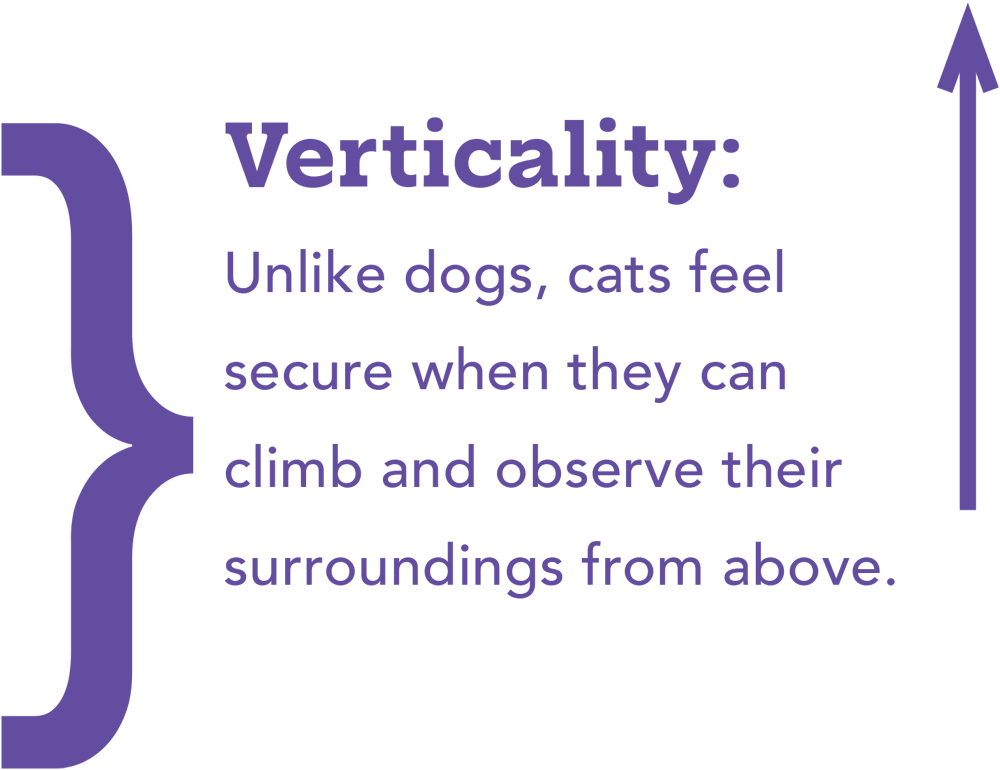
- Verticality: Unlike dogs, cats feel secure when they can climb and observe their surroundings from above. Flat, confined kennels eliminate these opportunities.
- Enrichment: Mental stimulation is essential for feline wellbeing, but enrichment activities for cats differ greatly from those for dogs. Calm, deliberate play and environmental exploration nurture confidence and reduce stress.
Without these elements, even the most well-intentioned boarding setups can hinder a cat’s ability to acclimate and therefore compromise their welfare, leaving owners hesitant to return.
Behaviorally, the difference is profound. Cats acclimate faster, eat and eliminate more regularly, and show fewer signs of stress. For boarding professionals, it’s not just an animal welfare upgrade—it’s a business opportunity.

Designing for the Feline Mind
- Isolation of Scent and Sound: Even when housed in distinct areas, dogs introduce noise, vibration and olfactory cues that cats interpret as threats. In cat-only facilities, those stressors are removed completely, allowing guests to relax, explore and express natural behaviors without the constant background tension of canine activity.
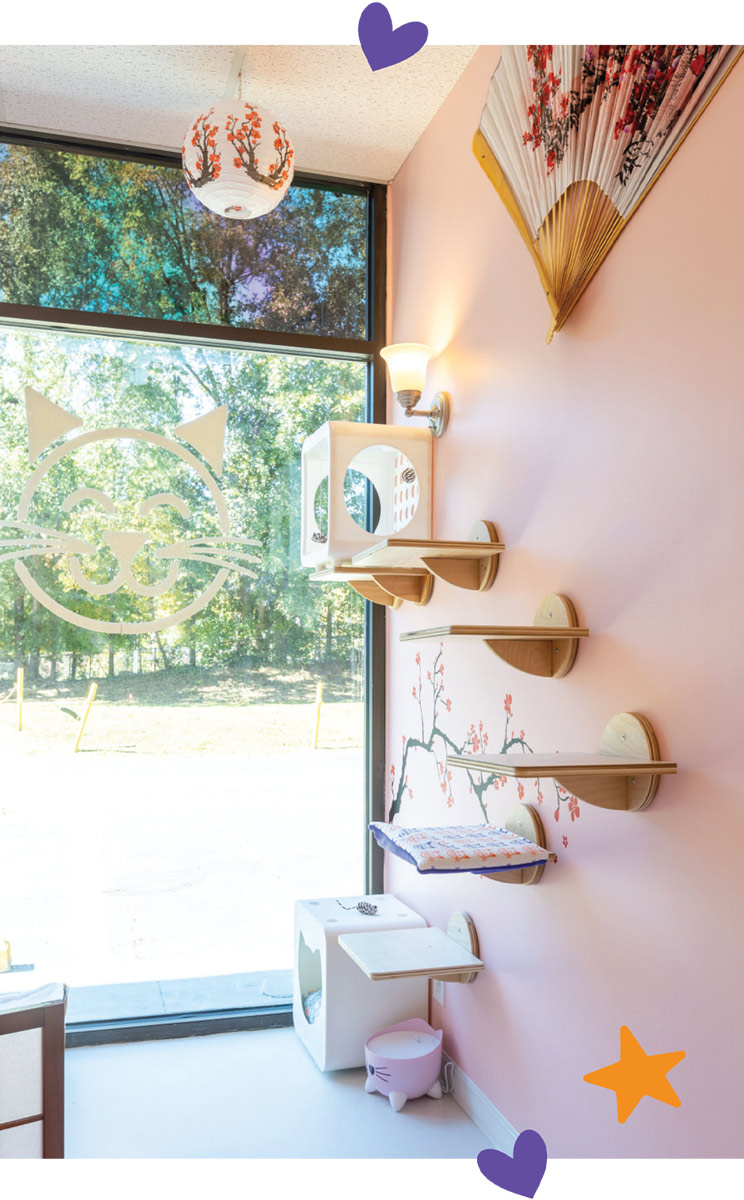
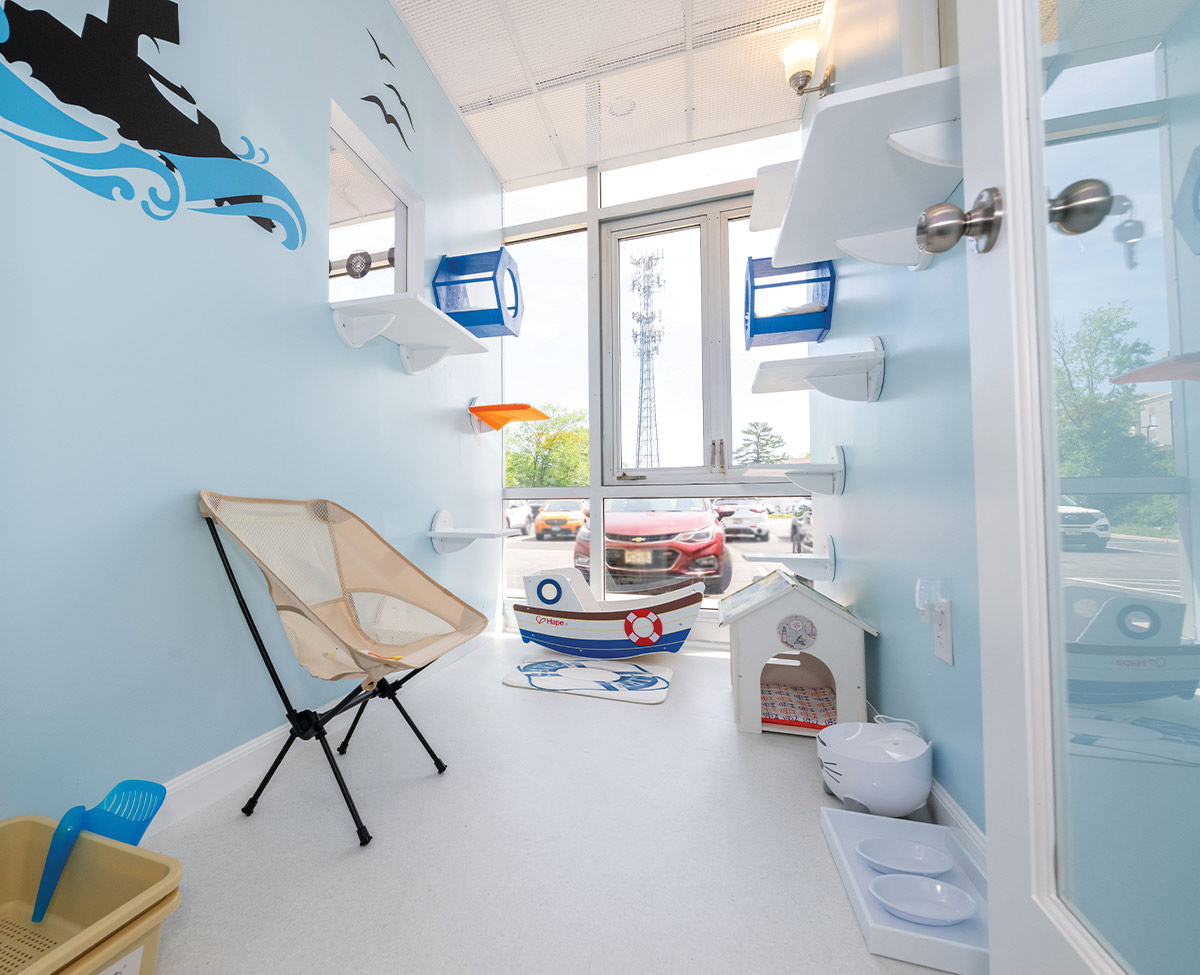
- Vertical Space Utilization: Suites should include climbing structures, shelving or elevated rest areas to satisfy cats’ natural instinct to survey their environment from above.
- Predictable Routines: Cats thrive on consistency. Scheduled feeding, cleaning and interaction times help them adjust more comfortably.
- Visual Stimulation: A thoughtful mix of movement, light, and stimulation keeps cats curious and content. Windows to outdoor spaces and bird-watching perches provide calm visual engagement, while interactive toys and rotating enrichment items create an atmosphere that feels vibrant, secure and distinctly feline.
- Human Connection: Gentle, deliberate handling and one-on-one engagement create trust and encourage socialization—when the cat chooses it.


The data—and the culture—suggest that the feline sector will continue to rise. The American Pet Products Association reports consistent growth in cat ownership among urban households, with a notable increase in dual-cat families. Simultaneously, consumer spending on specialized pet services continues to climb, particularly among younger pet parents seeking ethical, enrichment-based care.
For boarding professionals, now is the time to rethink space allocation toward more cat-only facilities, diversify service offerings and explore feline-specific programming. Investing in cats is not a step away from dogs; it’s an expansion toward balance. The next generation of pet care leaders will recognize that feline wellness is not an accessory to the business but a frontier of its own.
This new demographic expects transparency, design intention and enrichment-based care. They want to see thoughtfully themed spaces and individualized attention that mirrors the boutique experiences offered to dog owners. And they’re willing to pay for it.
Not to mention, there are far many more of them than meets the eye. According to the AVMA, cat ownership exceeds 32.1% of all households across the nation, boasting more pet cats than dogs in terms of national count, with the average household owning 1.8 cats per household.
The industry has long celebrated dogs as the centerpiece of pet care, but the quiet hum of feline potential is growing louder every year. Designing spaces that honor cats’ sensory worlds isn’t just good ethics—it’s good business.
As pet professionals, we have the opportunity to evolve beyond tradition, listen to the animals in our care and build environments that truly see them. The cats are ready, and it’s time the industry CATches up.
Happy Cat Hotel & Spa is a pioneering concept dedicated exclusively to feline boarding and grooming. Founded in 2014, it has been featured in Pet Boarding & Day Care Magazine, Catster, WSJ, Entrepreneur, and named the “World’s Greatest Cat Hotel.” Since launching its franchise program in 2020, the brand has expanded to 19 units open and in development across the United States. Through education, design innovation, and franchise development, Happy Cat continues to lead the movement toward elevated, cat-only hospitality nationwide and is redefining what professional pet care can look like in a historically dog-dominated industry.