






Staff
Barkleigh Productions, Inc.
Rebecca Shipman
Laura Pennington
Brandi Aurelio
Carlee Kubistek
Luke Dumberth
Todd Shelly
Gwen Shelly
Adam Lohr
James Severs
Karin Grottola
Evan Gummo
CONTACT
General: (717) 691-3388
Editorial: rebecca@barkleigh.com
Advertising: james@barkleigh.com


40

44

Business
Animal Health
Think Tank
Industry News
- Aerapy Animal Health7
- Alpha Tech Pet15
- Alpha Tech Pet56
- BackYard Pet Supplies19
- Barkleigh Store – Boarding Kennels: The Design Process18
- Barkleigh Store – Groom Curriculum33
- Barkleigh Store – The Rosetta Bone50
- Best Shot Pet – Scentament Spa41
- Business Insurers of the Carolinas36
- CleanWise17
- Cosmos Bathing Systems38
- Direct Animal Products37
- Electric Cleaner Company31
- Enrichment University27
- First Financial Bank21
- Gator Kennels32
- Groom’dDigital
- Gyms for Dogs11
- K9 Grass by ForeverLawn2
- Kuranda Pro3
- Midmark5
- Natura Turf Pro10
- Odorcide13
- Online Doggy30
- Outstanding Pet Care24
- Paragon School of Pet Grooming18
- Pet Boarding and Daycare Expo West54
- Pet Business Marketing26
- Pet Business Marketing43
- Pet Vet Sales49
- PetBizInsurance.com46
- PetEdge45
- PetLift9
- Presidio Custom Kennels8
- Professional Animal Care Certification Council55
- Professional Pet Boarding Certification14
- Puppy Playground42
- Snyder Manufacturing Company23
- Stone Mountain Pet Products22
- Tidy Paws16
- Turnkey, Inc.25
- Wag’n Tails51

















Business



By Dominic Hodgson
hen was the last time you walked into a business that did one thing brilliantly and instantly knew you were in the right place?
Maybe it was a Drybar, where they built a multimillion-dollar empire by doing only blowouts, or an In-N-Out Burger, where the menu hasn’t changed in decades—just three burgers, three shakes and lines around the block. Both picked a lane, mastered it and turned it into a magnet for loyalty, referrals and profit.
Most pet facilities still try to be everything to everyone. They offer daycare, boarding, grooming, training, and maybe a splash of retail and wonder why they blend into the background. But in business, broad is bland. Focus wins.
When you pick a lane and own it—whether that’s cats, small dogs, enrichment or busy pet parents—you stop competing on convenience and start charging for confidence.
Here’s the part most pet business owners never grasp: Specialization doesn’t limit you—it multiplies your value.
Think about it: When you’ve got a bad back, you don’t want a general doctor, you want the spine specialist at the Mayo Clinic who’s seen your exact issue a thousand times before. And you’ll happily pay more for that peace of mind.
It’s the same in your town. The minute you stop being “just another daycare” and become the feline-friendly resort or the enrichment-focused facility that helps dogs thrive (not just survive), you instantly move up the value ladder.
People pay higher prices for specialized services because expertise feels safer and more premium. That’s why they’ll drive past cheaper competitors to reach the facility that truly fits their pet.
Cat-only resorts charge premium prices by removing stress for feline guests. No barking. No chaos. No compromise.
Being a big fish in a small pond makes you easier to talk about, easier to recommend and far harder to replace. And the best part? You don’t need an overhaul to start.
You can introduce specialization one service or one campaign at a time. Maybe it’s a cat wing with feline-only suites or a Weekend Warrior Program for adventure-loving dogs. Leaning into a niche moves you from generalist to go-to expert, and once that happens, price resistance disappears.
Here are five proven paths to becoming the go-to name in your market:

1. By Species or Breed
If you’re thinking, “I don’t have enough of that type yet,” you’re missing the point. You don’t wait for the market—you create it. Plant your flag and the people who fit that niche will find you.


When your business mirrors how your clients live, everything clicks—your hours, your pricing and your message. And because people with the same lifestyle talk, one perfect client often turns into 20.

When you tailor your business to one community, you become the default choice—and not because you’re cheaper, but because you already speak their language.

These niches build fierce loyalty, because once an owner finds someone who truly understands their dog’s stage of life or special medical needs, they never leave.
Start with your content such as blogs, emails and social posts that speak directly to your niche. If you’re the cat boarding specialist, share behind-the-scenes clips of your feline suites or tips for stress-free travel. If you’re the enrichment expert, post videos of brain games in action and explain why they matter. If you’re the pro for medical professionals, show how your extended hours or concierge pick-up solve real scheduling headaches.
Then, give that audience a place to land—a dedicated page, lead magnet or book that deepens the story, such as “The Feline Boarding Checklist,” “The Enrichment Playbook for Happy Dogs” or “The Busy Professional Pet Parent Survival Kit.”
Before you go chasing new ideas, start with the data you already have. Your next profitable niche is probably hiding in plain sight.
Your best clients are already showing you who your niche is. All you have to do is notice and build your business around them.
Specialization doesn’t shrink your world, it expands it. It lets you charge more, upsell more and create offers only you can deliver. That’s how a small, family-run facility becomes a destination brand and outpaces the big-box chains.
So, whether you’re the cat resort everyone trusts, the enrichment experts raising smarter dogs or the concierge for busy professionals, the rule is the same: Pick your lane and own it completely. Be bold. Be the big fish. Own your small pond.
Dom Hodgson is known as the Pet Biz Wiz, and is widely regarded as the World’s leading pet business coach. His mission is to help pet service providers create superior customer service systems that enable them to build an impactful and profitable pet business. Dom has written 10 books and is a much in-demand speaker. You can instantly download a free copy of his latest book “How to Disnify Your Doggy Daycare Business” by going to www.petbusinessmarketing.com/daycaremagic.
Business

in the Pet Industry
 n the world of pet care, we often hear the same phrase: “It’s just a job.” Whether you’re talking about kennel techs, group-play attendants or receptionists, there’s an outdated belief that these roles are temporary, replaceable and low-skill. And it’s hurting our businesses more than we realize.
If we want to retain talent, attract professionals and grow strong, sustainable teams, we must change the way we talk about and structure roles in our industry. We must show that pet care isn’t just a pit stop—it’s a career.
Pet care should be leading the charge. We offer emotionally fulfilling work, real impact and tight-knit teams. But the gap between perception and potential keeps us from retaining good people.
Employers often view professional roles like trainers, groomers and managers as high-cost, hard-to-replace and deeply specialized. Meanwhile, hourly positions are seen as flexible, low-skill and easily filled. But ask your top group-play tech or lodging lead and they’ll likely tell you the work is demanding, technical and emotionally taxing. It deserves professional structure—and professional respect.
So how do we change that? We start by building visible, credible career paths within our organizations, then communicating those paths clearly and consistently.


Promotions should come with more than a title. Include responsibility for mentoring, training others or supporting departmental execution. Teach delegation, communication and follow-through—skills that build managers from the ground up.
Benefits matter, too. Healthcare—even if partially split with employees—sends a powerful message, as do PTO, pet perks and wellness support. These aren’t “extras;” they’re essentials in a career-oriented culture.
Employees should never have to guess what’s next for them. Spell out your advancement paths in writing, offer cross-training opportunities, and use development meetings to set SMART goals and coach progress, not just correct mistakes.
4. Fair, Transparent Wages
A five-year comparison between high-turnover and low-turnover models proves it: Fewer well-paid people often cost less than more lower-paid, often-replaced people.
Include tools like:
- Cross-training logs
- Performance-based bonus structures
- Scholarship or sponsorship programs for external certifications
The goal is to remove the mystery from moving up.

And don’t forget your clients. They love hearing that the person walking their dog or grooming their cat is a certified, career-track professional. Feature employee spotlights in newsletters or social posts. Let clients see how your investment in people strengthens the care their pets receive.
When employees see that their job can grow into a career, they bring more to the table; more professionalism, more pride and more longevity. The cost to retain is almost always less than the cost to replace. And you can’t put a price tag on the value of a well-trained, respected and fulfilled team.
So the next time someone asks, “Is this just a job?”—you’ll have an answer that shows exactly how and why this is a career.
Jennifer Wolf-Pierson has served as General Manager of ABC Pet Resort & Spa in North Houston since 2016, now proudly powered by Best Friends Pet Hotels. With a background in operational leadership, team development, and multi-service pet care management, she has supported pet care facilities nationwide through staff training, process improvement, and strategic planning. Jennifer is passionate about helping teams thrive through thoughtful leadership and systems that scale. She holds a BS in Agricultural Science from Colorado State University and maintains certifications as a Certified Professional Animal Care Operator (CPACO), a Certified Professional Dog Trainer (CPDT-KA), and a PetTech CPR and First Aid Instructor.
Business


 ow, more customers look for this convenience when using other services. From groceries to doctor’s appointments and even drive-thru orders, more business than ever is done online.
Some pet care facility owners have been tempted to follow the herd. After all, it’s easy, accessible from anywhere, at any time and hands-off for their staff. They may think, “Well, that seems useful. If it can save my business time and resources, then why not?”
Fast forward, and the ground gives way beneath them as a huge pitfall trap opens up. They might not even realize it at first, until they see the signs: declining revenue, increased customer friction, erosion of trust, loss of brand identity…each day, the pit gets a little deeper and darker, until it threatens to cave in completely.
So, let’s explore what makes online reservations so dangerous for pet care businesses and what to do about it.
Enormous pet sitting apps and big-box stores can get away with the lowest rates, but that’s not a winning battle for most pet care businesses. The alternative is to stand out, proactively communicate your superiorities and convince customers your services are worth their cost.
Pet care is complex, highly customized and rarely one-size-fits-all. If we try to shove it into a cookie cutter, we’ll likely get cut ourselves.
Needless to say, this industry is highly emotional. A page on a screen can’t reassure a pet parent that their “baby” is in safe, loving hands or establish a connection.
That’s why most pet parents will still make first contact with you on the phone, where they can talk to a live human who can convince them your company is deserving of their trust. But if the person picking up that call isn’t prepared to do so, or worse—points them to a soulless online form—that trust is lost, and there are no second chances.
If they choose not to book right away, you don’t even get to retain their name and contact information for future marketing. That marketing lead is burnt and lost, and its revenue along with it. Even those that do book often select the bare minimum. Chances are they don’t fully understand your care or what services are available to them. And if they don’t know about your fun enrichment add-ons, bathing services and customization options, they can’t buy them.
When booking online, important information is too easy for pet parents to skim over, misunderstand or ignore entirely.
When booking online, important information is too easy for pet parents to skim over, misunderstand or ignore entirely. Vaccinations, deposits, pick-up/drop-off hours…when these details aren’t clearly communicated from the start, it leads to more unhappy customers, confusion at the front desk, and vulnerability to backlash and bad reviews.
At the same time, there’s nothing (or no one) to catch any “red flags” that could lead to trouble later. Signs of aggression, health concerns and spay/neuter status can slip right through the cracks. The best time to address concerns like these is always on the initial call, with ample skill, care and compassion.
The same is true when a prospect pulls up your online reservation form. Who would you rather trust with that opportunity: words on a screen or a highly adept, caring human professional?
1. Capture leads—whether they book or not. If the pet parent isn’t ready to book today, they might in the future. Taking their information up front gives you the best chance of converting as many inquiries as possible with marketing and outreach efforts.
2. Differentiate your business. It’s not enough to assume prospects will browse your website to understand what makes your company special. On the phone, your staff can make sure every caller knows what’s unique about your facility and why they should choose you over a cheaper, inferior competitor…all while fighting commoditization.
3. Describe your care and defend your rates. Instead of simply giving your rates for a prospect to leave or take, a phone person explains why your services are worth the cost. If customers understand exactly what they’re paying for, they’re far more likely to be willing to pay it.
4. Win the pet parent’s trust. When they first call, most pet parents are apprehensive, cautious and emotionally charged. So much trust goes into choosing a pet care provider, and it’s your company’s job to win it. A compassionate, knowledgeable staff member has all the skills and tools to put clients at ease in minutes.
6. Clarify expectations. It will save you time and frustration to have a trained phone person inform customers of policies, requirements and next steps over the phone. This means better interactions, happier customers and elevated service overall.
7. Miss fewer calls. Many pet care facilities miss a staggering number of incoming calls. Each of these missed calls is a lost opportunity that damages your perceived trustworthiness. Having someone specially trained on the phones ensures you capitalize on every lead and maintain the best communication with your clientele.
The sooner your phone team is trained, the sooner the revenue comes ringing in…and the sooner you can leave the pitfall trap behind.
- Paw-rental differences: How each generation views their pets. (2025, May). Talker Research. https://talkerresearch.com/paw-rental-differences-how-each-generation-views-their-pets/
Laura Laaman is president of Outstanding Pet Care. If you’re interested in the strategies discussed in this article and want to grow your revenue with our proven, guaranteed services, schedule a consultation by calling 1-888-836-8740 or visiting www.outstandingpetcare.com/contact.

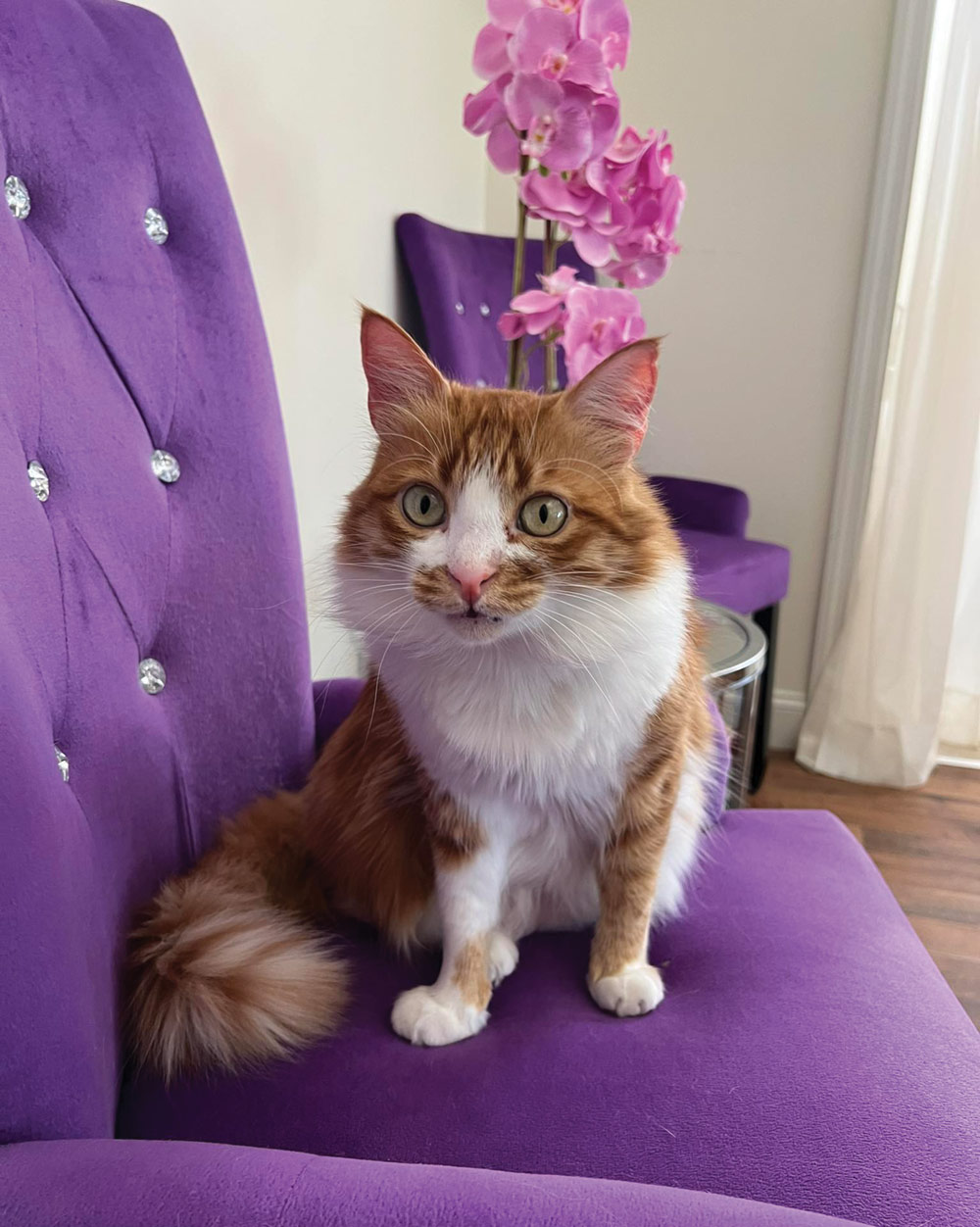

Photos provided by Cat’s Meow Resort


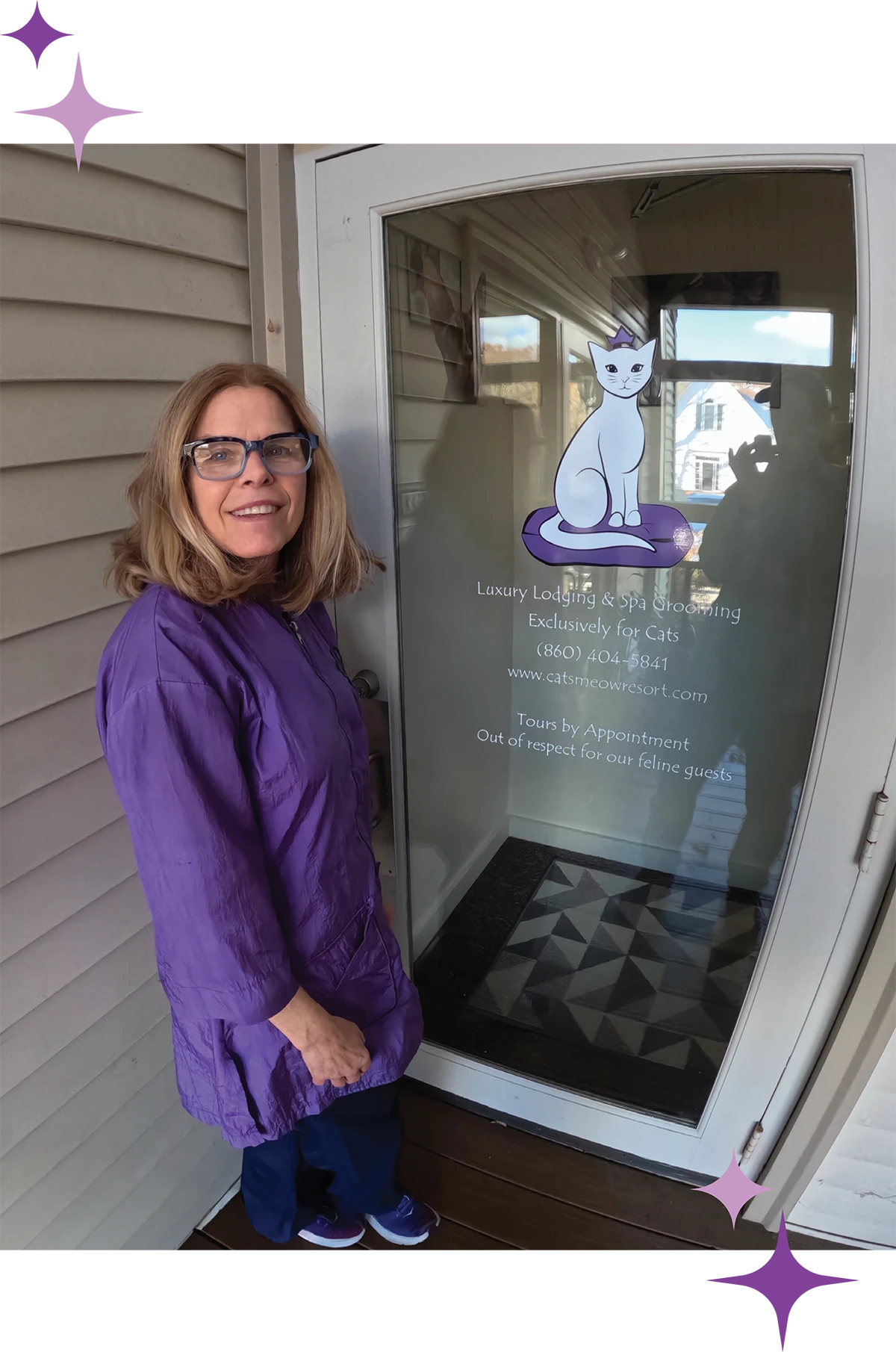
 ats have long been an underserved market,” begins Kim Thomas, owner and founder of Cat’s Meow Resort, a luxury cat boarding and grooming retreat in Avon, Connecticut. “When I started in the pet care industry, it was easy to find great boarding options for dogs, but cats were usually an afterthought. I wanted to change that.”
Kim’s journey to founding the Cat’s Meow Resort was anything but ordinary. In 2006, she launched West Hartford Pet Sitters, one of Connecticut’s first professional pet sitting services. Within just a few years, it became the largest and most trusted in the region.
Kim then opened her second business, The Mobile Pet Spa, which led her to realize how much cats benefit from professional grooming. To expand her skills, she enrolled in and attended the National Cat Groomers Institute, earning the designation of Certified Feline Master Groomer (CFMG).
Around that time, she saw a growing trend: Many owners were looking for alternatives to in-home pet sitting.
“I found that many cat owners weren’t comfortable having someone come into their home once or twice a day—especially after COVID,” Kim explains. “And often, the sitter didn’t even see the cat. That wasn’t real care.”
Kim saw this as an opportunity to raise the bar. She decided to create a feline-exclusive oasis—a boarding and grooming luxury resort where cats could be calm, comfortable and well cared for. She was determined to make her vision a reality.
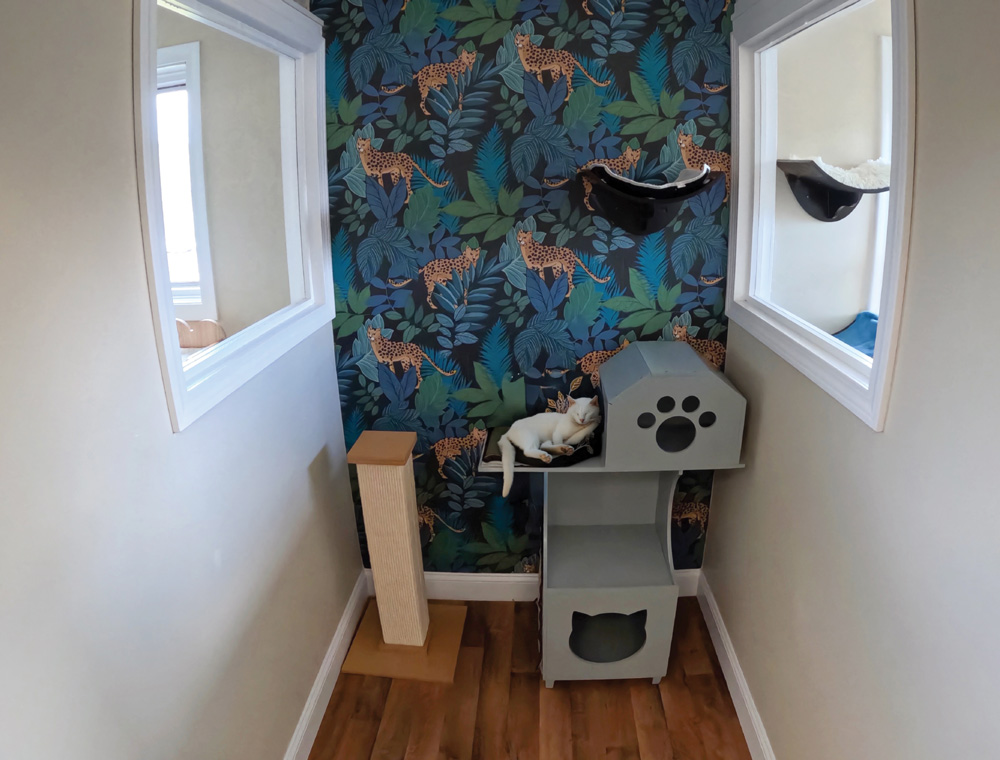
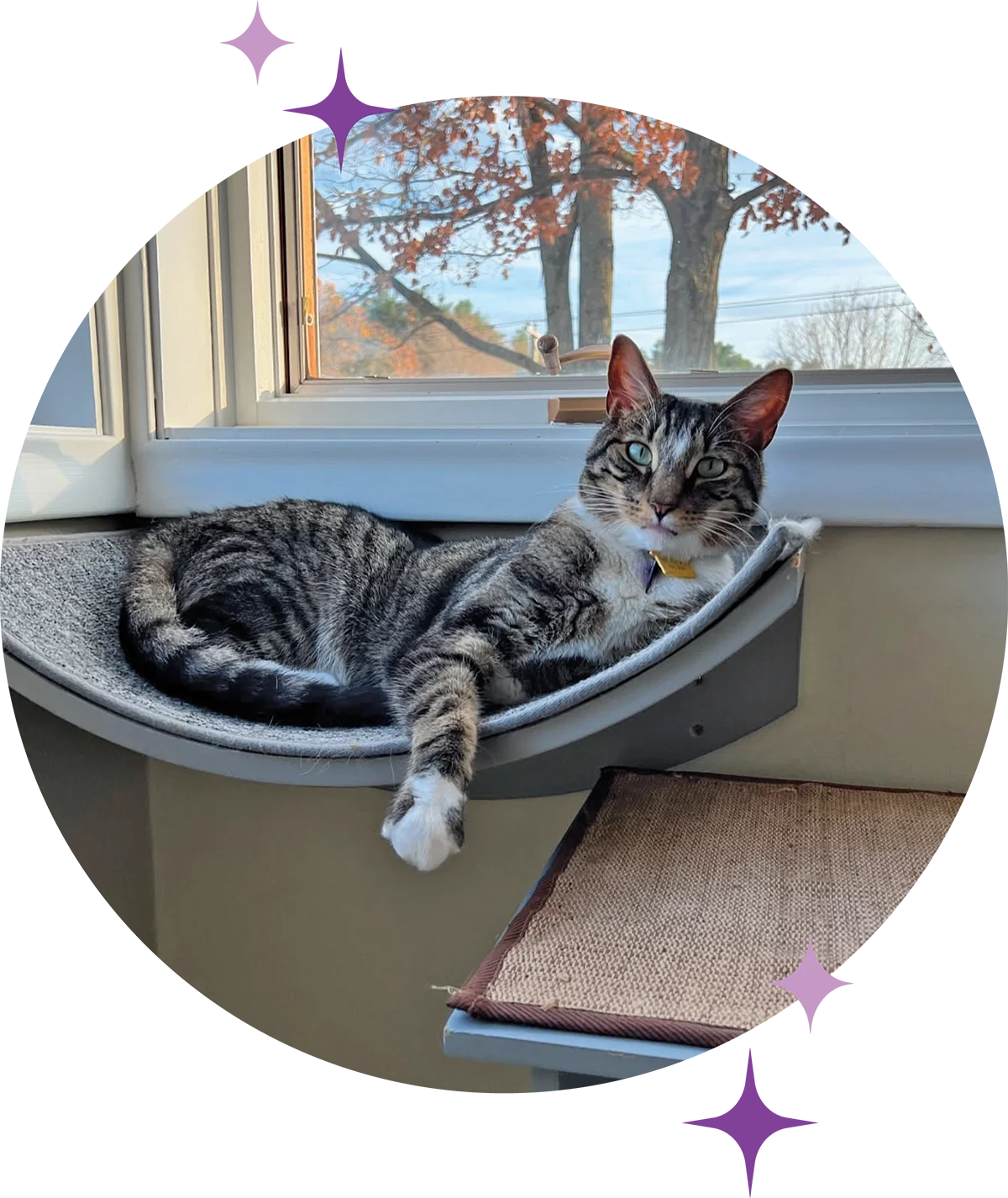
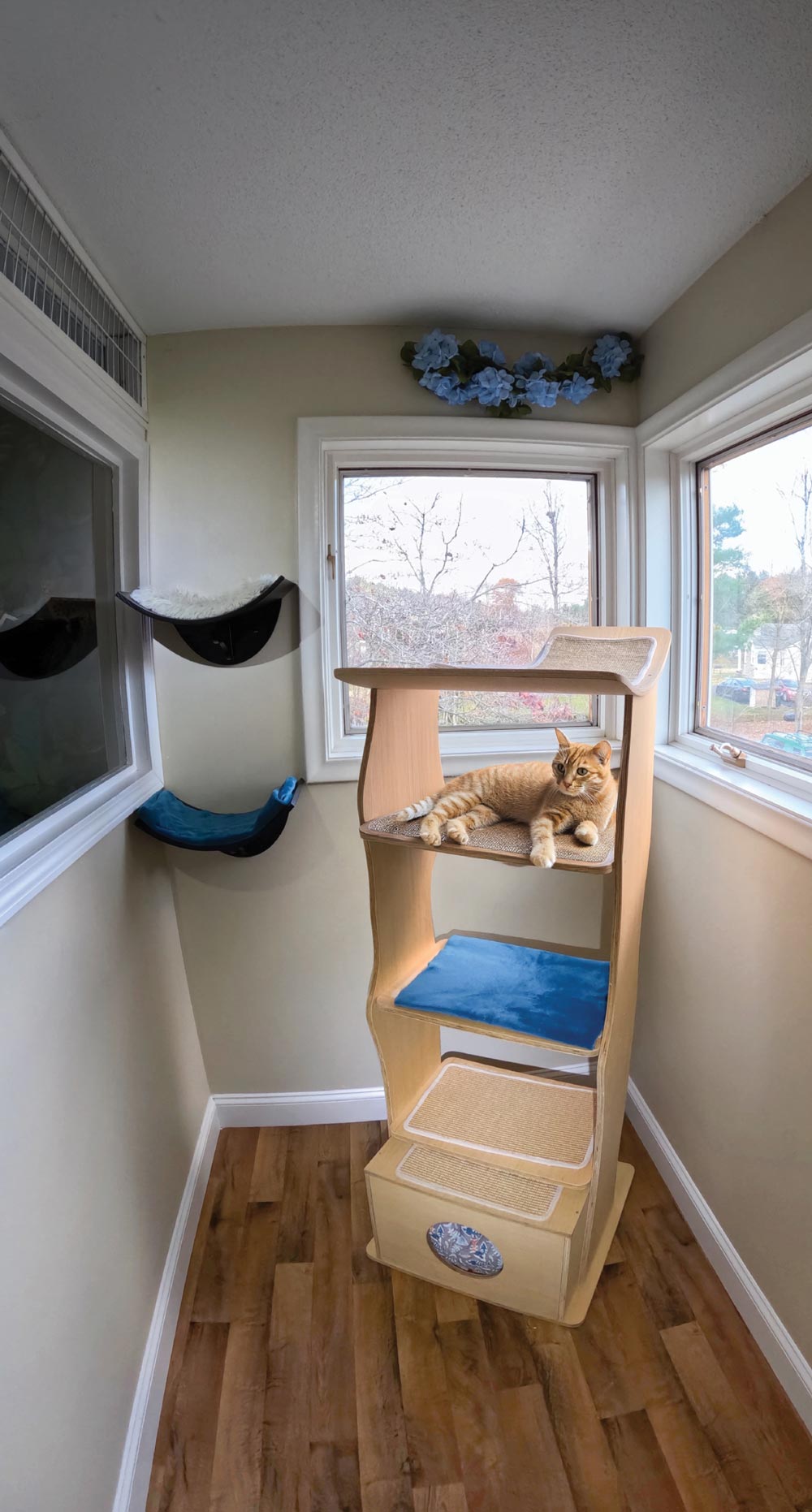
When Cat’s Meow Resort opened its doors in September 2019, it quickly became a model for how feline boarding can, and should, be done. When you walk into the resort, the first thing you notice is how peaceful it feels. There are no cages, no barking dogs and no stress, just soft music, natural light and contented cats.
“It’s about engagement and comfort,” says Kim. “We design every aspect to reduce stress and support natural behaviors like climbing, perching, and exploring.”
The staff at Cat’s Meow is made up entirely of cat lovers who receive extensive training in handling, feline body language, sanitation, safety and client communication. Catering to individual needs is another focus of the team’s.
 We tailor care for each cat; some want extra cuddles and to play with toys, while others prefer quiet
– Kim Thomas, owner and founder of Cat’s Meow Resort
“Clients love our transparency and communication,” she continues. “They can watch their cats through our 24/7 live Kitty Cams. It gives them peace of mind to see their cats playing, relaxing, or napping. In addition, our staff also sends regular photo and video updates upon request.”

Even the resort’s digital presence reflects Kim’s commitment to professionalism, with their website often being the first introduction potential clients have to the Cat’s Meow.

Cat’s Meow Resort also offers daycare, which has become increasingly popular. Many clients use this service when they’re hosting parties, having renovations done or during stressful times like the Fourth of July. It gives cats a peaceful place to stay when their home environment is too chaotic.
The on-site grooming salon complements the boarding operation perfectly. Services include baths, de-shedding treatments, blow-dries, nail care, specialized clips and show grooming.
“At Cat’s Meow, we treat every cat as an individual,” she states. “We tailor their care to their unique needs and personalities. Whether they’re a senior cat needing extra support or a playful kitten full of energy, we make sure they’re comfortable and content.”


When she saw a need in the market, Kim refused to fill it with cages and compromises. Instead, she created an exclusive sanctuary that elevates feline boarding into a worry-free retreat, the Cat’s Meow Resort.


By Happy Cat Hotel & Spa
Photos provided By Happy Cat Hotel & Spa
By Happy Cat Hotel & Spa
Photos provided By Happy Cat Hotel & Spa
 alk into most pet care facilities across the country and the design tells a familiar story: Rows of spacious dog runs line the walls, play yards echo with joyful barks and scent diffusers hum quietly in the background—designed, of course, to calm canines. Somewhere, though, behind a closed door or tucked into a quieter corner are the cats.
For decades, feline guests have been an afterthought in environments engineered for dogs. Cat boarding often means retrofitted dog kennels, improvised spaces, and “quiet rooms” that fall short of meeting cats’ complex behavioral and emotional needs. As the pet care industry continues to expand and evolve, one truth is becoming impossible to ignore: Cats deserve more.
This assumption is changing, though. Today’s pet owners, especially Millennials and Gen Z, are redefining the human-animal bond. They see their cats as family, crave enrichment-based care and are seeking professional services that reflect a modern understanding of feline behavior. The demand is outpacing supply, and it’s reshaping the future of pet boarding.




Why Traditional Boarding Fails Cats
Cats process the world through scent, sound and spatial hierarchy. In a facility designed primarily for dogs, these sensory cues can quickly become sources of stress:
- Scent: Dogs carry strong odors that linger in shared air systems and surfaces, signaling to cats that they are in unfamiliar, and potentially unsafe, territory.
- Sound: The acoustics of a kennel or open playroom amplify barking and echoing noise, which can trigger a cat’s natural instinct to hide.
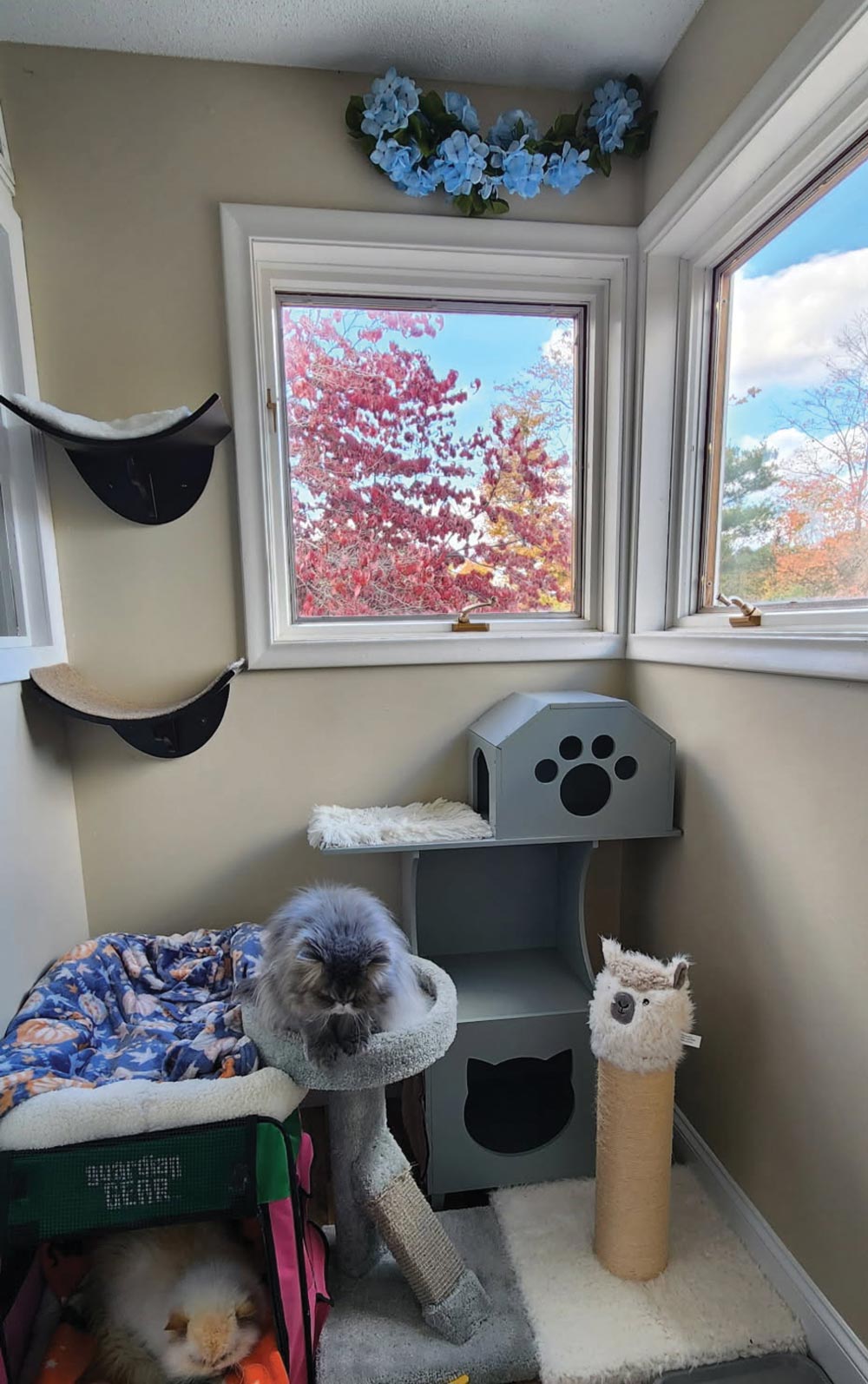
- Verticality: Unlike dogs, cats feel secure when they can climb and observe their surroundings from above. Flat, confined kennels eliminate these opportunities.
- Enrichment: Mental stimulation is essential for feline wellbeing, but enrichment activities for cats differ greatly from those for dogs. Calm, deliberate play and environmental exploration nurture confidence and reduce stress.
Without these elements, even the most well-intentioned boarding setups can hinder a cat’s ability to acclimate and therefore compromise their welfare, leaving owners hesitant to return.
Behaviorally, the difference is profound. Cats acclimate faster, eat and eliminate more regularly, and show fewer signs of stress. For boarding professionals, it’s not just an animal welfare upgrade—it’s a business opportunity.

Designing for the Feline Mind
- Isolation of Scent and Sound: Even when housed in distinct areas, dogs introduce noise, vibration and olfactory cues that cats interpret as threats. In cat-only facilities, those stressors are removed completely, allowing guests to relax, explore and express natural behaviors without the constant background tension of canine activity.
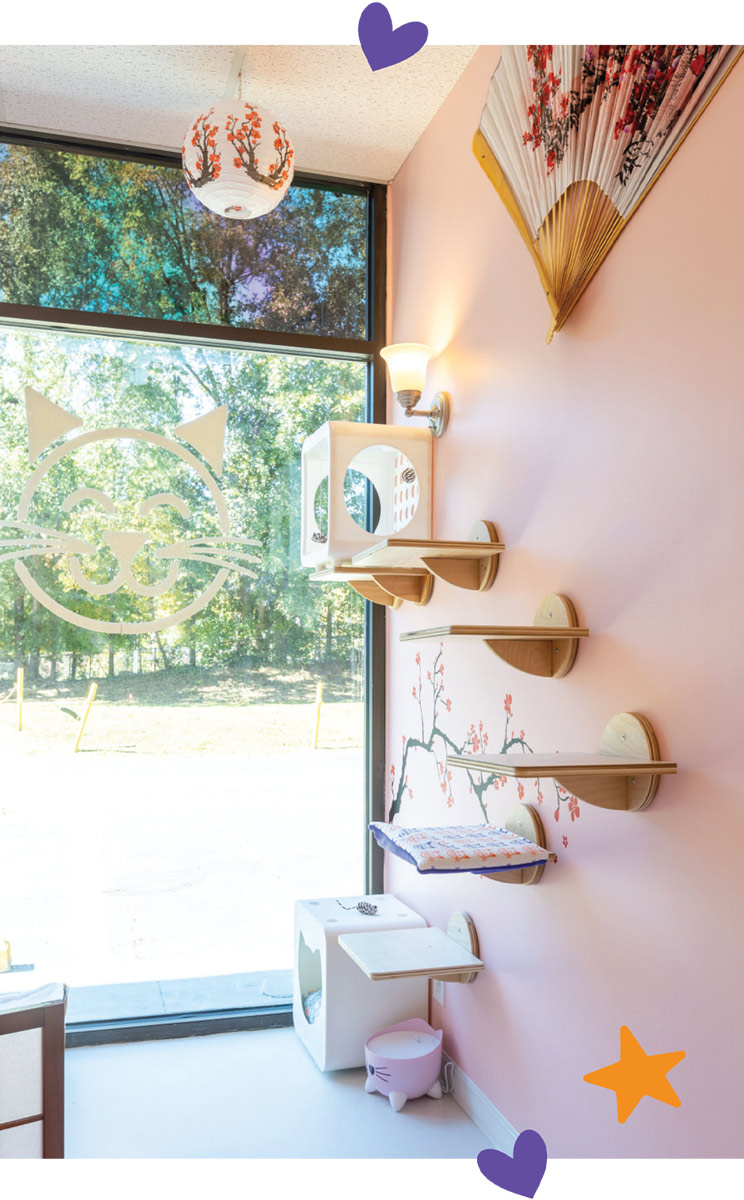
- Vertical Space Utilization: Suites should include climbing structures, shelving or elevated rest areas to satisfy cats’ natural instinct to survey their environment from above.
- Predictable Routines: Cats thrive on consistency. Scheduled feeding, cleaning and interaction times help them adjust more comfortably.
- Visual Stimulation: A thoughtful mix of movement, light, and stimulation keeps cats curious and content. Windows to outdoor spaces and bird-watching perches provide calm visual engagement, while interactive toys and rotating enrichment items create an atmosphere that feels vibrant, secure and distinctly feline.
- Human Connection: Gentle, deliberate handling and one-on-one engagement create trust and encourage socialization—when the cat chooses it.


The data—and the culture—suggest that the feline sector will continue to rise. The American Pet Products Association reports consistent growth in cat ownership among urban households, with a notable increase in dual-cat families. Simultaneously, consumer spending on specialized pet services continues to climb, particularly among younger pet parents seeking ethical, enrichment-based care.
For boarding professionals, now is the time to rethink space allocation toward more cat-only facilities, diversify service offerings and explore feline-specific programming. Investing in cats is not a step away from dogs; it’s an expansion toward balance. The next generation of pet care leaders will recognize that feline wellness is not an accessory to the business but a frontier of its own.
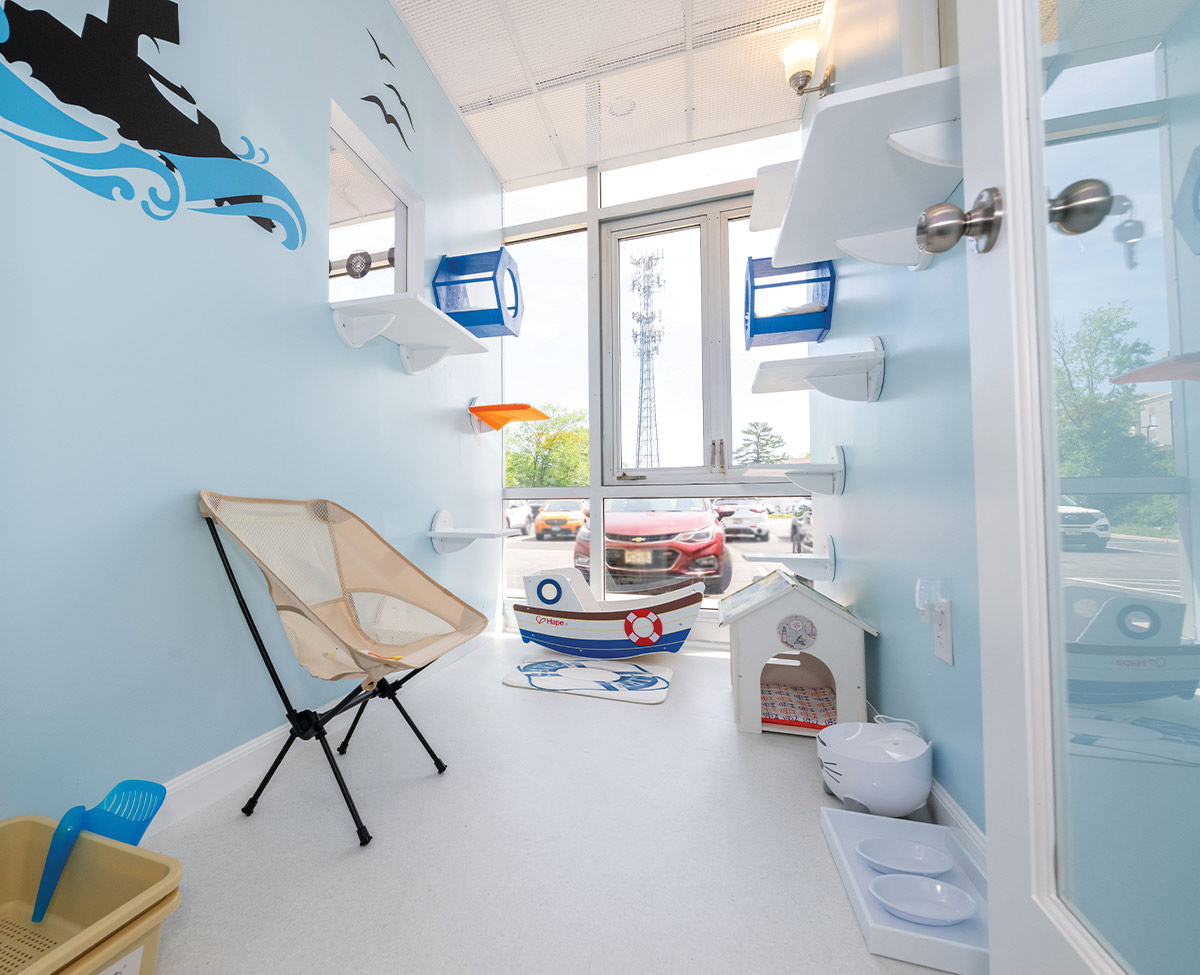
This new demographic expects transparency, design intention and enrichment-based care. They want to see thoughtfully themed spaces and individualized attention that mirrors the boutique experiences offered to dog owners. And they’re willing to pay for it.
Not to mention, there are far many more of them than meets the eye. According to the AVMA, cat ownership exceeds 32.1% of all households across the nation, boasting more pet cats than dogs in terms of national count, with the average household owning 1.8 cats per household.
The industry has long celebrated dogs as the centerpiece of pet care, but the quiet hum of feline potential is growing louder every year. Designing spaces that honor cats’ sensory worlds isn’t just good ethics—it’s good business.
As pet professionals, we have the opportunity to evolve beyond tradition, listen to the animals in our care and build environments that truly see them. The cats are ready, and it’s time the industry CATches up.
Happy Cat Hotel & Spa is a pioneering concept dedicated exclusively to feline boarding and grooming. Founded in 2014, it has been featured in Pet Boarding & Day Care Magazine, Catster, WSJ, Entrepreneur, and named the “World’s Greatest Cat Hotel.” Since launching its franchise program in 2020, the brand has expanded to 19 units open and in development across the United States. Through education, design innovation, and franchise development, Happy Cat continues to lead the movement toward elevated, cat-only hospitality nationwide and is redefining what professional pet care can look like in a historically dog-dominated industry.




hen you board a cat at your facility, not only are you responsible for the care and safety of the animal, but the cat’s grooming needs should also be made a priority. Whether you add the following services to your package inclusions or as an optional extra, staff should be observant of the grooming requirements of the cats and the services that may be required over their stay.

Nail Clipping


Daily brushing is more than a cosmetic service; it’s a vital part of feline care—especially for longhaired breeds like Persians, Maine Coons and Ragdolls. A wide-toothed comb is recommended for longhaired cats, while a fine-toothed comb and a rubber curry brush are recommended for shorthaired cats.
Brushing helps:
- Prevent tangles and mats
- Reduce shedding and hairballs
- Stimulate circulation and distribute natural oils
- Move oils and calming pheromones around the cat’s body
Daily brushing can also serve as a wellness check, allowing staff to spot skin issues, parasites or behavioral changes early.
Matting occurs when loose undercoat tangles and binds together with skin oils, forming tight clumps that can pull on the skin and cause pain, irritation or even infection. Cats are meticulous groomers, but in a boarding environment, several factors can lead to matting. Cats may under-groom, experience a change in temperature in the environment, reduce exercise and movement or become stressed.
Grooming add-ons are essential for maintaining a cat’s health and hygiene by preventing matting, infections and discomfort.


Sanitary trims involve clipping fur around the rear and genital areas to maintain hygiene. This is especially important for longhaired breeds prone to fecal matter or urine sticking to fur (especially due to stress or change of diet), senior cats who may struggle with self-cleaning and cats with mobility issues or arthritis. Sanitary clipping helps prevent infections, odors and discomfort, and is a discreet but highly appreciated service by pet owners.

Observations of Stress
- May result in bald patches, especially on the belly or legs
- Often a sign of anxiety or boredom
- Can lead to skin irritation or infection
- Coat becomes dull, greasy or matted
- Sanitary areas may become soiled
- May indicate depression, illness or discomfort
- Common in senior cats or those with mobility issues
Grooming add-ons are essential for maintaining a cat’s health and hygiene by preventing matting, infections and discomfort. They also contribute to the pet’s emotional wellbeing by offering a calming, reassuring experience. Additionally, owners value the cleanliness and care of their cats, leading to greater satisfaction. From a business perspective, offering grooming services adds a premium touch that can enhance revenue. Overall, grooming add-ons benefit the pet’s health, owner satisfaction and business growth.
Want to learn to become a Cat Groomer? Our extensive Cat Grooming Course has been written and delivered by Master Cat Groomers, Feline Behaviourists, and Vet Nurses with extensive experience. Follow Cat Grooming Education with Lexie and sign up for our newsletter at https://learncatgrooming.com.au/


 hen the holidays wind down and the decorations are put away, it can feel like the cozy energy disappears from boarding facilities, too. But for your feline guests, January and February are peak nesting season, and it’s a great time to level up your winter boarding experience with extra comfort, seasonal charm and smart safety strategies.
Whether you’re trying to fill post-holiday lulls or just want to improve your cat care game, this cold weather guide has you covered.
Ideal Temperature for Cats
While you don’t need to crank the heat all day, it’s worth adjusting your climate control settings or providing additional warming elements in the colder months. Avoid placing cage banks directly near windows, vents or doors. A quiet corner away from airflow is ideal.
- Microwavable, pet-safe heating pads that provide warmth for hours without cords.
- Low-wattage, under-cube heating pads designed for pet shelters.
- Self-warming beds that use Mylar to reflect the cat’s body heat without any electricity.
- Fleece- or Sherpa-lined bedding that insulates well and can be washed frequently.
Make sure every warming product is washable, can be easily replaced and doesn’t get too hot. Safety and hygiene should always go hand in hand.
- The Cozy Cubby Upgrade
Offer fleece-lined cubes, covered beds or cave-style hideouts for cats who crave security. This provides comfort for the cat and also looks appealing to owners (who are ultimately the ones that pay for upgrades).
- Brushing Sessions
Dry winter air can increase shedding and static. Offer a 10-minute brushing session with a warm towel wrap, focusing on comfort and reducing cold-weather matting.
- “Fireside” Photo Package
A simple flannel blanket and cardboard fireplace cutout or digital background can turn any enclosure into a charming photo backdrop. Have the pictures printed to give to owners upon pick-up or offer them a digital file.
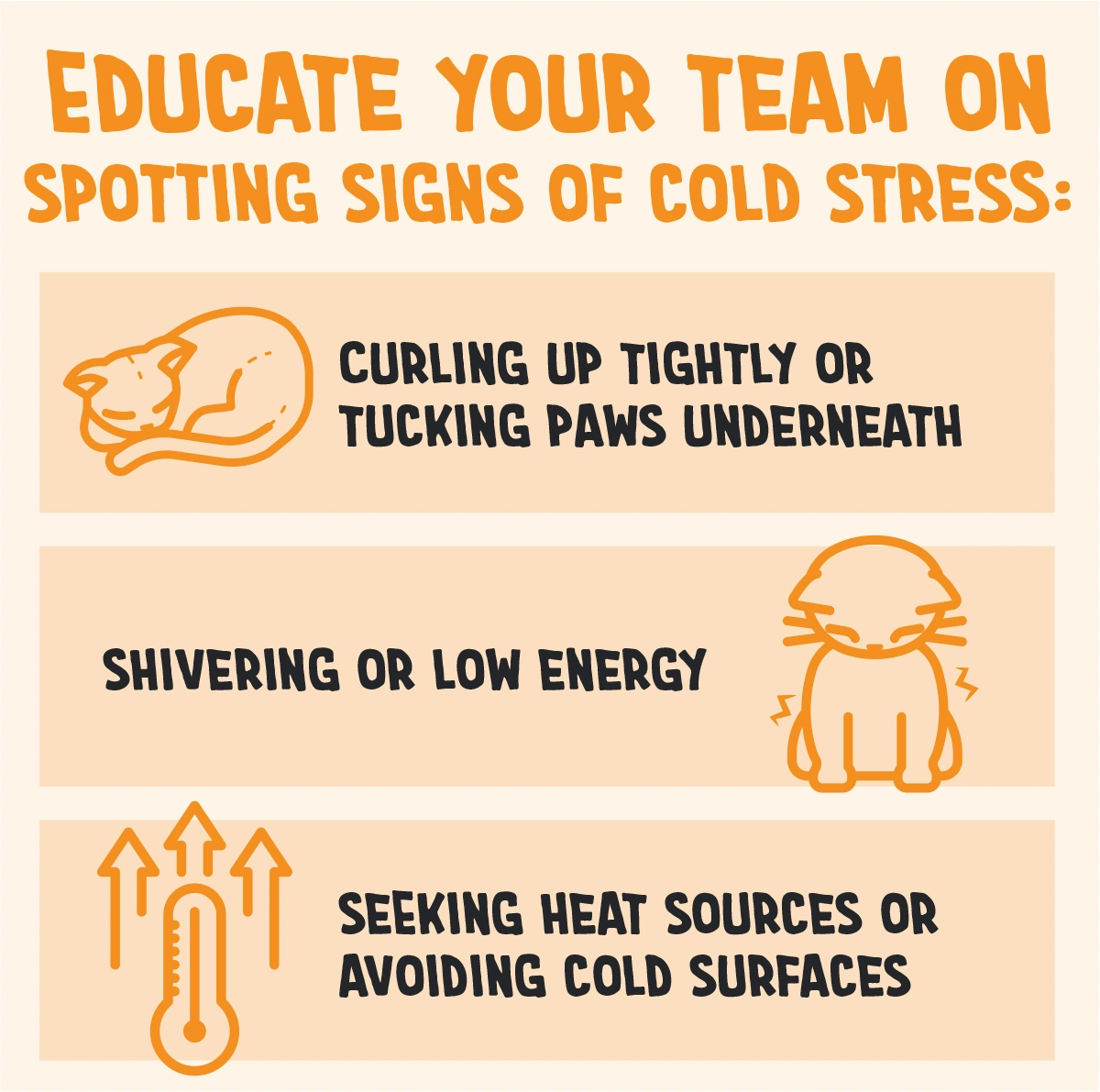
- Curling up tightly or tucking paws underneath
- Shivering or low energy
- Seeking heat sources or avoiding cold surfaces
Remind staff that senior cats, hairless breeds, and thin or matted coats need extra monitoring. And while some cats may hunker down more in winter, a cat that seems lethargic or off food should always be assessed for illness.
Encourage hands-on interaction with gentle brushing, quiet petting sessions or observation from outside the enclosure when appropriate. Even shy cats appreciate warmth, comfort and routine during long winter stays.

With the right environment and some creative touches, your feline guests can enjoy a warm, comforting stay while their humans are away.
Social Media Posts:
- “Cold noses, warm hearts: Our January guests are staying toasty with heated beds and snuggly blankets!”
- “Behind the scenes: See how we keep our boarding cats cozy all winter long.”
- “Cozy Cubby upgrades now available! Book your cat’s winter getaway.”
- “Winter Safety Tip: Never leave a space heater unattended. Here’s what we use to keep cats cozy instead…”
Promotions or Booking Boosts:
- Offer a January/February booking special that includes one free “Cozy Add-On.”
- Launch a “Winter Wellness Check-In” for long-term boarders that includes a brushing session and staff notes.
- Partner with local rescues to offer short-term boarding for cats recovering from TNR surgery or adoption.
Winter doesn’t have to be a slow season for cat boarding. With the right environment and some creative touches, your feline guests can enjoy a warm, comforting stay while their humans are away. And your clients? They’ll notice the difference.
Comfort is never out of season. Make your boarding space feel like the coziest little cat hotel in town, and those January slots will fill faster than a heating pad on a cold morning.

By Arden Moore
Photo provided by Arden Moore
By Arden Moore
Photo provided by Arden Moore
 eing prepared for medical emergencies in a pet care setting is paramount. Cat parents trust that you and your staff will know what to do in the case of an injury or illness. But what about a cat that is choking?
Approach the cat calmly so as not to cause them to panic and lash out at you.

Position the cat standing up on a sturdy table with their back braced against your front torso.

Hold the cat up with one arm around their upper abdomen.

With your other hand, tuck your thumb inside your palm while making a fist.

Position your closed fist at the end of the cat’s ribcage in the soft spot.

Listen for the stridor (inhale), then thrust your fist in and upward five times in a row when the cat exhales to try to dislodge the object.

After each series of five thrusts, open and inspect the mouth to see if you can dislodge any object.
Identifying Choking
When a cat under your care starts choking, it is vital to use your eyes and your ears so you can time when to render pet first aid. Choking actions and sounds differ from that of a cat experiencing a hairball. A cat will tend to shrug their shoulders and make quick gulping sounds before opening their mouth and releasing a hair-filled lump. In general, hairballs are normal, especially for longhaired cats, and tend to be due to excessive grooming and are not regarded as pet emergencies.
But when a cat starts to choke due to something partially blocking their airway, they will make a gasping sound, called a “stridor,” on each inhale. The cat will also tend to crouch and maybe lurch forward. This lurching and gasping combination are your cues to step in and perform the kitty Heimlich maneuver that consists of well-timed abdominal thrusts followed by mouth inspections.
Approach the cat calmly so as not to cause them to panic and lash out at you.
Position the cat standing up on a sturdy table with their back braced against your front torso.
Hold the cat up with one arm around their upper abdomen.
With your other hand, tuck your thumb inside your palm while making a fist.
Position your closed fist at the end of the cat’s ribcage in the soft spot.
Listen for the stridor (inhale), then thrust your fist in and upward five times in a row when the cat exhales to try to dislodge the object.
After each series of five thrusts, open and inspect the mouth to see if you can dislodge any object.
If the cat collapses into unconsciousness, you will need to perform CPR that consists of chest compressions and rescue breaths (you breathing air from your mouth into the cat’s nostrils). It is best to also call the nearest veterinary clinic for further instructions.
Sadly, more than 200,000 cats and dogs die from choking each year, according to Dr. Judy Morgan, DVM.1 This statistic inspired her to launch a website for National Pet Choking Prevention Day2 that offers valuable articles and videos for pet professionals and pet parents. Officially, the day is held every June 22nd, but the advice is valuable every day of the year.

- Baby bottle nipples
- Baby carrots
- Buttons
- Dental floss
- Food wrappers
- Game pieces
- Hair ties
- Jewelry
- Kibble pieces
- Plastic bags
- Refrigerator magnets
- Rubber bands
- Shoelaces
- String
- Tinsel
- Window blind cords
- Yarn
“I saw many choking cases involving dogs and cats during my career, and some of these cases did not have good outcomes, which is very sad, as this is something that is preventable,” says Dr. Morgan. “My mission is to empower and educate pet parents and pet professionals on ways to keep their pets healthy and safe.”
Many cats hone their hunting skills by stalking feather wand toys and other wiggling linear objects. To reduce the risk of choking in cats under your care, get into the habit of playing with wand toys and other linear toys, and then storing these items in cat-safe containers to prevent accidental choking.
Also, monitor cats at mealtime to step in if a fast-eating cat starts to choke on pieces of kibble. And definitely do a thorough check of each cat’s surroundings to remove any choking objects, such as rubber bands or hair ties.
- Dr. Judy Morgan’s Naturally Healthy Pets. https://drjudymorgan.com/
- National Pet Choking Prevention Day. https://nationalpetchokingpreventionday.com/

 ost pet resort owners are obsessed with one thing: getting more leads—more ads, more promos, more new faces through the front door. But while you’re spending time and money trying to attract new customers, your existing ones might be quietly slipping out the back.
The truth is, you don’t need more clients—you need more from your clients. The key to scaling profitably isn’t about chasing new business; it’s about keeping, nurturing and growing the customers you already have.
Customer lifetime value (LTV) is the total revenue you earn from a single client over the entire relationship. It’s based on three levers that are completely within your control:
- Retention Rate: How long they stay with you
- Visit Frequency: How often they book
- Average Spend: How much they spend each time
If your average client spends $6,000 over two years, imagine what happens when you increase each of those numbers by just 10%. A little longer retention, a few more bookings and slightly higher spend, and suddenly that same customer is worth $8,784 instead of $6,000. That’s a 46% jump without spending a dollar more on marketing.
Think of your favorite coffee shop or restaurant. You don’t keep going back just for the product—it’s how they make you feel. Your pet resort should create the same kind of emotional connection.
Here’s how to build what I call the “Cycle of Delight:”
- First Impression: Seamless booking, warm welcome
- Experience: Updates, photos and exceptional care
- Follow-Up: A personalized “thank you” and check-ins
- Re-Engagement: Timely reminders and special offers
Each step builds trust and momentum toward the next visit.
When you address their unspoken question—“Will my pet be safe and happy here?”—you’re not just onboarding a client, you’re earning an advocate.

- Monthly emails about upcoming activities
- Holiday reminders or seasonal specials
- Win-back campaigns for inactive clients
- During booking: “Would Max enjoy a premium suite with extra playtime?”
- During their stay: “We can add a spa bath before pick-up so he goes home fresh.”
- Before departure: “Grab a treat bag for the ride home.”
Keep it conversational and specific to the pet. When it feels like genuine care, clients happily say yes.
The best pet resorts aren’t the ones chasing every new lead; they’re the ones mastering the art of nurturing the customers they already have. When you intentionally design the client journey, increase frequency and boost spend, you’re not just filling space—you’re building lifelong relationships and predictable, profitable growth.
Fern is the founder of Overdog Digital, a digital marketing & consulting agency that helps dog daycare and boarding facilities attract, convert, and keep more customers by creating winning marketing campaigns and providing the business guidance to build momentum and spark long-term growth. Fern also has programs to train daycare staff, is a dog behavior consultant, and has a dog training business in New Jersey. He is the author of eight books and a popular speaker at national conferences and private events. To join The Dog Daycare Business Think Tank or ask a question, go to: www.facebook.com/groups/dogdaycarethinktank
New Products


Wisdom & Grace

Thanks for reading our January/February 2026 issue!