

Business



 outhwest Airlines and Emirates both fly people from one place to another. These businesses operate under the same aviation regulations, use similar aircraft and perform the same basic function, yet nobody confuses the two, and nobody expects them to charge the same prices.
One is built for travelers who will tolerate friction in exchange for a lower fare (and a bit of fun thrown in); the other is built for people who value ease, certainty, status, and an extra-special level of service—and, crucially, they are prepared to pay vastly higher prices for the privilege.
Most pet businesses sit much closer to the first model than they realize while quietly wishing they could charge like the second. And that tension shows up everywhere: in pricing conversations with needy customers, and in staff stressing out because more and more dogs are being squeezed into the facility, which leads to the business being busy but often never quite as profitable as you would like.
The main reason for this is few business owners ever step back to ask the fundamental question: “Who is this business designed to serve?” But an even better question might be: “Who should this business be designed to serve, and who should we be targeting as a customer?”


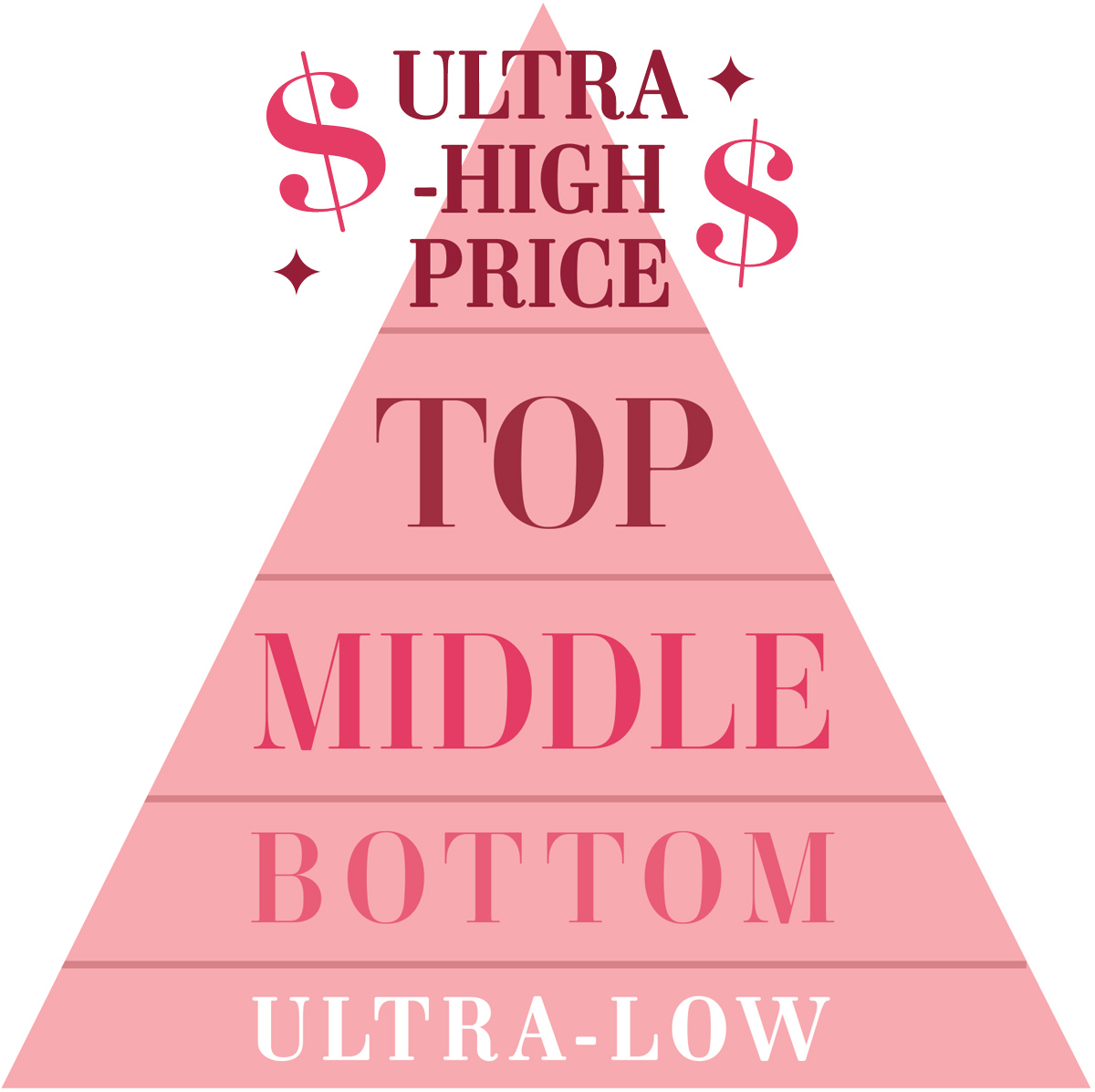
The problem is, over time, the middle of the market becomes crowded, price-sensitive and demanding. The business stays busy but margins tighten up, and you end up looking like every other pet resort in your area. The competition grows, wages and other costs continue to increase, and inflation and the rising cost of living greedily eat into your shrinking margins.
But when a business is designed around a specific type of client, then wrong clients quietly opt out, and the right ones lean in. This is not about excluding people for the sake of it. It is about building a business that makes sense for the clients you want and the operation you are trying to run.
Every market is made up of top, middle and low-priced service providers. Deciding that your “who” is going to be affluent dog owners means you move away from that overcrowded middle and bottom sections of the market.
The easier money is to be made by targeting (and designing your services to suit) dog owners who live in the top section. There are less of those buyers for sure, but that’s okay, because they are prepared to spend exponentially more on their dogs’ happiness, so you need less clients overall.
But, here’s the thing no one wants to admit: The affluent people who live in the top levels are different from the people at the middle and bottom levels. It’s not that they love their dogs any more or less, or that they are better or worse human beings. It’s that they are wealthy, successful people who demand, expect and are happy to pay for a service that feels worthy of their hard-earned cash.


Affluent people aren’t buying minutes; they’re buying what aligns with their standards, their identity and their worldview.

Here are three big differences in the two:

Affluent people aren’t buying minutes; they’re buying what aligns with their standards, their identity and their worldview. They have their own “tribal language”—you must talk to them the way they talk, or they won’t see you as someone worth buying from.

They’re not just buying dog care; they’re buying the version of themselves who goes above and beyond.

Your standards and service levels need to sit comfortably inside their world. If they walk into your place and it feels “off-brand” for their lifestyle, you lose them instantly.
Taken together, these differences explain why two businesses offering similar services can feel completely different to operate. One relies on volume, flexibility and constant adjustment, while the other relies on commitment, clarity and superior levels of service. Neither outcome is accidental. Each is the result of who the business is designed to serve.

Price is not just a revenue lever, it is also a filter. When prices sit in the middle of the market, businesses tend to attract clients who compare options closely and expect flexibility. When prices move decisively higher, the client mix changes.
People who are used to paying for premium services in other areas of their life are comfortable paying more when a similar premium experience feels right for their dog. Remember, they are used to upgrading, investing in memberships and enjoying the perks that come with success.
Once a business makes a clear decision about who it is built for—and stops trying to be everything to everyone—it all becomes simpler. Just as no airline attempts to serve every traveler equally well, no pet business needs to appeal to every dog owner in town.
The question is not whether affluent dog owners exist in your area (they almost always do), the real question is whether your business is designed in a way that makes sense to them. Are you speaking the right kind of “affluent attractive” language on your website? Are you perceived as being the expert pet care provider in town? This matters because affluent buyers gravitate towards the provider they feel is the best.
And being the best doesn’t necessarily mean collecting more certificates or doing more courses so you have more letters after your name. Continuous improvement is desirable, but it doesn’t elevate the business in the eyes of your prospects as much as you might think.
Many experience more success by going beyond the norm and embracing a strategy that makes their business a magnet for affluent dog owners. I’m talking about things like:
- Creating their own media such as a paper-and-ink newsletter or running their own podcast. These are media outlets that cut through the generic white noise of social media marketing that everyone does.
- Becoming a local celebrity by getting press coverage and being featured in local newspapers and magazines, or on radio or TV shows.
- Cementing their expert status by writing a book that sells the business for you. You can’t spell “authority” without “author.”


The operators who step back and decide who they are actually serving tend to experience the opposite. Their marketing has more clarity and focus, and over time, they attract those more affluent clients. This leads to higher margins and a business that feels far more stable as a result.
That outcome does not come from working harder; it comes from choosing the right client and building everything else around it.
Dom Hodgson is known as the Pet Biz Wiz, and is widely regarded as the World’s leading pet business coach. His mission is to help pet service providers create superior customer service systems that enable them to build an impactful and profitable pet business. Dom has written 10 books and is a much in-demand speaker. You can instantly download a free copy of his latest book “How to Disnify Your Doggy Daycare Business” by going to www.petbusinessmarketing.com/daycaremagic