




By Fernando Camacho
 f you’ve ever finished a full day at your pet resort completely wiped out, only to realize the big things you meant to work on never happened, you’re not alone. Most pet resort owners aren’t short on effort—they’re short on time spent in the right places.
Author Stephen Covey lays out a great framework called the “Time Management Matrix” that helps explain why this happens in his book The Seven Habits of Highly Successful People. It divides your work into four quadrants based on urgency and importance. And once you see where your time is actually going, a lot of frustration suddenly makes sense.
Quadrant I is urgent and important. This is the firefighting zone, and every pet resort owner knows it well. It’s the dog that suddenly gets sick, the employee who calls out an hour before a packed daycare day or the client who shows up insisting they had a reservation that doesn’t exist. These things demand immediate attention, and they matter. There’s no ignoring them.
By Fernando Camacho
f you’ve ever finished a full day at your pet resort completely wiped out, only to realize the big things you meant to work on never happened, you’re not alone. Most pet resort owners aren’t short on effort—they’re short on time spent in the right places.
Author Stephen Covey lays out a great framework called the “Time Management Matrix” that helps explain why this happens in his book The Seven Habits of Highly Successful People. It divides your work into four quadrants based on urgency and importance. And once you see where your time is actually going, a lot of frustration suddenly makes sense.
Quadrant I is urgent and important. This is the firefighting zone, and every pet resort owner knows it well. It’s the dog that suddenly gets sick, the employee who calls out an hour before a packed daycare day or the client who shows up insisting they had a reservation that doesn’t exist. These things demand immediate attention, and they matter. There’s no ignoring them.
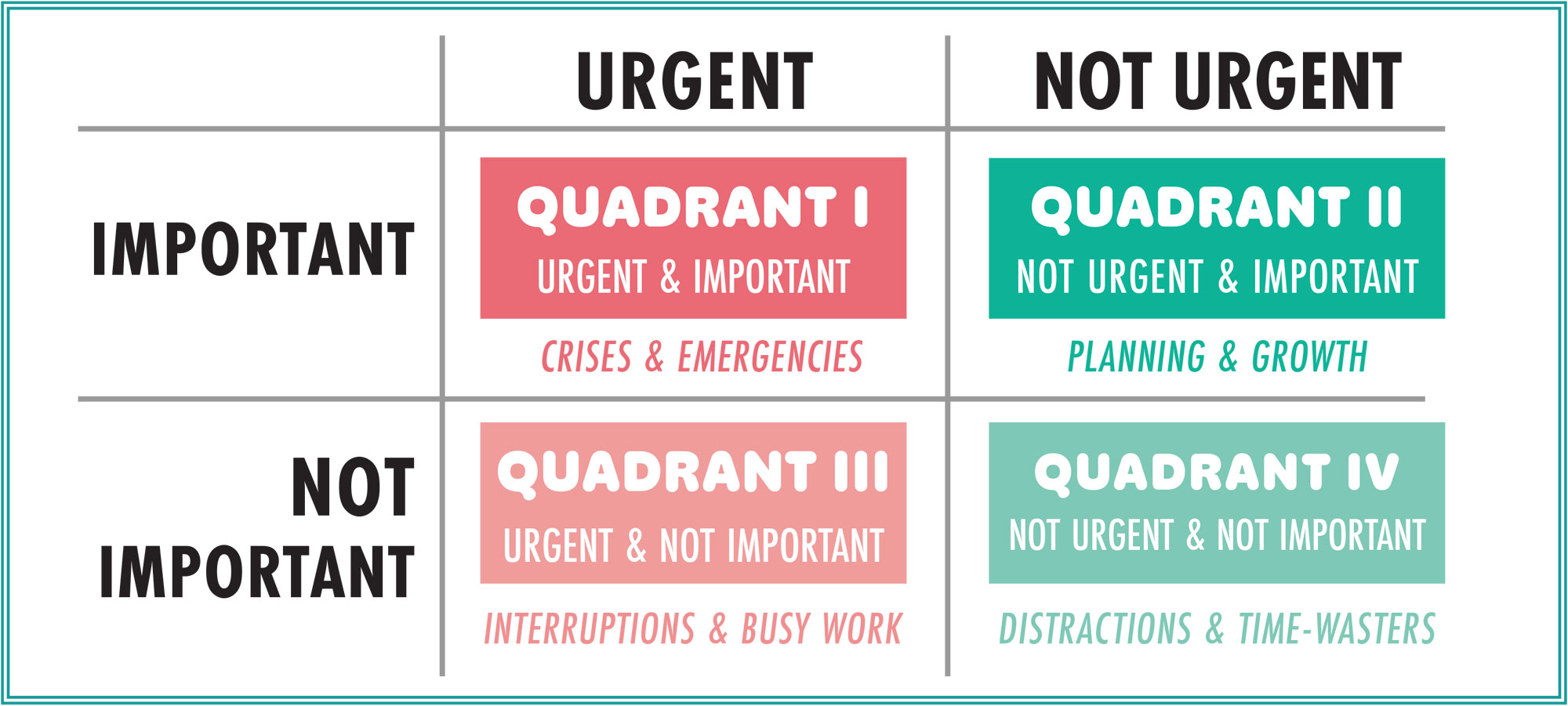
Quadrant II is where long-term success is built, but it’s also the easiest to ignore. Nothing here is screaming for your attention—there’s no immediate consequence if you skip it today, tomorrow or even this month. But over time, neglecting this quadrant creates more emergencies, more stress and more burnout. When owners say they feel stuck or overwhelmed, it’s usually because Quadrant II keeps getting pushed aside.
Then there’s Quadrant III, which is urgent but not important. This one is sneaky. These tasks feel pressing, but they don’t actually move your business forward. It looks like answering every phone call yourself even when you’re deep in payroll or scheduling. It shows up as allowing walk-in tours during peak daycare drop-off hours or jumping in to handle minor issues your team could manage just fine.
Quadrant III keeps you busy but not effective. It trains your staff to rely on you for everything and pulls you away from leadership-level work. The solution here isn’t working harder; it’s delegating, training and trusting your systems so you’re not constantly dragged back into the weeds.
Finally, there’s Quadrant IV, the not urgent and not important zone. This is where time quietly disappears. Scrolling social media with no business goal, obsessing over competitors instead of improving your own operation, or reorganizing the same supply area over and over because it feels productive. Everyone ends up here occasionally, and that’s human. The danger presents itself when it becomes a habit.
For pet resort owners, the real goal is to spend more time in Quadrant II. This is where burnout decreases, teams get stronger, clients stay longer and revenue grows without constant chaos. Projects like improving your website’s ability to convert visitors, mapping out a client retention plan, holding monthly team development meetings, or automating bookings and payments all live here. These aren’t emergencies, but they’re the reason your business eventually feels easier to run.
Using Covey’s matrix doesn’t require a massive overhaul. You can start by paying attention to how you actually spend your day, then begin scheduling Quadrant II work intentionally, treating it like an appointment instead of an afterthought. Delegate Quadrant III tasks to staff members, and be honest about how often you drift into Quadrant IV.
If you want a pet resort that feels less chaotic and more controlled, Quadrant II is the place to live. It’s where clarity replaces stress, where growth becomes intentional and where your business starts working for you instead of the other way around.
Fern is the founder of Overdog Digital, a digital marketing & consulting agency that helps dog daycare and boarding facilities attract, convert, and keep more customers by creating winning marketing campaigns and providing the business guidance to build momentum and spark long-term growth. Fern also has programs to train daycare staff, is a dog behavior consultant, and has a dog training business in New Jersey. He is the author of eight books and a popular speaker at national conferences and private events. To join The Dog Daycare Business Think Tank or ask a question, go to: www.facebook.com/groups/dogdaycarethinktank