



Animal Behavior

A cropped graphic showing portions of two lavender gear icons on a white background.
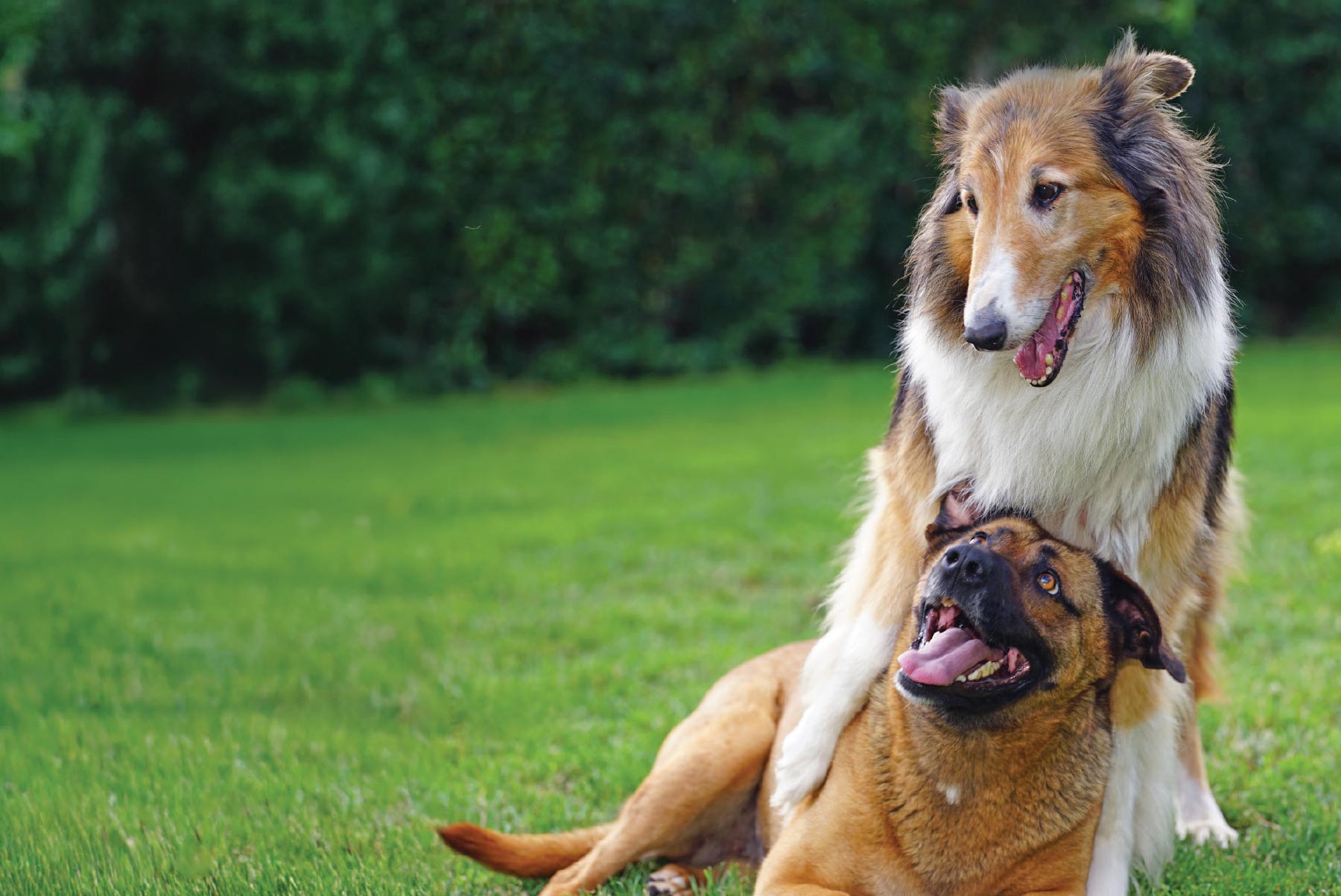
A rough collie stands over a seated German Shepherd mix in a grassy field.
Graphic text on a black background reading "WHAT DO DOGS Actually Learn AT DAYCARE?"
Decorative graphic featuring purple and lavender gear icons and a thought bubble with three dots.

By Bradley Phifer

Most dog owners view daycare as a place where their dog burns off energy, plays with other dogs and stays out of trouble while they are at work. But what they often don’t realize is that every minute at daycare influences their dog’s future behavior.

While the best daycares leave dogs better than when they arrived, in-house training can be viewed as optional or unrealistic, yet learning happens whether or not it’s planned. When we recognize the type of learning happening in our facilities, we can intentionally shape it rather than leave it to chance. What dogs learn while in our care can follow them home, just as the behaviors they practice at home can show up when they walk through our doors.

Every Experience is Learning Experience
Dogs are always learning. Even when we’re not paying attention, they’re learning which behaviors gain attention, which gain them space, which are enjoyable and which are not. They’re also learning whether new dogs are safe or dangerous, whether people set clear expectations, how to cope with frustration, how to recover from excitement, and whether calm behavior gets noticed or ignored.

In daycare, lessons are learned quickly and reinforced often. For example, when a dog routinely practices undesirable behaviors, like rushing through gates, barking for attention, jumping up, ignoring humans, mouthing or using aggression to manage social pressure, those behaviors become more proficient and frequent.

A beagle stands on its hind legs looking upward, flanked by purple gear icons and a checkmark circle.
Many behavior problems at home, like jumping, mouthing or rough play, come from dogs practicing over-aroused behaviors at daycare, and vice versa.
Similarly, when dogs routinely practice desirable behaviors, such as waiting to be released at gates, sitting for attention, responding to cues during play, settling after play and following a handler’s instructions, those behaviors can become equally reliable.

That’s why your team’s habits matter so much. Sometimes, without meaning to, we’re teaching lessons that will stick with a dog for life. Facilities that don’t incorporate training principles are still teaching—they’re just letting the environment decide the lesson.

Training Creates Predictability
Predictability is one of the strongest stress reducers for both dogs and people. When dogs learn what is expected of them—what we want them to do and when those expectations are rewarded and applied consistently—the dog no longer needs to guess what will happen next. That reduces anxiety, impulsivity and reactivity.

When team members spend time teaching the dogs what they need to know, the dogs respond more reliably. Days run more smoothly when desired behavior is rewarded and when strategies are implemented to interrupt and redirect undesired behavior. Handlers move with confidence instead of preparing to put out the next fire. Calm becomes the default rather than the exception, and we see less need for corrections and less frustration among staff.

Teaching Opportunities at Daycare
1. Regulating Arousal
Many behavior problems at home, like jumping, mouthing or rough play, come from dogs practicing over-aroused behaviors at daycare, and vice versa. If undesired behaviors are allowed to continue or are unintentionally rewarded, dogs learn that staying amped up is normal. When facilities intentionally rotate between play and rest, dogs develop self-regulation skills that can decrease unwanted behaviors both in your facility and at home.
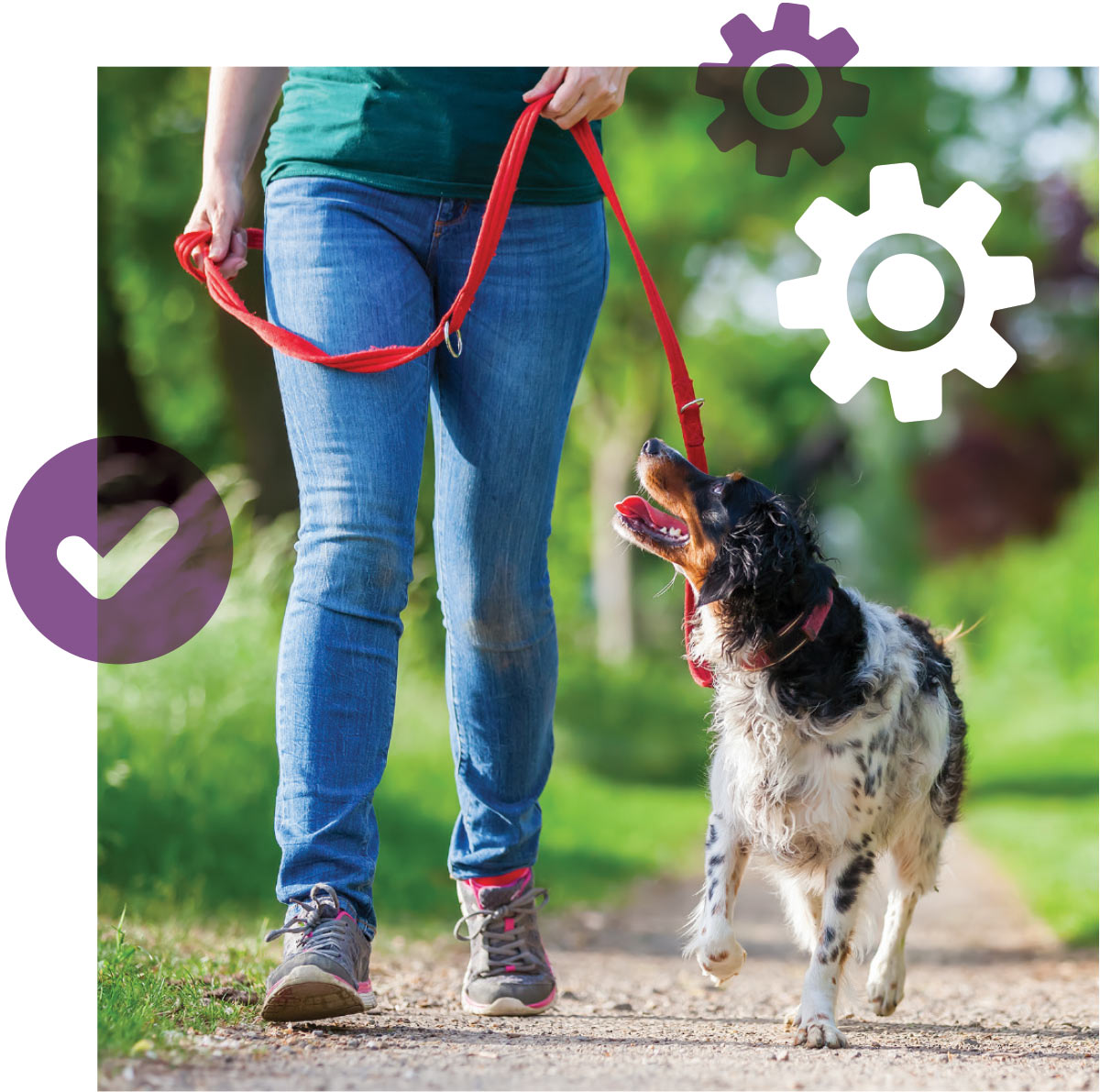
A person in jeans walks an English Setter on a red leash down a sunlit path, framed by gear and checkmark icons.
The most effective facilities incorporate training into day-to-day interactions with the dogs.
2. Dog-to-Dog Social Interaction
Play style matters. We’ve all seen what can happen when dogs are left to “work it out.” They often become fearful or intolerant of other dogs; others learn to body-slam, chase or be opportunistic with less-confident dogs. Facilities that intentionally pair dogs in groups of other like-minded dogs based on size, age, temperament or personality, and that guide their play through regular feedback from team members, help dogs develop healthier, safer social skills.
3. Responding to Human Direction
Employing consistent rules and adhering to them are just as important at daycare as they are at home. Inconsistency teaches dogs to ignore cues or try to manipulate their environment. Set consistent expectations so handlers can reward calm behavior and avoid encouraging nuisance behaviors like jumping and barking for attention. The result is that dogs listen more reliably and exhibit more desirable behaviors.
4. Conditioned Emotional Responses
This is the one that operators underestimate most. Dogs form emotional associations with new people, new dogs, confinement, noise levels, handling and separation from their owners. A well-run facility strengthens dogs’ resilience and confidence, but a chaotic one can do more harm than good. Dogs have been known to develop intolerances to other dogs, begin resource-guarding toys and exhibit other nuisance behaviors, all because the daycare environment was not properly managed.

The solution is treating daycare like a classroom, not a playground. To achieve this, operators must invest in regular staff training, develop clear operating procedures informed by canine behavior science, and ensure the whole team shares the same goals about what behaviors to encourage, prevent and reinforce.


Building Structure into Your Interactions
Training doesn’t have to be formal or time-consuming. The most effective facilities incorporate training into day-to-day interactions with the dogs. It can’t be stressed enough that consistency is everything. Training occurs when dogs wait at a gate before being released to play, when calm behavior is rewarded, when staff practice recall during exercise and when loose-leash walking is reinforced during transitions from one area to another.
purple gears
Set some training goals for you and your staff. Ideally, every dog in your care can be trained to wait at gates, sit for attention and come when called during play. Even better if they are asked to walk on a loose leash, respond to body cues from team members, rest quietly in a crate or enclosure, and take treats/toys calmly without taking a finger with them.

Also consider developing written procedures for your staff using a shared language of cues and providing ongoing employee training. Ask your staff to watch daily routines to identify what dogs are learning at your facility. Train your team to observe canine body language, distinguish between appropriate and inappropriate play, and reinforce their handling skills. Create standard procedures so every handler teaches the same way. And, let your clients know how you are reinforcing good behaviors so they understand the quality of your daycare.

Training at daycare isn’t about obedience; it’s about communication and stress reduction. Think of your daycare as a learning environment first and a play environment second. Ensure that dogs leave with more than physical or emotional exhaustion. Send them home with stronger emotional responses, more reliable skills and improved behavior. A well-run daycare produces better dogs, thankful owners and safer communities.

Bradley Phifer, CBCC-KA, CPDT-KSA, is the Executive Director of the Certification Council for Professional Dog Trainers (CCPDT) and the owner of multiple dog training, boarding, and daycare businesses. He specializes in behavior modification, professional standards, and the practical application of learning theory in real-world settings.