





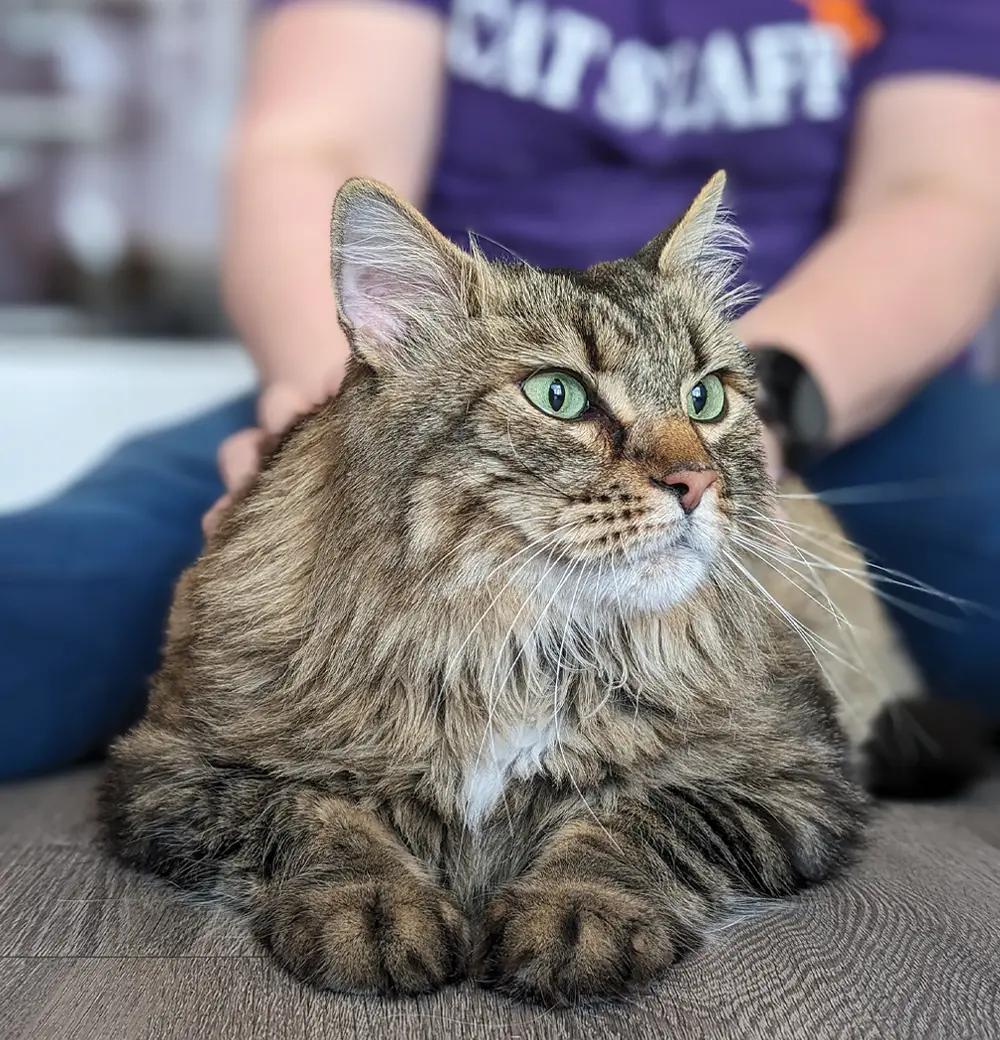

Photos provided by Happy Cat Hotel & Spa
 or decades, the prevailing belief in pet care has been that cats are solitary, territorial animals who are happiest when left alone in their familiar environment. While routine and predictability do matter to cats, modern behavioral science paints a more nuanced picture.
Comfort alone is not the same as welfare, and environmental familiarity does not replace social, cognitive and emotional needs. The following will deconstruct the myth: “Cats are best left in the same environment.”
Cats Are Not Truly “Solitary”
Research demonstrates that cats form meaningful attachments to humans. In one landmark study, it was found that a majority of cats tested displayed secure attachment styles to their caregivers, similar to patterns observed in human infants.1 This challenges the long-standing assumption that cats are emotionally independent.
Further preference testing has shown that many cats choose human social interaction over food, toys or scent stimuli.2 This proves that interaction is not incidental; it is reinforcing and rewarding for many cats.
Environments intentionally designed around feline behavior, with vertical space, hiding options, structured play and predictable human interaction, more closely align with current welfare recommendations.
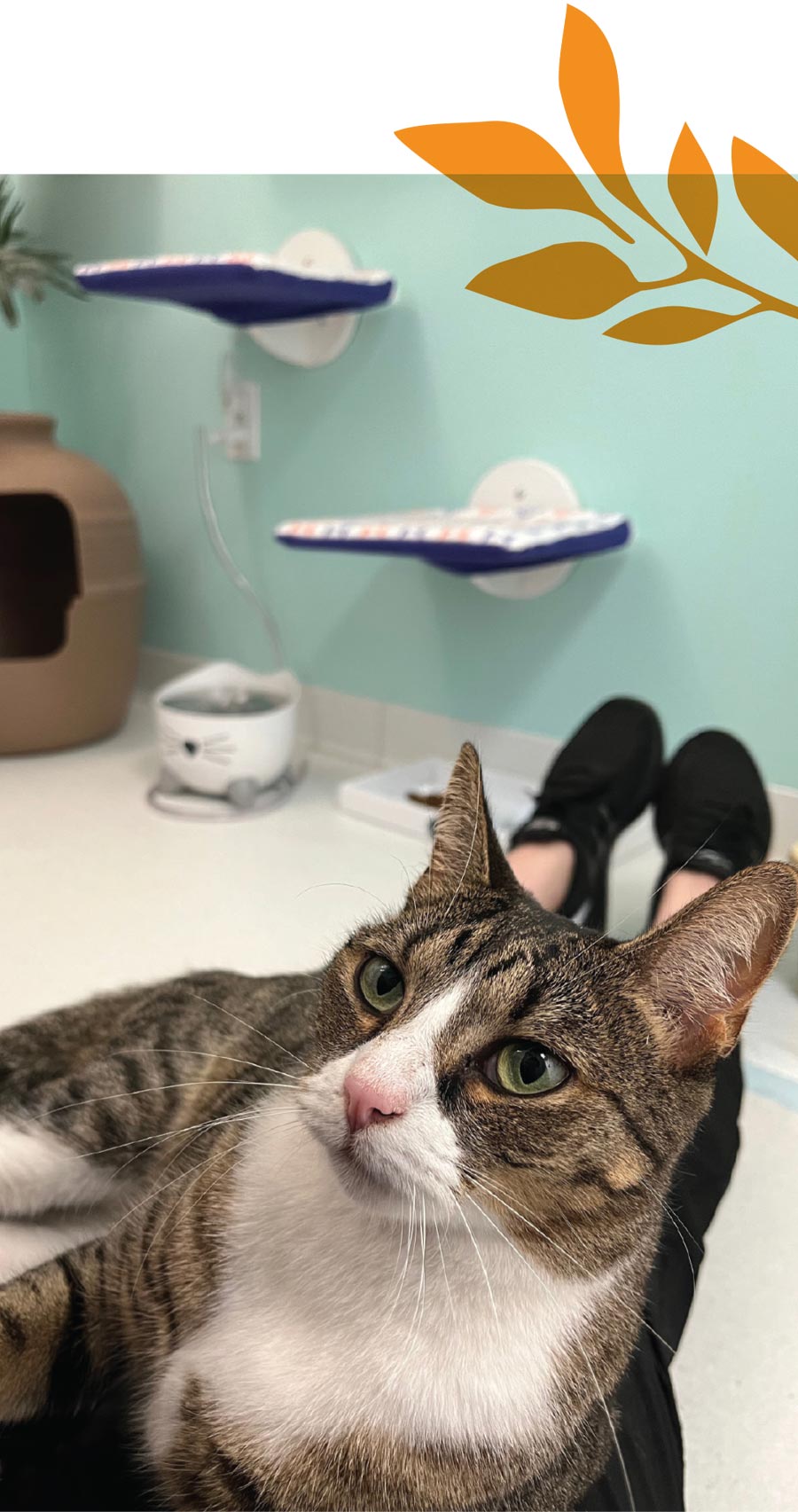
The American Association of Feline Practitioners (AAFP) and International Society of Feline Medicine (ISFM) emphasize that feline welfare depends on meeting behavioral needs, including play, predatory expression, environmental complexity and appropriate social interaction. Providing food, water and a clean litter box addresses physical survival, but it does not necessarily support emotional wellbeing.
In contrast, environments intentionally designed around feline behavior, with vertical space, hiding options, structured play and predictable human interaction, more closely align with current welfare recommendations. Often cats that may not initially appear well-adjusted do acclimate in fair time and appreciate the interactions humans offer in relatively short order.
Whether by research or experience, it is clear that environment and the enrichment within (led by human interaction)—not the cat’s core personality—has a bigger role to play than was previously thought.
A Global Shift in Understanding Feline Welfare
As a result, certain rescue and adoption agencies have developed amazing rehabilitation programs that create a deeply impactful influence over how feline orphans adapt to the human world. Often, by the time rescued cats are adopted out, they can be far accepting of human touch and interaction.
In Sweden, regulations issued under the Animal Welfare Act (SFS 2018:1192) specify that cats must be supervised regularly and not left alone for extended periods. The Swedish Board of Agriculture requires that cats be checked at least twice daily and provided appropriate care and social contact. These guidelines reflect an international shift.
The blanket belief that a cat is automatically better off at home overlooks the role that engagement, stimulation and attentive care play in long-term wellbeing.
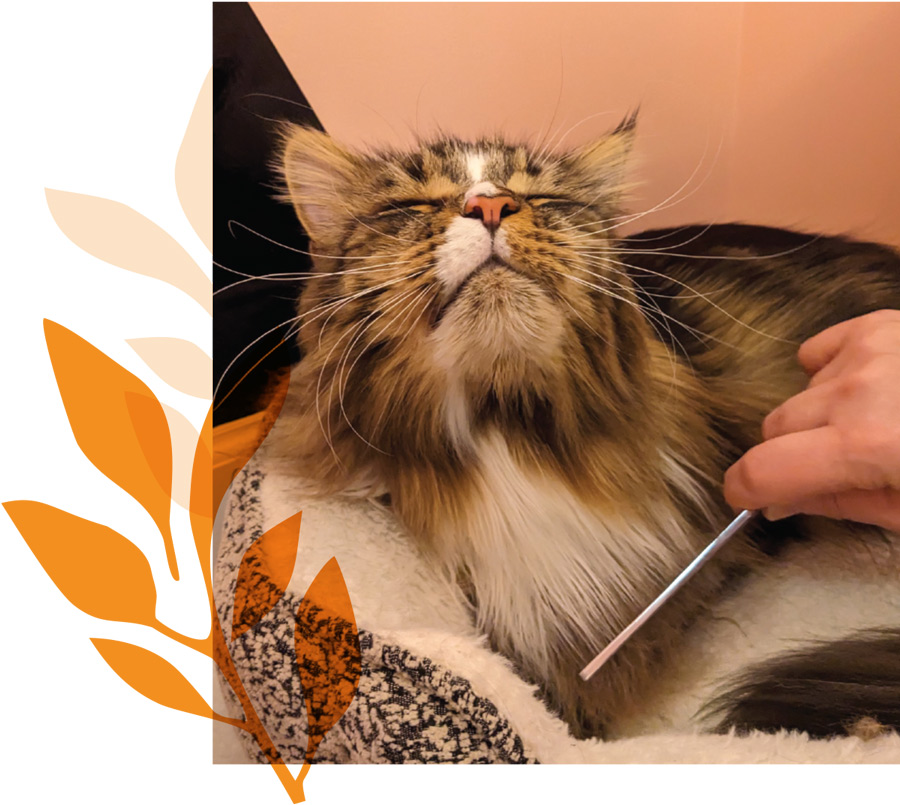
Professional boarding and daycare environments, when thoughtfully designed and staffed by trained caregivers, can address several key components of feline welfare:
Not every cat responds identically to new settings, and individualized assessment remains essential. However, the blanket belief that a cat is automatically better off at home overlooks the role that engagement, stimulation and attentive care play in long-term wellbeing.
As our knowledge of feline behavior continues to expand, so too should the conversation around what constitutes optimal care. Familiarity matters; but connection, enrichment and attentive supervision matter just as much.
When considering the impact the environment has on cats, it’s clear to see that the sentiment, “Cats are best left in the same environment,” is more about the fear of new ideas than the cat’s fear of change.
Happy Cat Hotel & Spa is a pioneering concept dedicated exclusively to feline boarding and grooming. Founded in 2014, it has been featured in Pet Boarding & Day Care Magazine, Catster, WSJ, Entrepreneur, and named the “World’s Greatest Cat Hotel.” Since launching its franchise program in 2020, the brand has expanded to 19 units open and in development across the United States. Through education, design innovation, and franchise development, Happy Cat continues to lead the movement toward elevated, cat-only hospitality nationwide and is redefining what professional pet care can look like in a historically dog-dominated industry.
- Vitale, K., Behnke, A., Udell, M. (2019). Attachment bonds between domestic cats and humans. Current Biology, Volume 29, Issue 18, R864 – R865. https://www.cell.com/current-biology/fulltext/S0960-9822(19)31086-3
- Vitale Shreve, K., Udell, M. (2015). What’s inside your cat’s head? A review of cat (Felis silvestris catus) cognition research past, present and future. Animal cognition, 18(6), 1195–1206.