








Staff
Barkleigh Productions, Inc.
Rebecca Shipman
Laura Pennington
Brandi Aurelio
Carlee Kubistek
Luke Dumberth
Todd Shelly
Gwen Shelly
Adam Lohr
James Severs
Karin Grottola
Evan Gummo
CONTACT
General: (717) 691-3388
Editorial: rebecca@barkleigh.com
Advertising: james@barkleigh.com
May / June 2026

16
50

Business
Facility
Think Tank
Industry News
- Aerapy Animal Health53
- Alpha Tech Pet41
- Alpha Tech Pet64
- BackYard Pet Supplies11
- Barkleigh Store – Boarding Kennels: The Design Process44
- Barkleigh Store – Kage Kard Holder55
- Barkleigh Store – Kennel Sales Slips52
- BarkPark39
- Best Friends Pet Care9
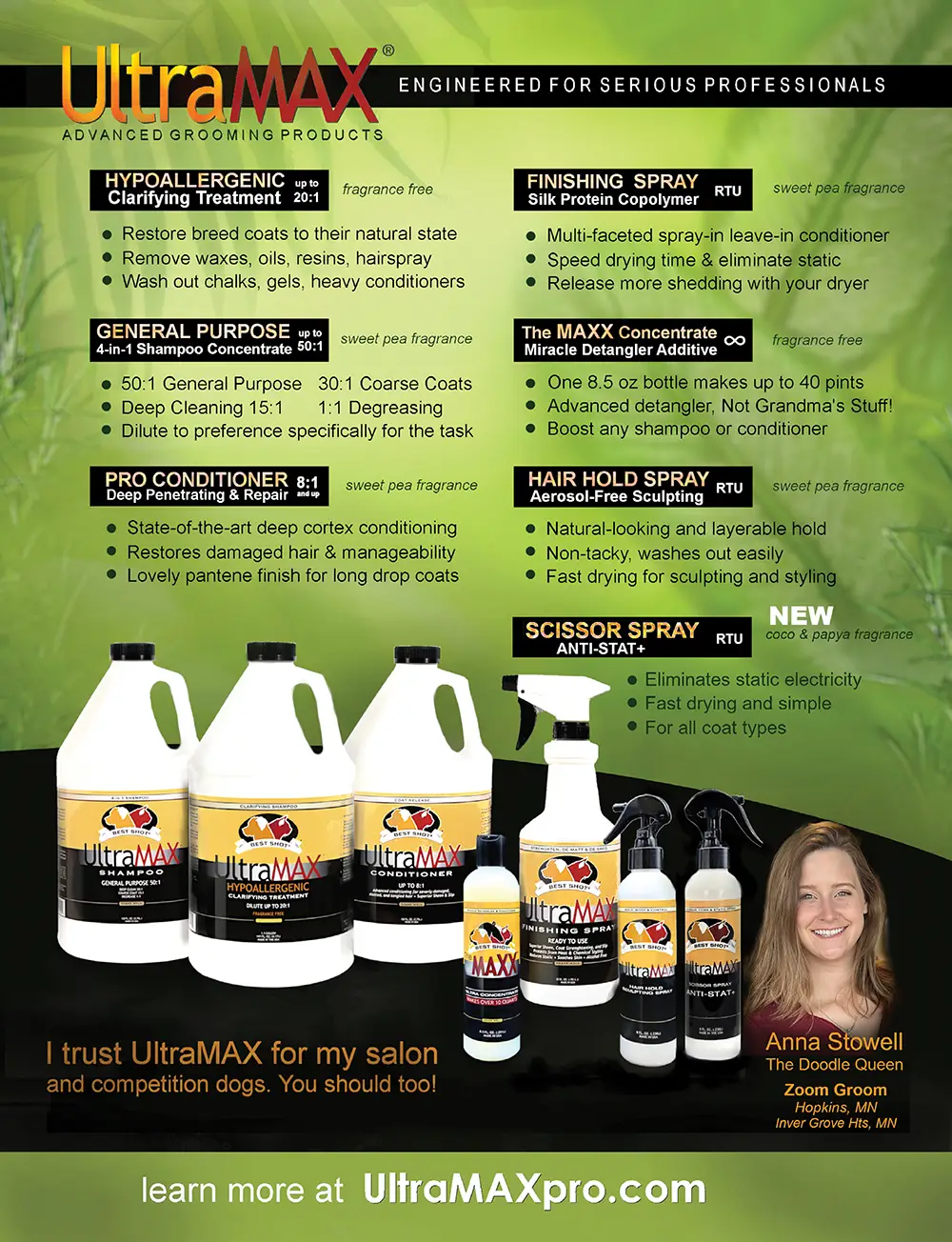
- Best Shot Pet – UltraMAX49
- Business Insurers of the Carolinas42
- BusyPaws2
- CleanWise51
- Cosmos Bathing Systems36
- Direct Animal Products57
- Eckel Noise Control Technologies58
- Electric Cleaner Company34
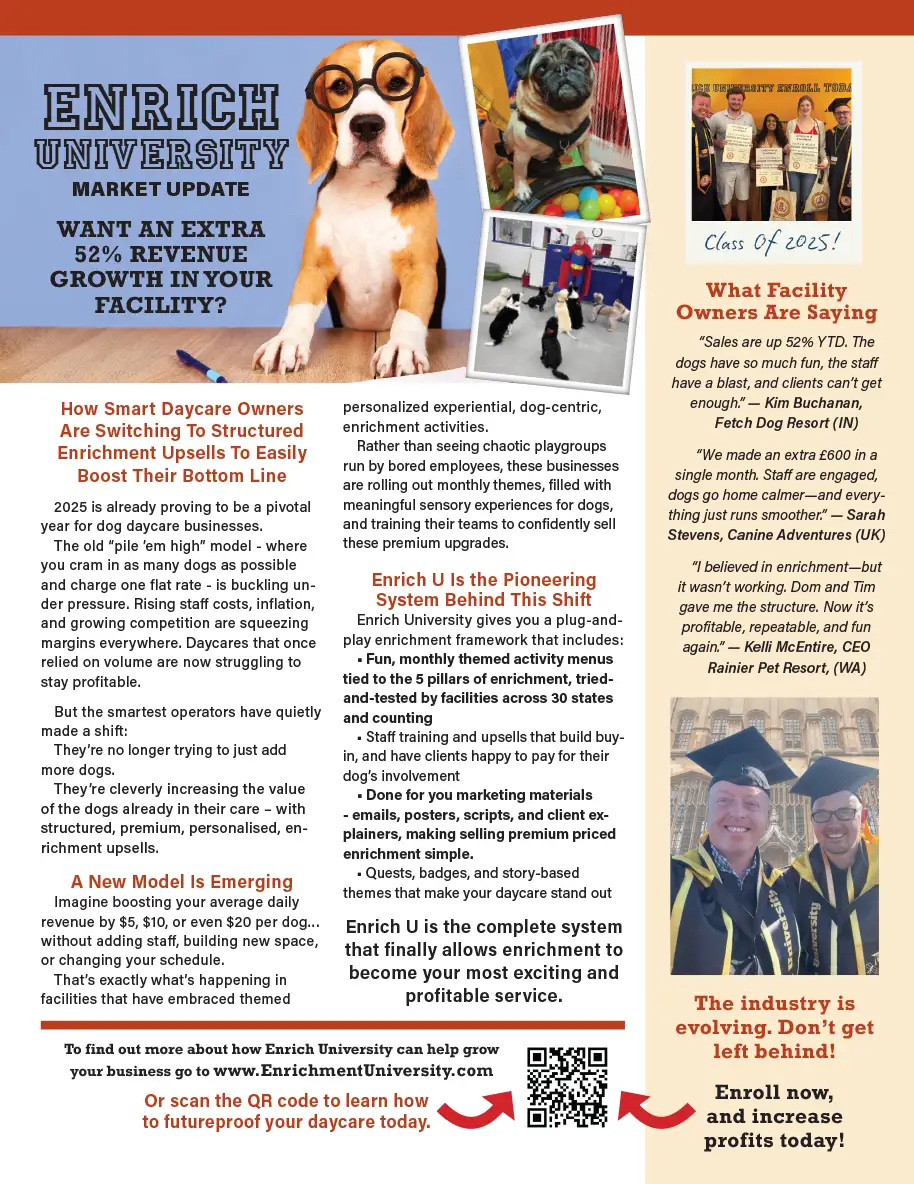
- Enrichment University27
- First Financial Bank21
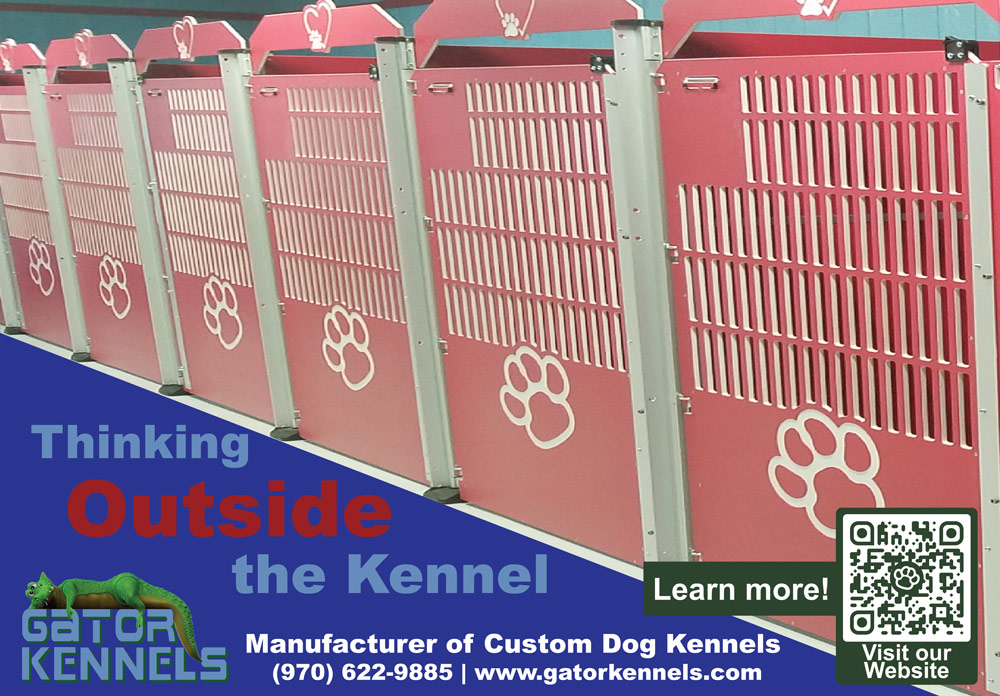
- Gator Kennels14
- Governor Insurance Agency29
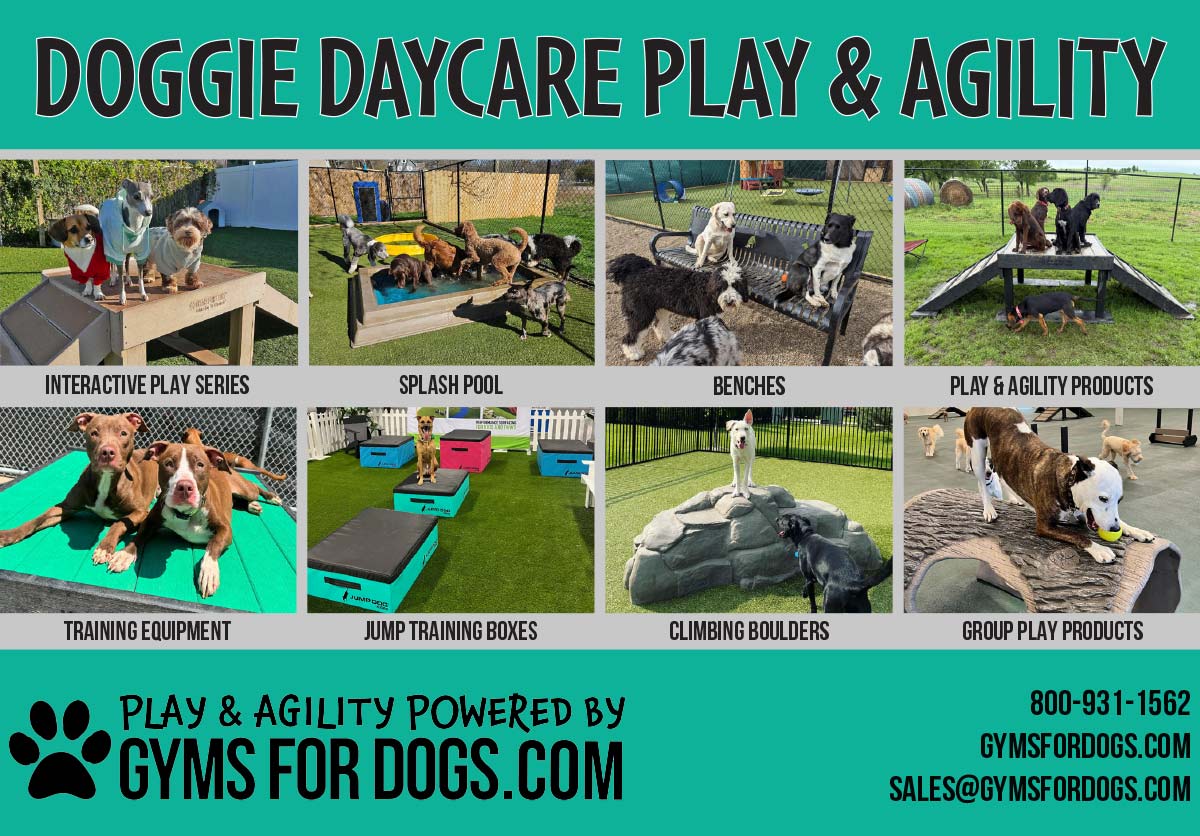
- Gyms for Dogs19
- K9 Grass by ForeverLawn7
- Kuranda Pro3
- Midmark5
- Natura Turf Pro20
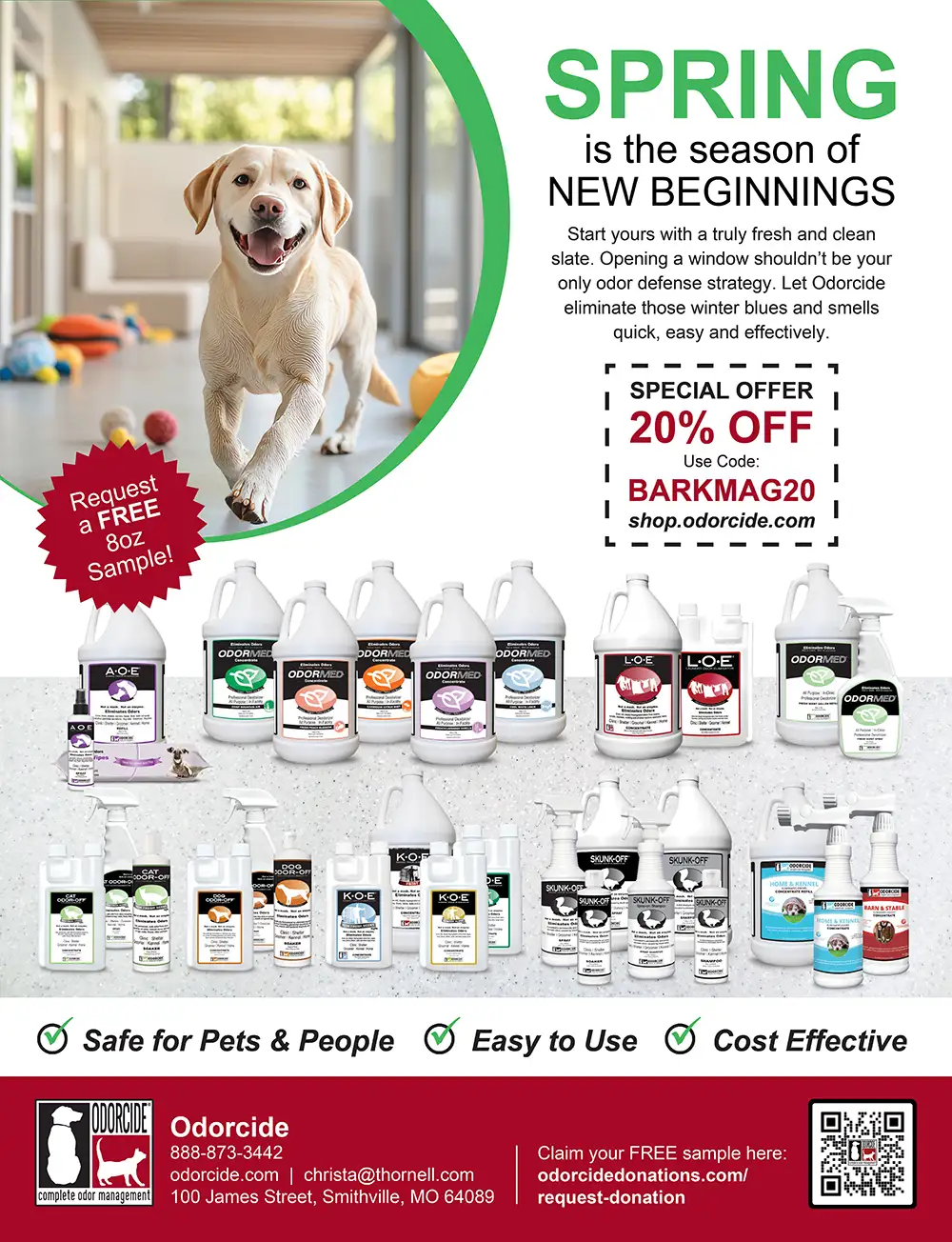
- Odorcide45
- Online Doggy35
- Outstanding Pet Care18
- Paragon School of Pet Grooming12
- Pet Boarding and Daycare Podcast62
- Pet Business Marketing15
- Pet Business Marketing26
- Pet Vet Sales25
- Pet-Shield54
- PetBizInsurance.com30
- PetLift61
- Poly Pet Tubs40
- Presidio Custom Kennels8
- Professional Animal Care Certification Council59
- Professional Pet Boarding Certification10
- Puppy Playground13
- Rescue Disinfectants17
- Snyder Manufacturing Company43
- Stone Mountain Pet Products24
- World Pet Association | SuperZooDigital
- Tidy Paws31
- Turnkey, Inc.23
- Wag’n Tails63



































f you own a boarding facility or dog daycare, training may not be your primary focus. You provide a safe, supervised space where dogs can socialize, exercise and stay while their owners are away. But in boarding and daycare environments, dog behavior determines everything: group safety, staff workload, the vibe of the facility, client retention and your bottom line.
As more owners look for professional help with their dog’s training, partnerships with certified professional trainers can strengthen your business model by increasing client loyalty, supporting dogs and your team more effectively, and generating additional revenue.
Behavior problems cost money in less obvious ways, too. For example, extended conversations during drop-off and pick-up consume staff time, difficult dogs can drain your team’s energy or even increase staff turnover, and owners who feel embarrassed about their dog’s behavior often quietly downgrade or cancel services.

You refer clients with challenging dogs to a trainer you trust. In return, the trainer will refer clients back to you because of the trusted relationship.

You can do this simply by leveraging the dogs already in your building who can most likely benefit from additional training. For many facilities, that alone justifies partnering with or hiring a certified professional trainer.
The boarding and daycare environment can intensify problem behavior. High arousal, resource guarding, fear-based reactions and underdeveloped social skills can escalate quickly if not managed carefully. A trainer can help create structure around these factors by developing group-introduction protocols, creating training plans for dogs that need closer supervision and teaching your staff to spot early stress signals before situations get worse.
With improved systems, teams depend less on physical intervention and focus more on prevention and skill development. The outcome is fewer incidents, injuries, insurance claims and emotional burnout. When your team feels capable and supported in managing behavior, confidence goes up, turnover goes down and the overall culture of the facility improves.
Remember, your referral is an endorsement; if you send a client to a trainer who makes their dog worse or uses harmful, outdated or aversive methods, your name is associated with that outcome.
A trainer can also provide hands-on staff training on canine body language, managing playgroups, intervention techniques and safe handling practices. Equally important, they can assist in developing and improving standard operating procedures for group introductions, red-flag behaviors, escalation points, reintegration strategies and incident reporting. Having well-defined SOPs will promote consistency among your team.
A competent trainer will focus on environmental management, emotional wellbeing and individual training plans that prioritize positive reinforcement, skill development and reinforcing appropriate behavior. Remember, your referral is an endorsement; if you send a client to a trainer who makes their dog worse or uses harmful, outdated or aversive methods, your name is associated with that outcome.

Observe them train a dog, either through a hands-on demonstration or a video of them working with a client’s dog. Notice how the dog reacts. Does the dog appear relaxed and engaged, or tense? Look for loose body language, active engagement and a dog that is thinking rather than just obeying.
Observe them train a dog, either through a hands-on demonstration or a video of them working with a client’s dog. Notice how the dog reacts. Does the dog appear relaxed and engaged, or tense? Look for loose body language, active engagement and a dog that is thinking rather than just obeying.
Also observe the trainer’s process and timing. Are they setting the dog up to succeed or only correcting after mistakes? When the dog struggles, do they adjust the environment or break the task into simpler steps? Does the dog choose to stay engaged with the trainer after the lesson? Even in a short session, you should see measurable progress. It may be small, but it should be visible.
Checking references is always a good idea. Ask local veterinarians, groomers or past clients about their experiences with this trainer, or maybe they know of other candidates. Get to know them and invite them to tour your facility. Discuss the dogs your team finds most challenging and your vision for the partnership. You want someone who listens, respects what you’ve built and sees this as an opportunity for both of you.
Introduce the trainer to your staff in a clear and organized way. Agree on language, cues, reinforcement methods and strategies for managing escalations. Dogs should consistently receive the same communication and expectations, whether they are in training or playing in a group.
When you hire a certified professional dog trainer, promote it. Make sure it’s visible on your website, in your marketing materials and during client conversations. Position your facility as more than just a place to drop off a dog. Make it a place where dogs learn, build skills and improve their behavior.
The bottom line is, adding professional training services doesn’t alter your business model; it boosts the overall facility. Dogs become more engaged and easier to manage, staff confidence increases, clients stay longer and revenue grows.
Training might not be your primary service, but behavior impacts every part of your business. Facilities that understand this and take a proactive approach will outperform those that see behavior as someone else’s issue.
Bradley Phifer, CBCC-KA, CPDT-KSA, is the Executive Director of the Certification Council for Professional Dog Trainers (CCPDT) and the owner of multiple dog training, boarding, and daycare businesses. He specializes in behavior modification, professional standards, and the practical application of learning theory in real-world settings.
Business





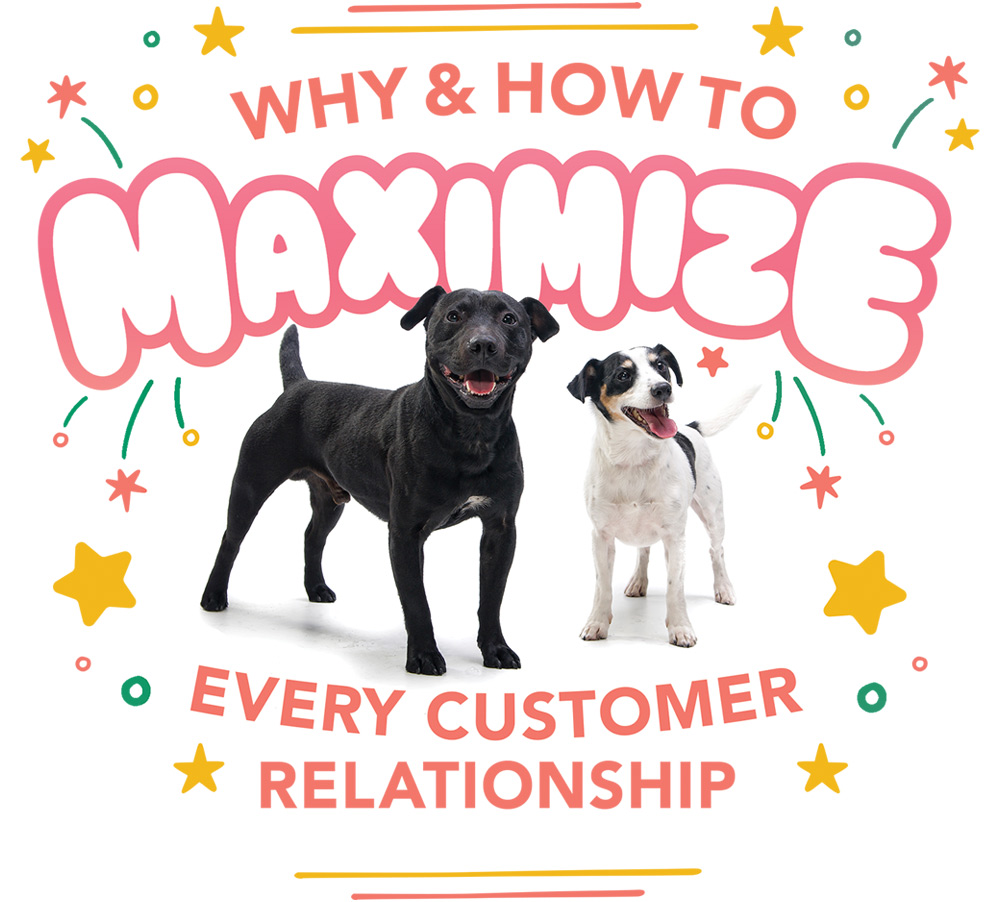
 ost pet care businesses invest significantly in acquiring new customers—digital campaigns, printed materials, community outreach, special events—all to convince pet parents to make that initial booking. Unfortunately, many facilities treat this reservation as the finish line, when it’s really just the beginning.
Lifetime value depends on what happens next. The full opportunity is turning as many of those first-time bookings into long-term relationships. If handled with intention, a single visit can grow into a partnership that supports your business for years to come. But how?
It doesn’t usually happen on its own. Creating a sustained customer relationship requires thoughtful communication, planning and strategy. The following explores the systems that make it possible.
Ideally, this means offering a combination of boarding, daycare, grooming and training. Most pets need several (or all) of these services throughout their lives. If a client can’t get them from you, they’ll get them from your competitors—putting the whole relationship at risk.
Multi-service revenue accumulates quickly because it increases frequency, not just reservation value. Let’s say you have a client who boards their labradoodle once or twice a year. On its own, that may not add up to significant annual revenue; however, labradoodles (and many other breeds) need regular grooming as often as every four to eight weeks. That can represent sizable annual revenue even before factoring in boarding, daycare, training, add-ons or anything else they buy from you.
If you don’t offer multiple services, it may be time to consider it. A boarding business already has most of the elements in place: the physical building, trained staff, play areas and an established client base. For relatively little additional investment, the returns can be exponential. Your client pool gets deeper, your net wider and each client more valuable overall.
Diversified services are only part of the equation. The next step is ensuring those services become habitual, positioning your business as the automatic choice for future bookings.
Unfortunately, many pet care businesses operate reactively. They serve clients as they come in, then wait idly until their next visit…if there is one.
Like anyone, pet parents have busy lives. They might forget to book their dog’s next groom or put off their pet’s holiday boarding reservation until it’s too late. Or they might see your competitor’s ad enough times they decide to try something new.
The best facilities play an active role, continuously cultivating the client relationship. This doesn’t have to mean going overboard. The most effective rebooking strategies require simple but meaningful shifts, including:
- Grooming: Think about the last time you got a haircut. At checkout, they probably asked: “Would you like to schedule your next appointment now?” They might have even offered a discount or other incentive if you booked the next visit on the spot. Are you doing the same in your pet care business? If not, it’s a great way to secure grooming business and support ongoing client relationships.
- Daycare Packages: Many times, the best daycare customers are those who utilize multi-day packages. These are important clients who do a lot of heavy lifting when it comes to your off-season revenue. Once they’re running low on days, inform them and ask if they’d like to book their next package ahead of time.
- Holiday Boarding: Given recent travel trends, it’s no longer safe to assume you’ll sell out during holiday periods. It’s far better to reach out to existing clients weeks in advance of high-demand seasons. Ensure they know you want their pet to have a great place to spend the holiday and offer to save them a space. This helps clients feel valued while encouraging early booking.
- Reminder Campaigns: If a client hasn’t been to your facility in a while, it’s wise to strategically reach out. Send an email, text, or call to let them know you miss their pet and offer to book a future service. You might extend a coupon or invite them to your next special event. Even if they don’t take you up on it, you’ve repositioned yourself at the front of their minds.

Given recent travel trends, it’s no longer safe to assume you’ll sell out during holiday periods. It’s far better to reach out to existing clients weeks in advance of high-demand seasons.
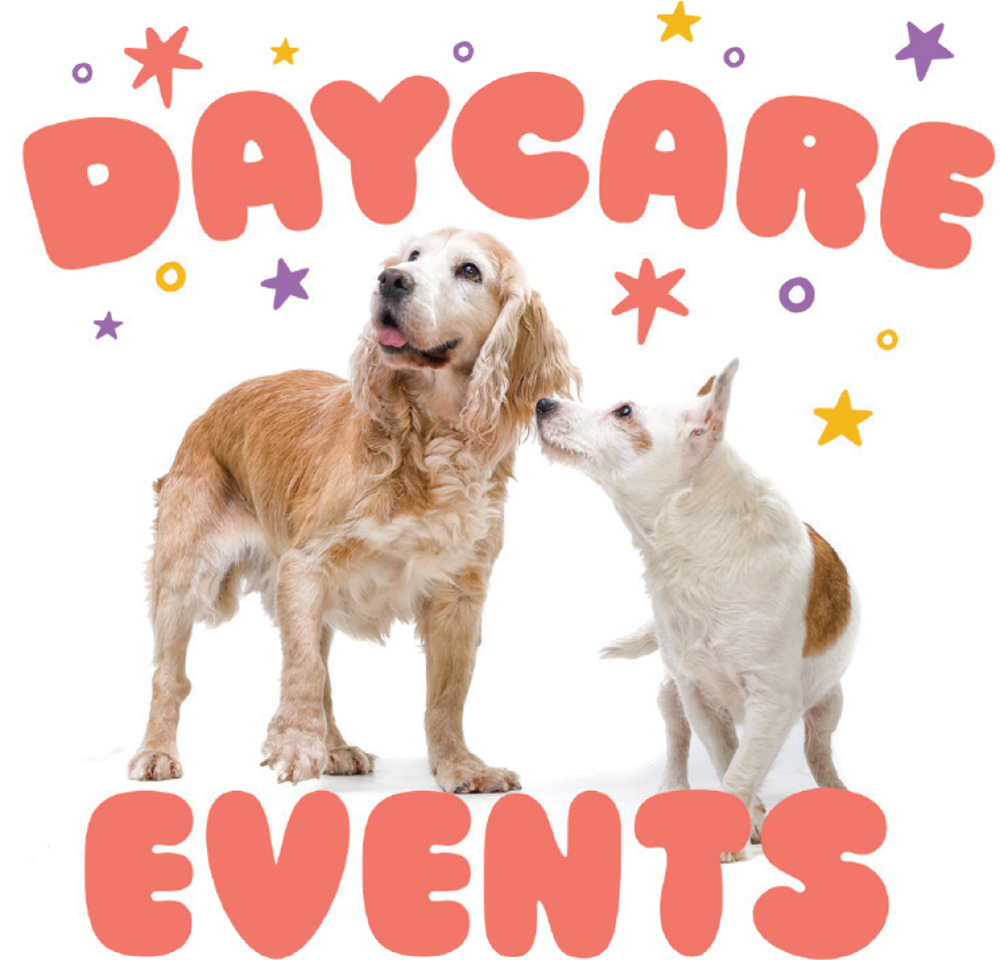
Here are some examples of high-impact, crowd-pleasing daycare events:
- Halloween costume contests
- Winter holiday photo portraits
- Valentine’s Day treat parties
- St. Patrick’s Day parties
- Easter egg hunts
- Mother’s/Father’s Day parties
- Summer splash parties
- Breed-specific parties
- “Ice cream” parties
- Paw print craft parties
Events like these reward frequent daycare users by keeping things fresh, interesting and exciting. At the same time, it entices occasional users—and first-time clients—to sign up before they miss out. Plus, a full party calendar ensures a continuous stream of highly shareable photos and content to set you up for even more successful events next year.
Events are tons of fun for dogs but even more fun for pet parents. From cute photos to take-home gifts and treats, it gives your customers a window into the wonderful, enriching experience you provide. It helps them feel involved and shows them why your resort is the place to be for pets—not just another forgettable, faceless company.
- Halloween costume contests
- Winter holiday photo portraits
- Valentine’s Day treat parties
- St. Patrick’s Day parties
- Easter egg hunts
- Mother’s/Father’s
- Day parties
- Summer splash parties
- Breed-specific parties
- “Ice cream” parties
- Paw print craft parties
VIP clients can be worth several thousand to tens of thousands each year, especially if strategically nurtured. The first key to making the most of these special relationships is recognizing them from the beginning. Often, a pet parent might drop “clues” as early as the first phone call, such as:
- Frequent business travel
- Mention of a vacation home
- Puppies (incredibly valuable opportunities for multi-service, long-term use)
- High-maintenance breeds that need frequent grooming
- History of frequent daycare use
- Families with two or more dogs
- “Money is no object, he/she is my baby” comments
Astute facilities go out of their way to engage these clients with intent. For example, these are the pet parents you might call first ahead of the holiday season to ensure your limited space goes to the most valuable reservations.
Whether they’re an all-star VIP or a once-a-year vacationer, the question isn’t how much value a given customer has—it’s whether your business is making the most of what’s already in front of it. Every existing client is a pet parent who has already chosen you. At least once, they’ve decided you’re worthy of their trust. Now, you need to make sure they choose you again and again.
As the summer season gears up, it’s time to look at your existing clients and ask: How can we serve them even better? How can we bring them back sooner? How can we strengthen the relationships we’ve already planted? With strategies like these, you’re much closer to the answers—and harvesting the fruits of your labor.
Laura Laaman is president of Outstanding Pet Care. If you’re interested in the strategies discussed in this article and want to grow your revenue with our proven, guaranteed services, schedule a consultation by calling 1-888-836-8740 or visiting www.outstandingpetcare.com/contact
Business


By Susan Briggs
 ere’s the good news: You don’t need to be a “numbers person” to take control. You just need the right few numbers—the ones that truly guide your success. Those numbers are called KPIs, and they’re your secret weapon for turning financial goals into measurable, achievable results.
- Are we on track to meet our 2026 financial goals?
- Why isn’t profit growing even though revenue is?
- What needs attention right now, not six months from now?
If seeing the word “financials” makes you want to skip right over an article, you’re not alone. Many pet care business owners work incredibly hard but still aren’t sure why their owner pay is too low, profits are unpredictable or growth feels stuck.
To grow profits, you also need lead measures—the actions and behaviors today that predict tomorrow’s results. Think of them like this: Lag = the scoreboard (you can’t change it) and Lead = the plays you call (you can change these). Both are essential, but only lead measures help you fix problems before they become expensive.
Let’s say you want to increase bath revenue in 2026. That’s a great goal, but revenue is a lag measure. You don’t influence it directly. What you can influence are the actions that generate more bath sales; your lead measures.
- Step 1) Set the goal (your lag measure). For example, “Grow bath revenue by 30% this quarter.” It should be clear, measurable and easy to track.
- Step 2) Choose lead measures you can control. Examples for a pet resort might include percent of lodging reservations booking a bath at checkout, number of upsells per day by staff, number of social media posts promoting baths or number of clients enrolled in a recurring bath program. These measures tell you what to do, not just what happened.
- Step 3) Track both weekly. This might look like if revenue is down (lag), but your upsell rate also dropped (lead), you know exactly what to coach your team on. Or if revenue is flat but social engagement is rising, you may be building demand that will show up next week. And finally, if both lead and lag measures are trending up, you know your strategy is working—so double down.
- Step 4) Review and adjust. By the end of the quarter, your lag measure shows the outcome. Maybe you grew bath revenue by 35%—great! Now you look back at which lead measures drove the success and incorporate those into your ongoing KPI plan.
This is the magic of combining lead and lag KPIs. You stop guessing and start knowing which actions truly move your business forward.
KPIs make finances feel manageable, even if you’ve avoided numbers for years. Here’s why:

They shine a light on what matters (and nothing more). No more drowning in reports—a handful of KPIs can give you the full picture.

They make progress visible. Seeing movement—up or down—helps you feel in control instead of confused.

They support proactive decisions. Instead of, “I hope things get better,” you now say, “Here’s exactly what we’re adjusting next week.”

They reduce stress. Uncertainty is exhausting, clarity is empowering.
You started your pet business because you love animals—not spreadsheets. But you deserve a business that pays you well, supports your team and provides the stability you’ve worked so hard to build. KPIs make that possible.
- Revenue KPIs: Total revenue by service line, revenue per pet, growth by month and season
- Payroll KPIs: Payroll percentage of revenue, cost per unit (per dog, per bath, etc.)
- Capacity & Utilization: Lodging occupancy, daycare attendance vs. capacity, bathing hours booked vs. available
- Customer Behavior KPIs: Upsell percentages, conversion from inquiry to reservation
- Owner Pay & Profitability: Net operating profit margin, owner paycheck
From these, select the most important few to guide the next 90 days. Simplicity leads to action.
You started your pet business because you love animals—not spreadsheets. But you deserve a business that pays you well, supports your team and provides the stability you’ve worked so hard to build. KPIs make that possible.
They give you a way to understand your numbers without feeling overwhelmed. They help you predict your future instead of being surprised by it. And with the simple lead-and-lag structure, you always know exactly where to focus your efforts.
Start small, stay consistent and let your KPIs give you confidence in your financial success.
As Crystal Canine’s head CFO, Susan Briggs helps pet care service business owners turn financial confusion into clarity and confidence. As a fractional CFO partner, we provide financial planning, KPI dashboards, and profit-building strategies tailored to pet resorts, daycares, grooming, and training businesses. Our mission is to make financial management approachable so owners can make insight-backed decisions and grow with ease. Through memberships, templates, and expert coaching, Crystal Canine turns your numbers into a roadmap for sustainable success. Learn more and access free financial tools at www.crystalcanine.com
Business


 hen promoting your dog daycare or pet resort, the important question in marketing—and often the most ignored—is, “Why should anyone choose you?”
This is the exact same question a local dog owner asks when they see your Google listing, scroll over one of your social media posts, view your website or come across a printed advertisement: “Why should I choose you (you instead of another pet care business who offers a similar service, often at a very similar price)?”
 hen promoting your dog daycare or pet resort, the important question in marketing—and often the most ignored—is, “Why should anyone choose you?”
This is the exact same question a local dog owner asks when they see your Google listing, scroll over one of your social media posts, view your website or come across a printed advertisement: “Why should I choose you (you instead of another pet care business who offers a similar service, often at a very similar price)?”
More and more pet lovers are leaving their jobs and pursuing their pet care dreams. Add to that lots of corporate money coming into the industry, plus big-box competitors and franchises that are popping up everywhere, and attracting clients is getting harder.
So, how can you make your business appear to be the best choice?
The trick is to swim against the tide, zig when everyone else is zagging and do the opposite of the rest. This may seem contrarian—and maybe even a little scary—but it’s a well-worn path to success.
Look at how Apple dominated by doing everything different from their competitors. While other tech companies competed on specs, speed and storage, Apple focused on design, simplicity and user experience. They didn’t try to be slightly better—they tried to be meaningfully different. And customers rewarded them for it.
Doing this takes guts. But, as any industry matures and competition increases, the pressure to be different only intensifies.
This is not to say you shouldn’t model some of the traits of successful pet businesses; but remember, it’s about standing out from the competition. Focusing your efforts on having slightly cleaner kennels, installing more-expensive epoxy flooring or collecting one more certificate will not make you the obvious “stand-out” choice. Those are improvements; they are not distinctions. And in a crowded market, improvements are invisible.
Here are three practical and proven ways to ensure your business is seen as the clear, compelling choice for dog owners in your area:

The truth is, it’s far easier to build a great business serving 200 premium clients rather than 2,000 price-sensitive ones. If your prices are tight, your margins are tight. If your margins are tight, your options are tight. You can’t hire well, you can’t train properly, you can’t improve the facility without stress and you can’t market consistently. You’re always one quiet month away from panic.
Now here comes the usual line: “My town won’t support premium prices.” I’ve heard this said in wealthy suburbs and I’ve heard it said in small towns. It gets said everywhere. And it’s usually rubbish.
In most areas, nobody truly owns the top spot. Everyone’s nervously bunched in the middle, peaking at each other’s prices…which means the top is often wide open. Will you claim this top spot so you become known as the premium pet care provider in town?


So how else can you get the eyes of local dog owners on your unique services?
Well, depending on your location and demographic of your ideal client, it might be worth exploring billboard, radio or even TV advertising. Yes, this may require more investment, but if it buys more eyes on your business, then it’s a price worth paying.


I’m a huge fan of email marketing. Creating a paper-and-ink newsletter and doing more in-person events, like a behavior clinic, enrichment workshop, or even just an open house event are also great ways to cut through the noise and be different with your marketing.
Remember, how you show up to a prospect matters just as much as what you say in your advertising.
So how else can you get the eyes of local dog owners on your unique services?
Well, depending on your location and demographic of your ideal client, it might be worth exploring billboard, radio or even TV advertising. Yes, this may require more investment, but if it buys more eyes on your business, then it’s a price worth paying.
I’m a huge fan of email marketing. Creating a paper-and-ink newsletter and doing more in-person events, like a behavior clinic, enrichment workshop, or even just an open house event are also great ways to cut through the noise and be different with your marketing.
Remember, how you show up to a prospect matters just as much as what you say in your advertising.

You simply can’t operate like a functional utility service, where dogs are dropped off, picked up, then an invoice is paid. Those that stand out create reasons to visit—and visit more often. They do this by including services like:
- Dog of the week
- “Pawrents” evenings
- Seasonal showcases
- Graduation ceremonies
- An ever-changing canine curriculum
- Themed monthly enrichment experiences
- Annual awards and client appreciation events
- Charity involvement
These experiences provide wow-factor moments and real touchpoints that clients not only value but that are also story worthy, which means they’ll tell their dog-owning friends about all the exciting things you do, too.
If you are currently doing one or more of these three things that can separate your business from the ever-increasing competition, well done! You are already differentiating your business DNA. If you want to stand out more, then do more from the list.
Don’t stop there either. You could take Earl Nightingale’s advice and make a list of all the things your competitors do, then on the same page map out how you will do it differently (and better). Anything you can do differently you should try.
Believe it or not, standing out isn’t about working harder. It’s about deciding who you are—and having the courage to build your business around that decision.
In a crowded market, the safe option is to copy, but the profitable option is to be different. Choose wisely.
Dom Hodgson is known as the Pet Biz Wiz, and is widely regarded as the World’s leading pet business coach. His mission is to help pet service providers create superior customer service systems that enable them to build an impactful and profitable pet business. Dom has written 10 books and is a much in-demand speaker. You can instantly download a free copy of his latest book “How to Disnify Your Doggy Daycare Business” by going to www.petbusinessmarketing.com/daycaremagic
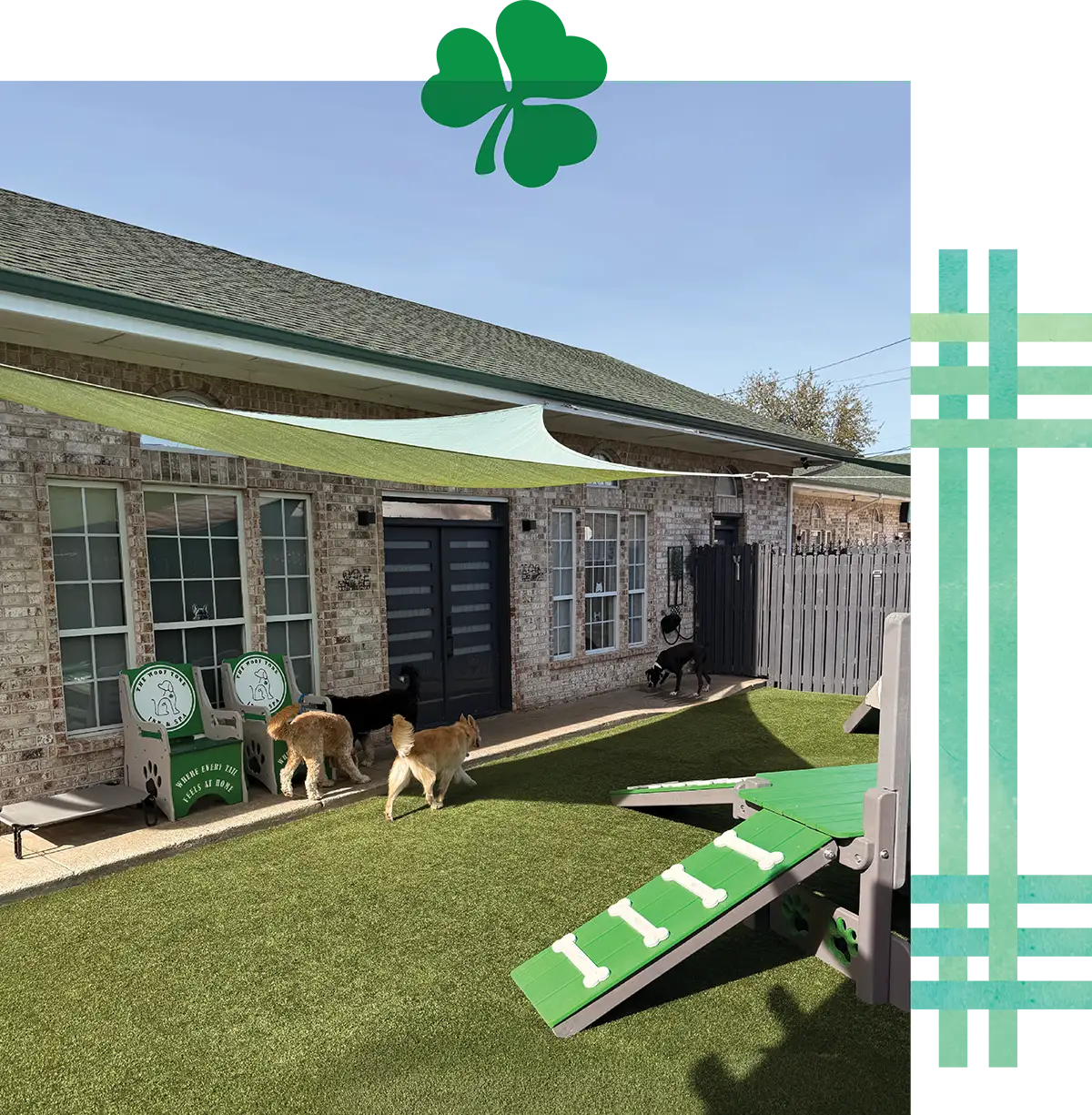
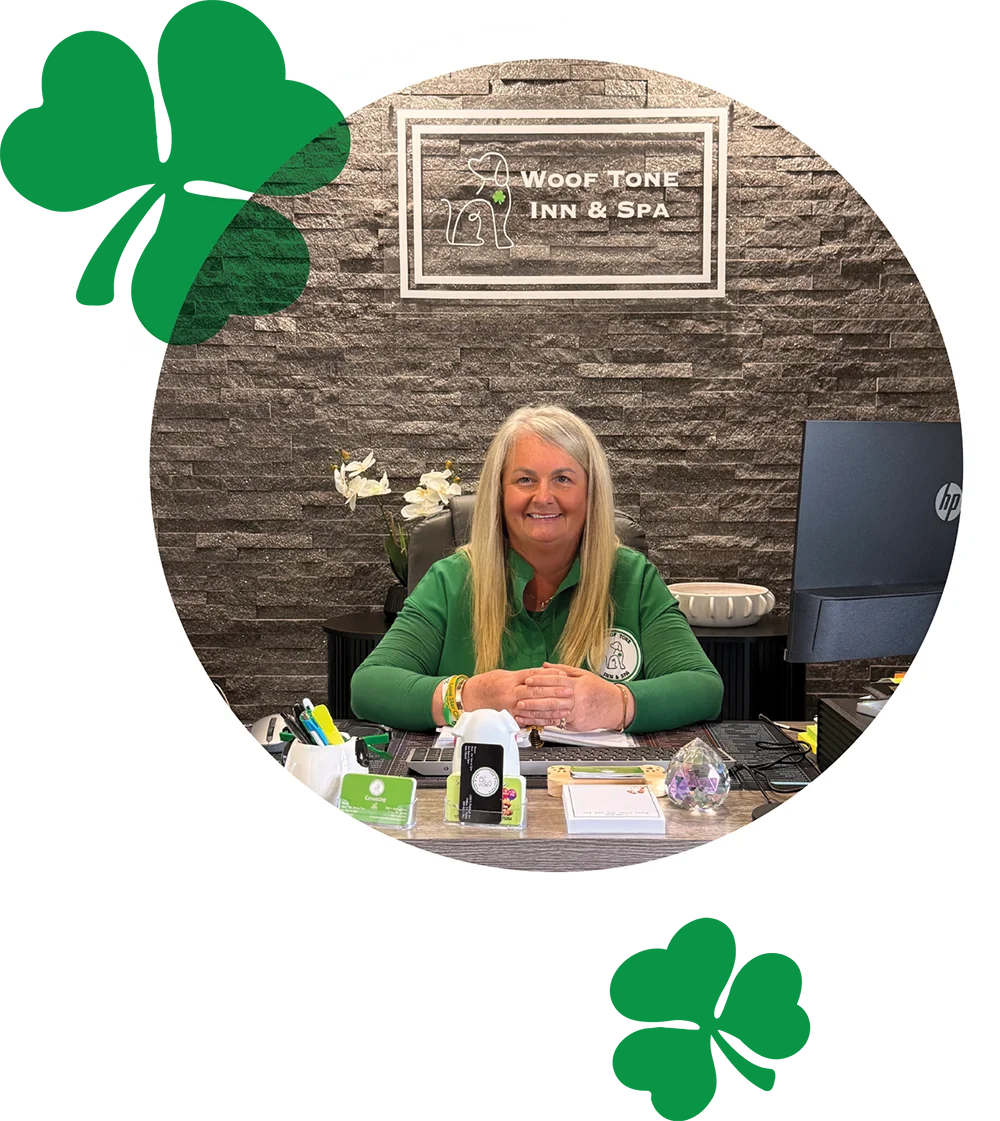

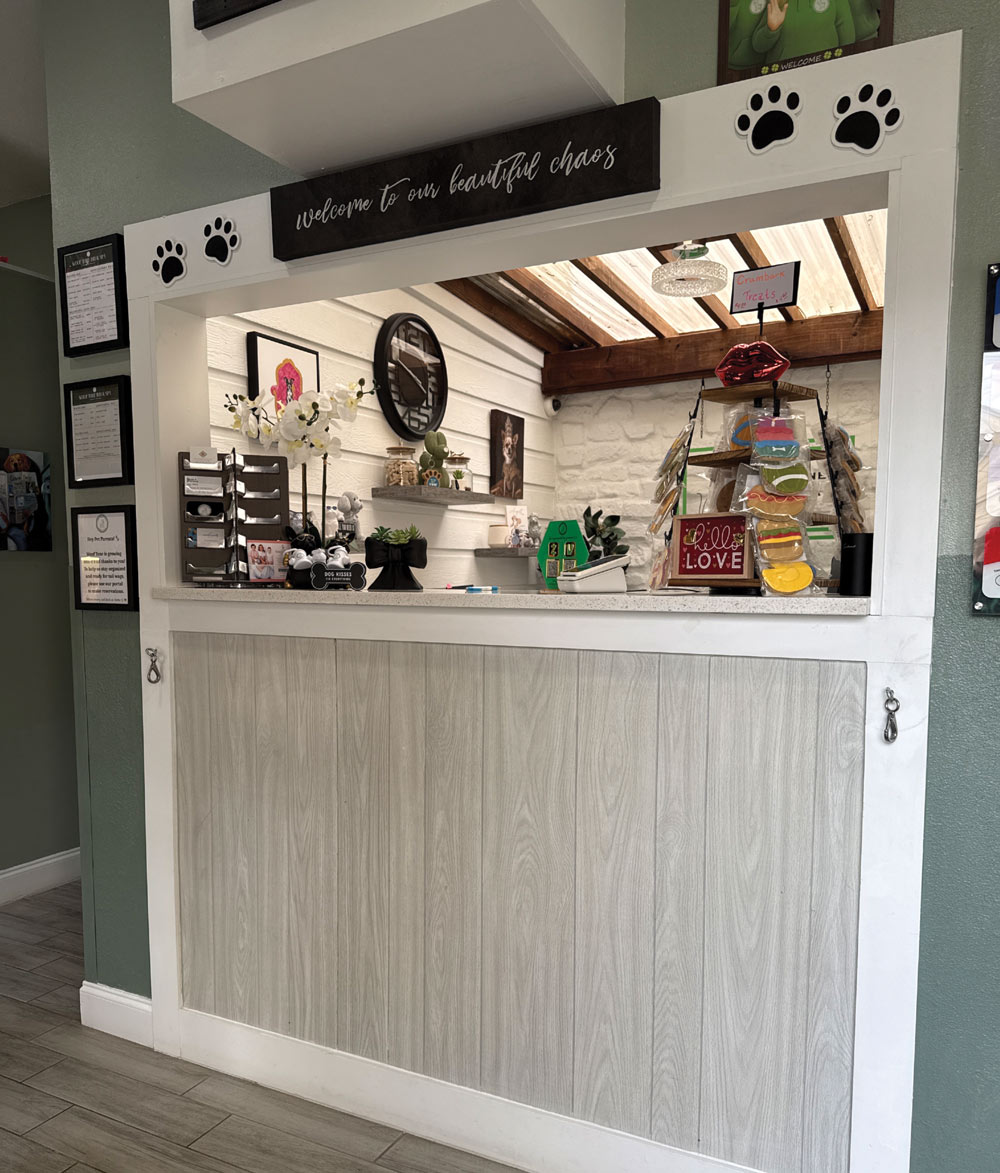
Photos provided by Woof Tone Inn & Spa
 n an industry that often measures success by square footage, pricing or how many dogs can be accommodated in a day, Woof Tone Inn & Spa in Dallas, Texas, goes by a different measurement: How does the dog feel while they’re here?
Founded by Scotland native Karen Smith, Woof Tone Inn & Spa is a boutique boarding, daycare and grooming destination that blends thoughtful design, Fear Free principles, enrichment-based care and a strong sense of community, among both their clients and their staff. Karen’s journey offers valuable insight into how vision, intention and people-first leadership can fuel sustainable success.
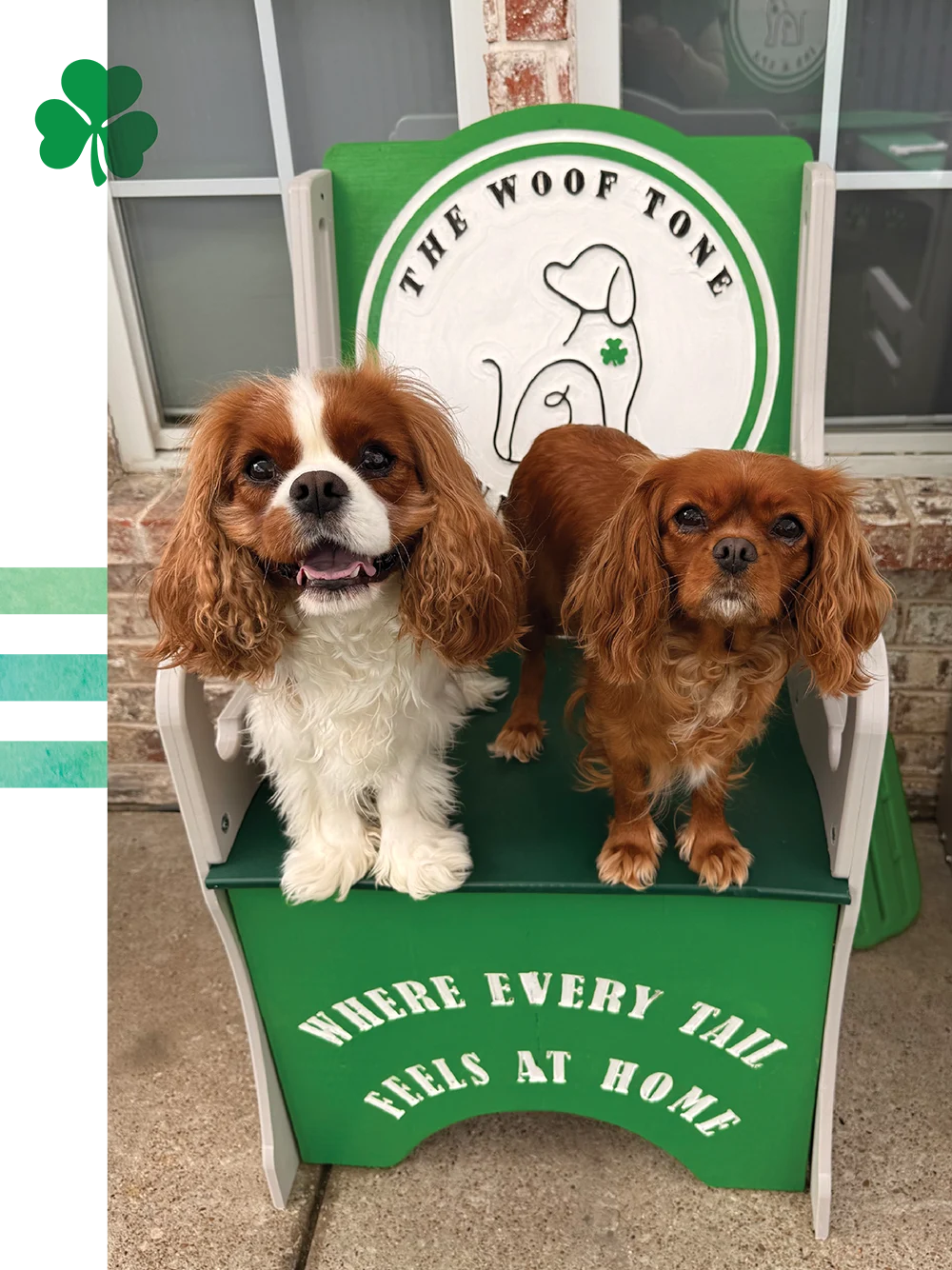
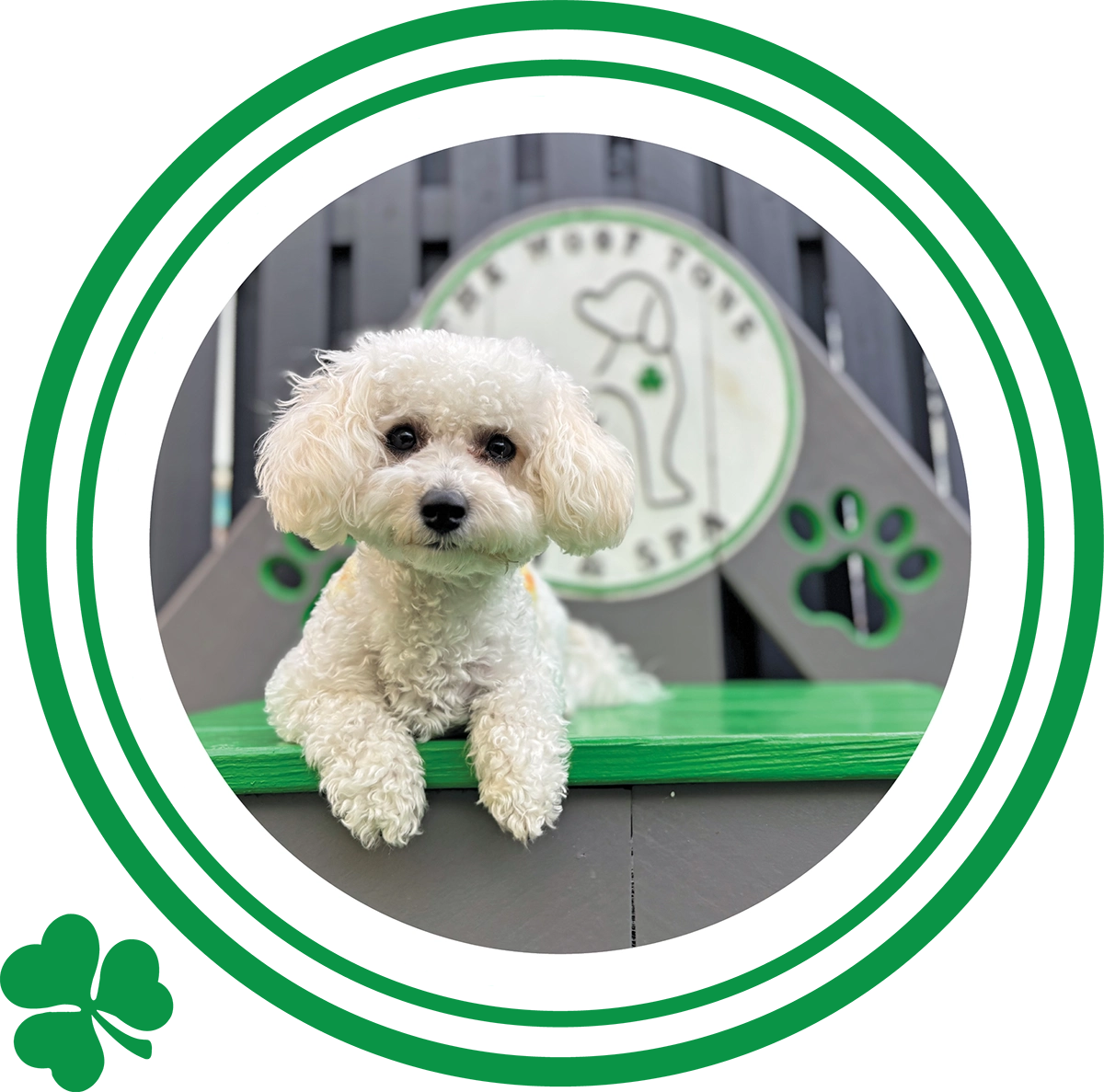 n an industry that often measures success by square footage, pricing or how many dogs can be accommodated in a day, Woof Tone Inn & Spa in Dallas, Texas, goes by a different measurement: How does the dog feel while they’re here?
Founded by Scotland native Karen Smith, Woof Tone Inn & Spa is a boutique boarding, daycare and grooming destination that blends thoughtful design, Fear Free principles, enrichment-based care and a strong sense of community, among both their clients and their staff. Karen’s journey offers valuable insight into how vision, intention and people-first leadership can fuel sustainable success.
“When I had to go away, my dogs were always very well cared for at the veterinary hospital, but it wasn’t the way I would have liked it to be,” Karen explains. “I wanted it to feel more like home.”
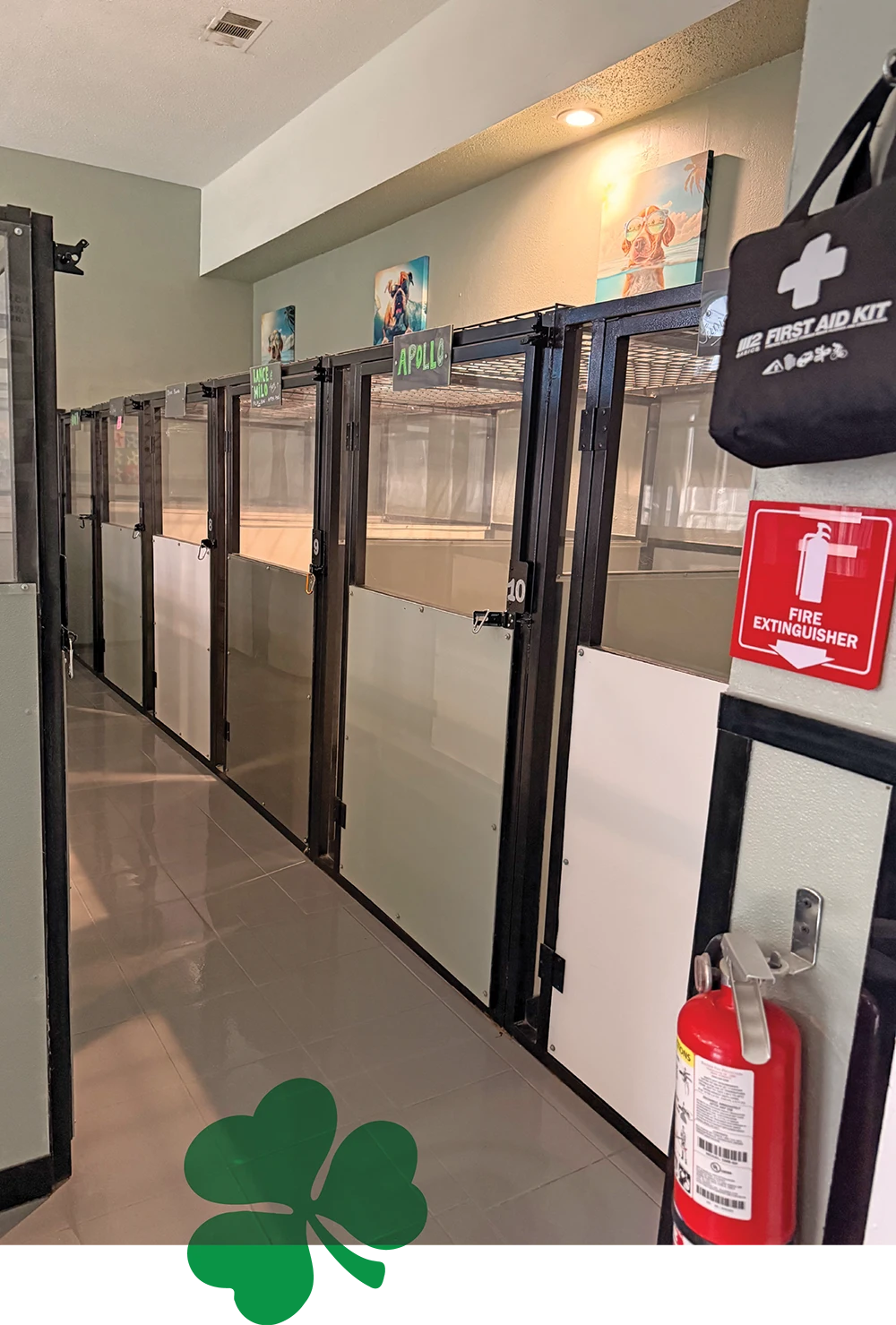
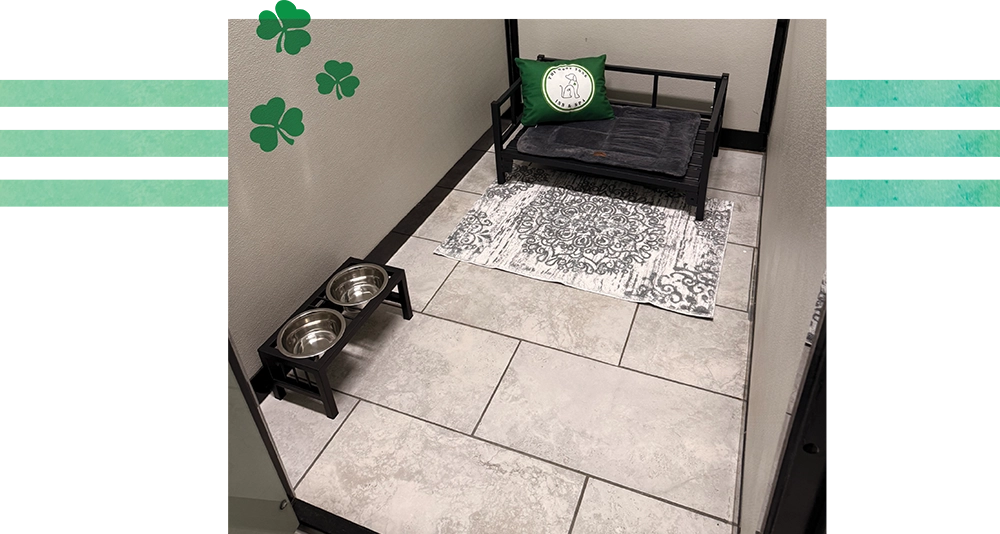
Everything from layout to materials was selected with safety, enrichment and emotional comfort in mind.
A facility that worked for her ultimately became available, and after eight months of extensive remodeling, Woof Tone Inn & Spa was born. Everything from layout to materials was selected with safety, enrichment and emotional comfort in mind.
“I worked in a veterinary hospital that was Fear Free, and we adopted that philosophy into Woof Tone,” Karen shares. “Even the colors we chose throughout the facility support that. It reduces anxiety not only for the dogs, but also for the pet parents as well.”
The boarding suites at Woof Tone are glass-enclosed, allowing dogs to feel secure without being visually isolated. And, all the rooms have Irish names as a quiet tribute to Karen’s heritage.
Their boarding service is far more than just feeding, cleaning and supervision. It’s customizable, enrichment-focused and tailored to each individual dog. Overnight guests enjoy plush bedding, multiple daily walks and individual off-leash outdoor potty breaks—an intentional choice to reduce stress and provide meaningful outlets from confinement.
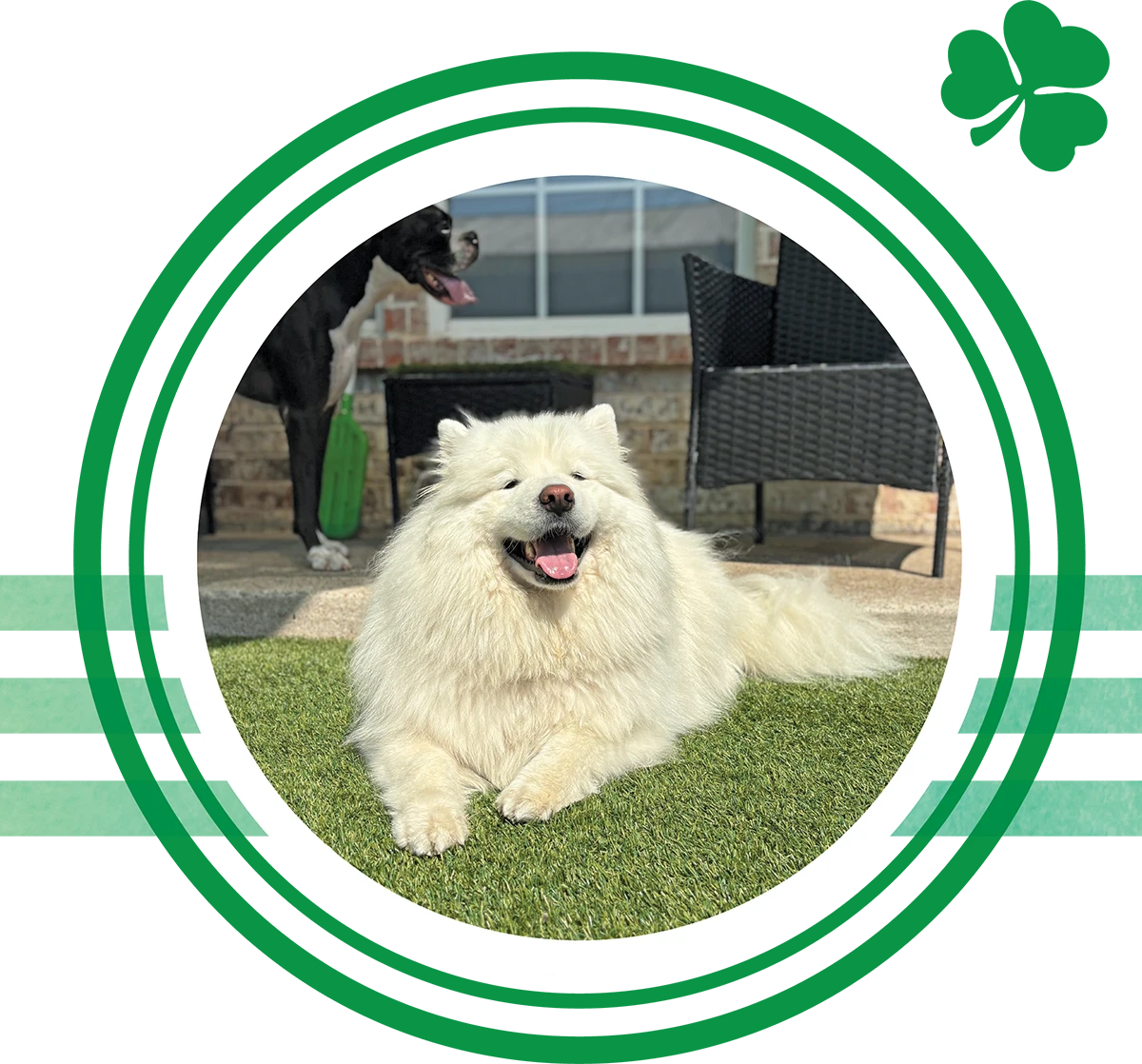
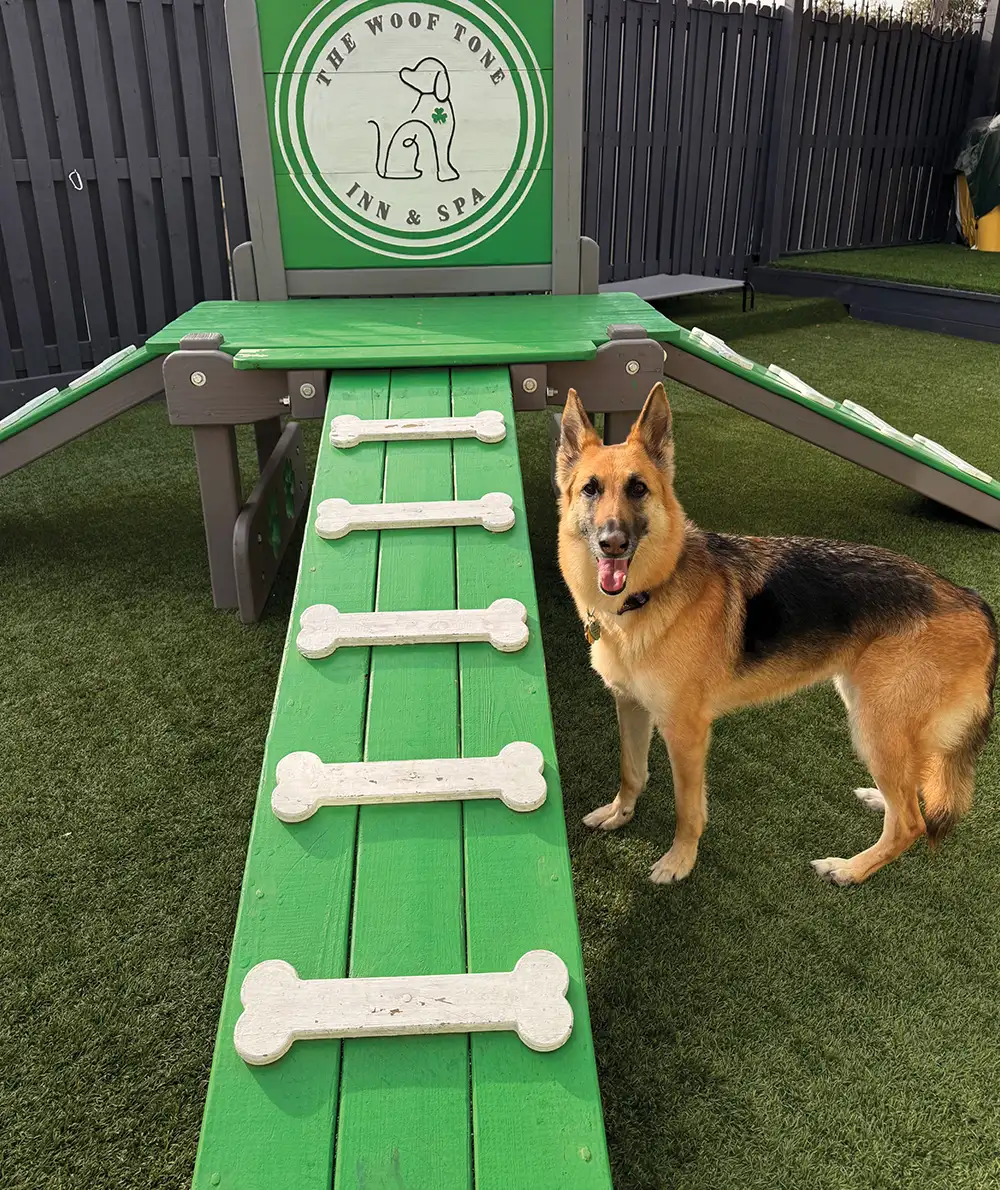
“These aren’t gimmicks,” Karen expresses. “They’re tools that allow us to meet dogs where they are, emotionally and physically.”
Woof Tone’s daycare program emphasizes supervised play and rest in a clean, safe environment. However, Karen and her team recognize that not every dog thrives in group play, and that led to the creation of their “Day Stay” option, a quieter alternative for dogs who need individualized care without social interaction.
Sticking to the Fear Free model, it’s woven into their daily operations. Staff members are trained to recognize stress signals, adjust handling techniques and prioritize emotional wellbeing, as well as physical safety. This mindset extends across boarding, daycare, grooming and even front desk interactions.
Woof Tone Inn & Spa’s on-site grooming department completes the experience, allowing dogs to be pampered in a familiar environment, thus reducing stress associated with traveling to a separate groomer.
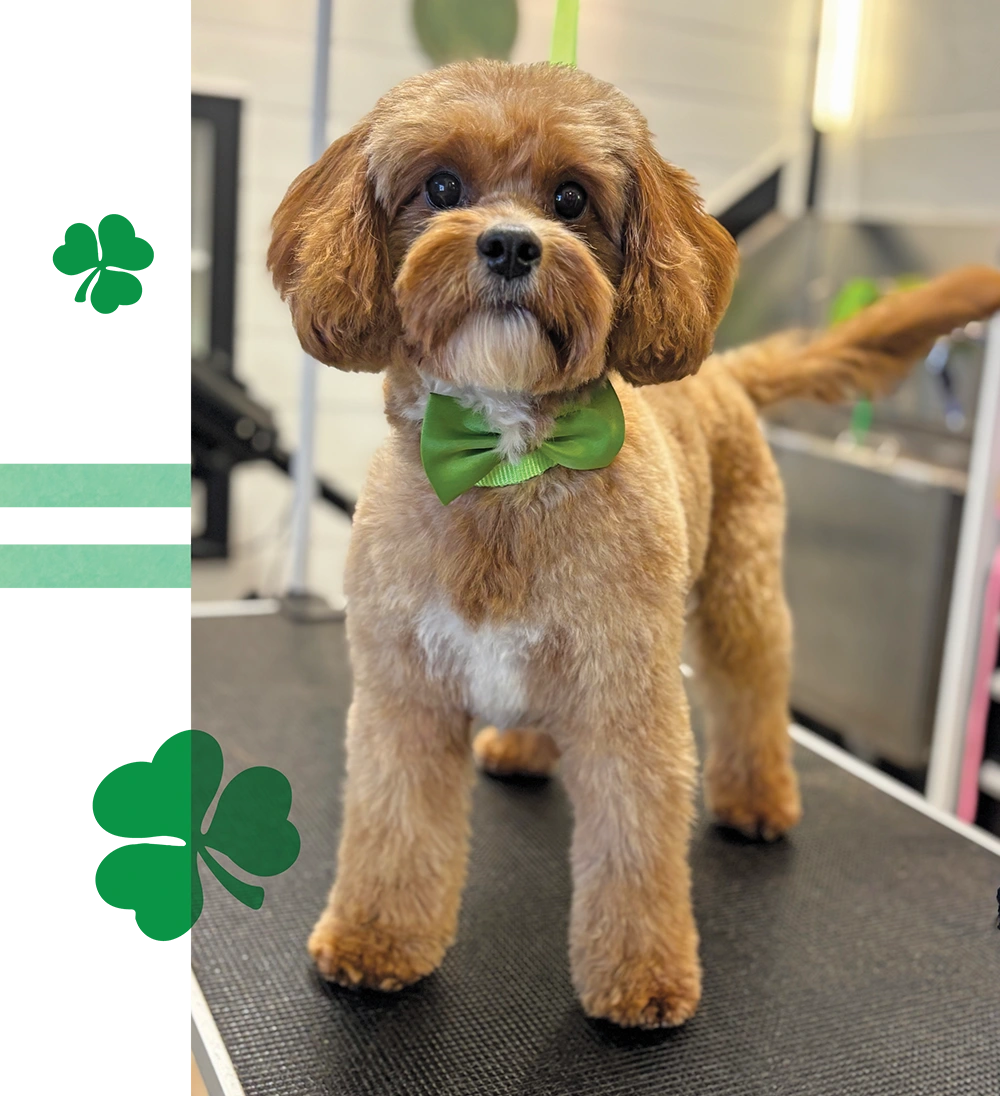
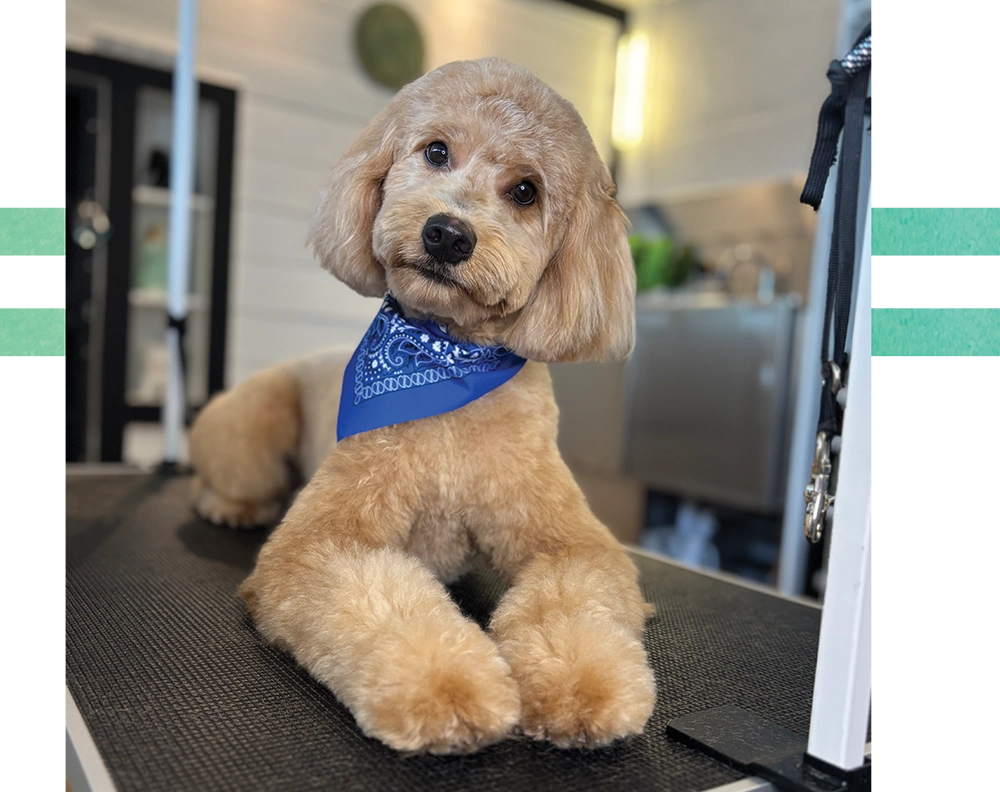
“When Woof Tone first opened in September 2024, we spent a lot of money on marketing, but we had very limited results,” Karen shares. “But now, with Liv at the helm of our social media department, and through word of mouth, Woof Tone Inn & Spa has achieved great exposure and growth in a short period of time.”
Another star employee is their Front Desk Manager, David Phillips, who has a background in veterinary healthcare. David knows every dog that walks through the door, along with their personality, preferences and quirks. He also introduced one of Woof Tone’s most beloved features; a “Family Tree” wall in the reception area, where framed photos of client’s dogs adorn the branches. Owners light up when they see their dog included.
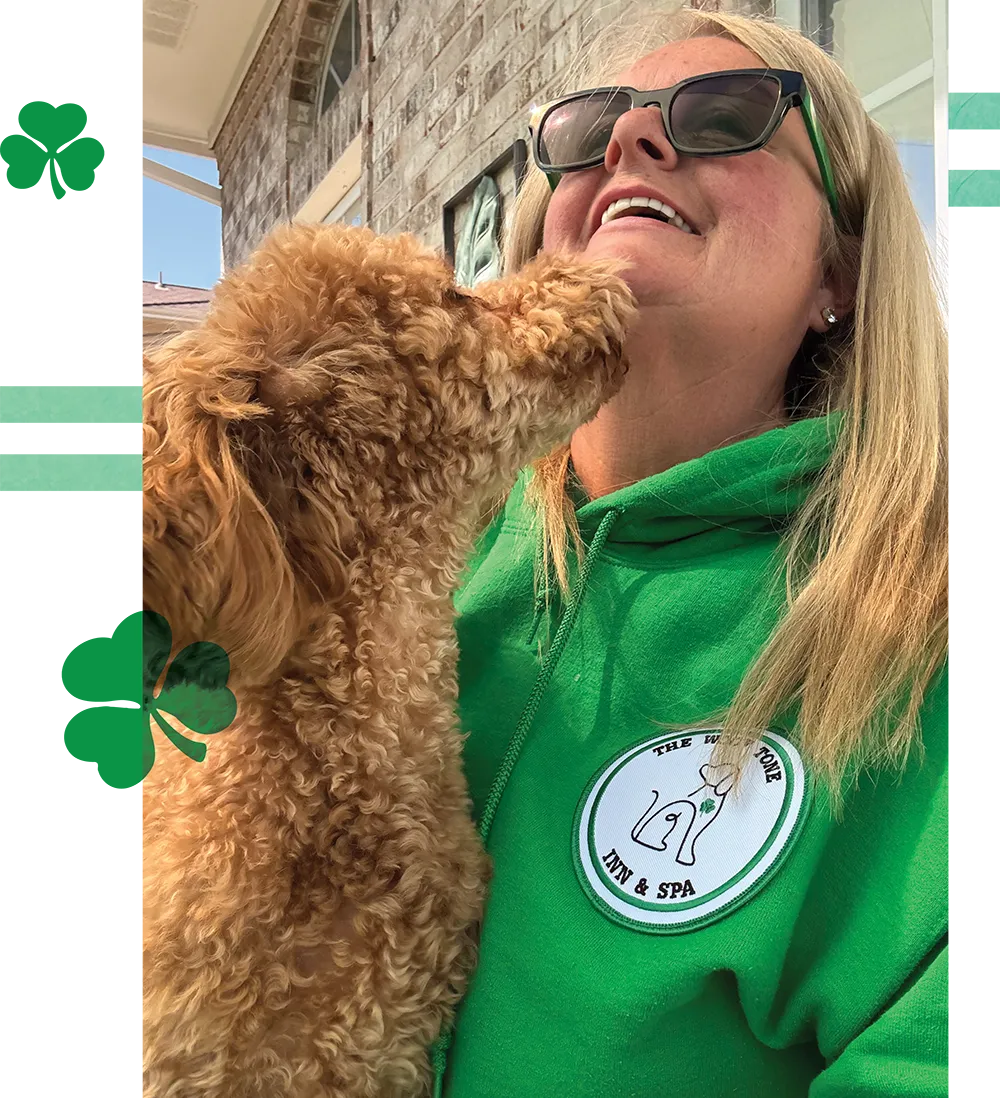
In addition to their service offerings, Woof Tone also has a specialty retail area. Dog clothing (much of it branded with the Woof Tone logo) shares space with brushes, shampoos, CBD products and even purses for the owners, with everything thoughtfully displayed rather than overcrowded.
“It’s a bit of a one-stop shop,” Karen adds, “and placing our logo on clothing is great marketing.”
Woof Tone Inn & Spa’s success didn’t come from cutting corners or packing in more dogs. It came from clarity of vision, respect for the pet’s experience and an unwavering commitment to people—both clients and staff.
Despite the popularity and growth of Woof Tone, Karen is clear about her goals: “We never want to become the biggest,” she says emphatically. “It’s not about that or making lots of money. It’s about being the best at what we do and being known for that!”

By Claire Pickens
 s more people bring pets into their lives, there’s also a growing awareness about how we care for both our furry companions and the planet we share. This shift in mindset towards sustainability opens up a fantastic opportunity for pet boarding and daycare businesses to go green. By embracing eco-friendly practices, these businesses can not only attract more customers but also save some cash and really stand out in a crowded market.
These days, Millennials and Gen Z make up almost half of all U.S. pet-owning households, and they’re not just looking for products or services—they want businesses that align with their values. For them, things like sustainability and ethical practices are must-haves, not just nice extras.
This isn’t just a passing trend; it’s part of a bigger shift in how younger generations make decisions. They’re looking for businesses that actively contribute to environmental and social causes.
For pet care businesses, this is a huge opportunity. Going green isn’t just a feel-good move anymore but a way to stand out and build trust with these environmentally conscious customers.
- Using Eco-Friendly Products: Many businesses are choosing to stock biodegradable toys, compostable waste bags and natural grooming products. These items reduce waste and also appeal to environmentally conscious customers.
- Energy Efficiency: Some facilities are investing in energy-efficient lighting and appliances. In addition to helping the environment, this change can also lower utility bills, saving money in the long run. An easy example is replacing some of the light switches in your facility with ones that automatically shut off when there is no motion in the room.
- Waste Reduction: Implementing recycling programs and composting pet waste can significantly reduce the amount of trash sent to landfills. This practice helps the environment while also demonstrating a commitment to sustainability. Are you still using paper check-in forms? Consider switching to digital.
- Sustainable Facility Design: When renovating or building new facilities, using sustainable materials and designs can make a big difference. Features like natural lighting and proper ventilation can reduce energy consumption.
Sample Eco-Friendly Social Media Post:
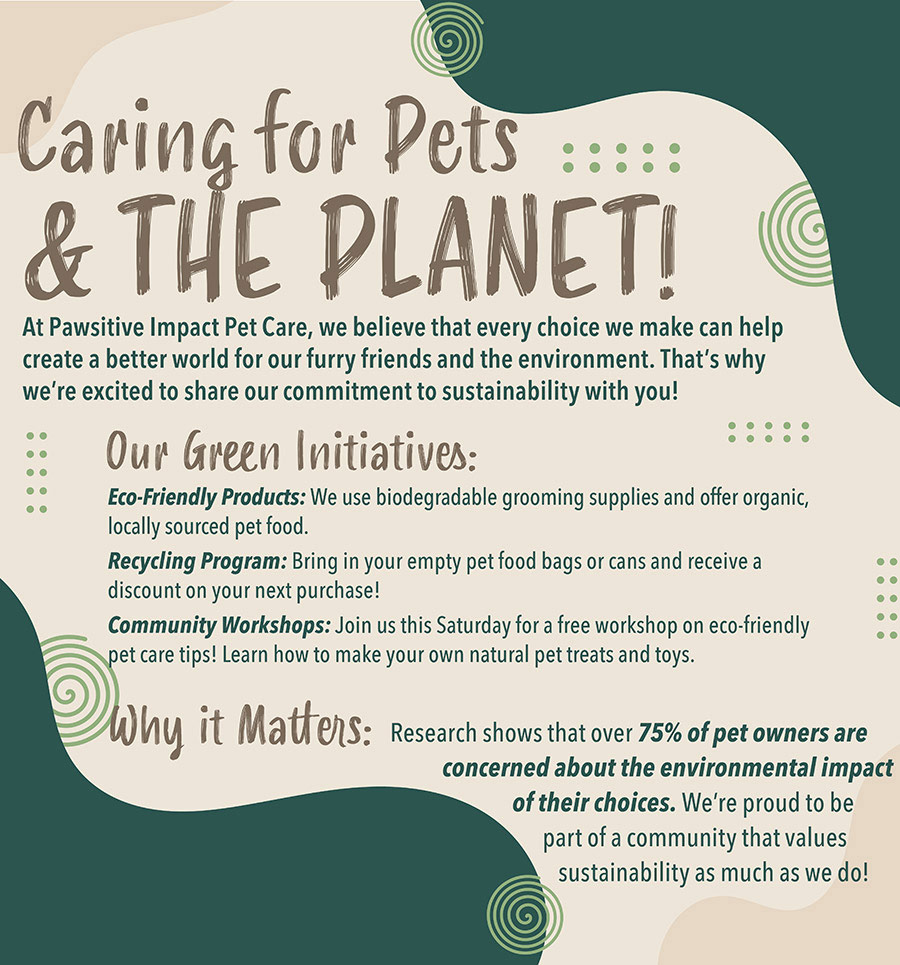
Here are some effective ways to market your green initiatives:
- Share Your Story: Use your website and social media to tell customers about your commitment to sustainability. Highlight specific actions you have taken to reduce your environmental impact.
- Use Clear Messaging: Incorporate eco-friendly language into your branding. Phrases like “Caring for Pets and the Planet” can resonate with customers who value sustainability.
- Engage with the Community: Host events focused on sustainability such as workshops on eco-friendly pet care. Partner with local organizations to promote environmental initiatives.
- Highlight Certifications: If your business has received any certifications for sustainability, display them prominently. This can build trust and credibility with your customers.
Here are few examples of areas where going green can help your business:
- Cost Savings: Energy-efficient appliances and reduced waste can lower your operating costs. Over time, these savings can add up significantly.
- Customer Loyalty: Many consumers prefer to support businesses that align with their values. By prioritizing sustainability, you can create a loyal customer base that appreciates your efforts.
- Competitive Advantage: In a crowded market, being known as an eco-friendly business can set you apart from competitors. This unique selling point can attract new customers.
- Positive Reputation: Businesses that prioritize sustainability often receive positive media attention and community support. This can enhance your brand image and grow your customer base.
Whether it’s reducing waste, using sustainable products or implementing energy-saving measures, every step toward sustainability counts. But don’t just do it to make money—do it because it’s the right thing to do as a business.
Create a greener future for your business, for the pets you care for and for your customers as you collectively travel the sustainability path forward together. A business with values is a business that is valued by the community.
Claire Pickens is a professional business plan writer with over 30 years of experience in the pet and veterinary industry. With an Executive MBA and extensive experience in guiding entrepreneurs, she empowers small business owners to realize their dreams through her expert planning services, available at smallbusiness-dreams.com. Claire is also the author of the published book, Pawsitive Blueprint Part 1: Writing Your Business Plan, which guides aspiring entrepreneurs in the pet sector, and she is a passionate speaker which allows her to share insights on performance management, business planning, entrepreneurship, and effective communication.


By Emma Chandley
 he moment you walk into any dog boarding facility or daycare, you immediately get a sense of the atmosphere. Some facilities will naturally have a calm, settled rhythm, while others feel charged and stressed.
Popular discussions surrounding group dog environments often include topics such as enrichment, infection control and vaccination protocols; however, one of the most powerful and underappreciated disease risk factors affecting dog populations is stress.
For those of us working across veterinary and pet care settings, understanding the physiological link between stress and immune function is not just an interesting part of the science—it has a direct effect on respiratory outbreaks, gastrointestinal disease, wound healing and even behavior-related injuries.
If we want healthier dogs in group care, we have to start by protecting emotional wellbeing as carefully as we protect hygiene standards.
In short bursts, this is adaptive. The problem occurs when this stress response keeps happening over a long period of time. In boarding and daycare environments, dogs can be exposed to chronic stress, which depletes their reserves and has a detrimental effect on their health.
When dogs are repeatedly exposed to unpredictable noise, social tension, sleep disruption, separation from attachment figures or inadequate recovery time, cortisol remains elevated. If the body stays in “stress mode” for too long, it can begin to interfere with normal immune function.
Most pet professionals are familiar with outbreaks of canine infectious respiratory disease complex (CIRDC). Vaccination protocols reduce severity, but they do not eliminate infection risk.
During outbreaks, it is common that not every exposed dog becomes clinically unwell. Some may be asymptomatic, others develop a significant cough, or some may even develop secondary bacterial pneumonia. Pathogen load is one factor, and vaccination status is another, but stress resilience plays a substantial role.
Mucosal immunity in the respiratory tract relies heavily on secretory IgA.
Chronic stress reduces IgA concentrations, weakening the first line of defense against inhaled pathogens. In a boarding setting where there is close-proximity housing, shared airspace and barking-induced aerosolization, the perfect environment for transmission is created.
Good biosecurity is still essential, but reducing stress in the environment should be seen as part of disease control, too.

Cortisol also influences gut motility, permeability and the microbiome. Stress can:
- Increase intestinal permeability (“leaky gut”)
- Disrupt microbial balance
- Exacerbate underlying inflammatory tendencies
- Reduce mucosal barrier integrity
Clinically, this may present as softer stools with blood and mucus present. In daycare settings where dogs attend multiple times weekly, patterns of intermittent diarrhea that correlate with attendance days are often seen.
- Reduced frustration tolerance
- Heightened reactivity
- Poor impulse control
- Altered social signaling
In group play environments, this can raise the risk of scuffles and bite injuries. Ongoing stress affects the body’s healing response, so even minor wounds may repair more slowly.
Without sufficient REM and slow-wave sleep, immune function declines further. From a disease-prevention perspective, quiet periods where dogs are able to rest should be prioritized during the day.
- Group sizes are excessive
- Personal space cannot be maintained
- Play styles are mismatched
- There is inadequate human supervision
Subtle social tension is often missed because it doesn’t always look obvious. Lip licking, yawning, avoidance behaviors and rigid postures are easy to overlook in busy environments. However, social stress is cumulative. A dog who cannot disengage or rest is physiologically working all day.

- Environmental Design: This could include acoustic-dampening materials to reduce reverberation, visual barriers between enclosures, designated quiet zones and adequate space per dog. Noise reduction alone can significantly reduce sympathetic arousal.
- Structured Rest Periods: Dogs should not be in continuous group interaction for six to eight hours. Scheduled downtime in calm, low-stimulation areas allows cortisol levels to normalize.
- Thoughtful Grouping: Matching dogs based on play style, not just size, and limiting group numbers is paramount. Also monitor individuals who struggle with disengagement.
- Predictability: Predictable routines reduce anxiety. Feeding times, exercise periods and human interaction should follow consistent patterns wherever possible.
- Staff Training in Subtle Stress Signals: Investing in education around canine body language allows earlier intervention before stress escalates to illness or injury.
Veterinary professionals can support facilities by:
- Advising on vaccination timing and protocols
- Discussing stress mitigation as part of outbreak investigations
- Encouraging realistic expectations about disease elimination versus risk reduction
For boarding and daycare owners, documenting behavioral stress patterns can provide invaluable context when discussing recurrent illness with a veterinary professional.
It’s easy to think of medical health and behavioral health as two separate things, but in reality, they overlap far more than we sometimes realize. A calm facility isn’t just nicer to look at or quieter to work in; it genuinely makes a difference in how dogs feel and function. When dogs feel safe, get enough proper rest and aren’t constantly overstimulated, their bodies cope better overall.


By Fernando Camacho
 ot long ago, we were reviewing results from several pet resorts running dog daycare ads at the same time. The businesses were similar in size, offered many of the same services, and were spending about the same amount on Facebook and Google advertising. Leads were coming in across the board, which is usually where most owners focus their attention. But one resort stood out right away.
While other businesses were converting a fair number of inquiries into daycare visits, this particular multi-service pet resort was converting nearly twice as many leads into actual customers. Naturally, we assumed their ads must be performing better—but they weren’t.
This particular owner made it a priority to respond to new leads quickly and continued reaching back out if they didn’t hear back the first time. And that habit alone made a noticeable difference.
It’s All About Timing
At that moment, they’re motivated. They’re researching options and often contacting more than one facility. The business that responds first has a big advantage because the conversation starts while interest is still fresh.
The pet resort with the more successful ad campaign treated every inquiry like someone had just walked through the front door. Instead of waiting until there was free time later in the day, they replied as soon as possible—often within 15 minutes. That quick response showed the owner they were easy to reach and ready to help.


A quick reply tells them you’re paying attention. A friendly follow-up shows you care enough to stay connected. That early experience often builds trust faster than any marketing messages can.
This pet resort didn’t assume silence meant no interest. If there was no answer or reply, they followed up the next day with a quick, friendly check-in. If there was still no response, they reached out again a few days later. Nothing complicated; just short messages letting the pet owner know they were happy to answer questions or schedule a visit.
A surprising number of daycare enrollments came from these follow-ups. Without them, those leads likely would have been lost even though the owners were genuinely interested.
If two facilities receive the same number of inquiries and one turns twice as many into customers,
the difference usually isn’t the ads—it’s how quickly and consistently they respond.
By simply replying faster and following up more than once, this particular pet resort doubled how many inquiries turned into real daycare dogs without increasing their ad budget.
A quick reply tells them you’re paying attention. A friendly follow-up shows you care enough to stay connected. That early experience often builds trust faster than any marketing message can.
You don’t always need better ads or a bigger marketing plan to grow daycare enrollment. Sometimes the biggest improvement comes from a simple change in habit. Respond quickly, follow up more than once and don’t assume lack of response means lack of interest.
In a crowded market where many facilities offer similar services, the businesses that grow fastest are often the ones that do the basics consistently—especially when it comes to following up with the people who already asked to hear from you.
Fern is the founder of Overdog Digital, a digital marketing & consulting agency that helps dog daycare and boarding facilities attract, convert, and keep more customers by creating winning marketing campaigns and providing the business guidance to build momentum and spark long-term growth. Fern also has programs to train daycare staff, is a dog behavior consultant, and has a dog training business in New Jersey. He is the author of eight books and a popular speaker at national conferences and private events. To join The Dog Daycare Business Think Tank or ask a question, go to: www.facebook.com/groups/dogdaycarethinktank

New Products


Therefore, as God’s chosen people, holy and dearly loved, clothe yourselves with compassion, kindness, humility, gentleness and patience.
Colossians 3:12 ● NIV BIBLE
Colossians 3:12 ● NIV BIBLE

Photos provided by Happy Cat Hotel & Spa
Comfort alone is not the same as welfare, and environmental familiarity does not replace social, cognitive and emotional needs. The following will deconstruct the myth: “Cats are best left in the same environment.”
Cats Are Not Truly “Solitary”
Research demonstrates that cats form meaningful attachments to humans. In one landmark study, it was found that a majority of cats tested displayed secure attachment styles to their caregivers, similar to patterns observed in human infants.1 This challenges the long-standing assumption that cats are emotionally independent.
Further preference testing has shown that many cats choose human social interaction over food, toys or scent stimuli.2 This proves that interaction is not incidental; it is reinforcing and rewarding for many cats.
Environments intentionally designed around feline behavior, with vertical space, hiding options, structured play and predictable human interaction, more closely align with current welfare recommendations.
The American Association of Feline Practitioners (AAFP) and International Society of Feline Medicine (ISFM) emphasize that feline welfare depends on meeting behavioral needs, including play, predatory expression, environmental complexity and appropriate social interaction. Providing food, water and a clean litter box addresses physical survival, but it does not necessarily support emotional wellbeing.
In contrast, environments intentionally designed around feline behavior, with vertical space, hiding options, structured play and predictable human interaction, more closely align with current welfare recommendations. Often cats that may not initially appear well-adjusted do acclimate in fair time and appreciate the interactions humans offer in relatively short order.
Whether by research or experience, it is clear that environment and the enrichment within (led by human interaction)—not the cat’s core personality—has a bigger role to play than was previously thought.
A Global Shift in Understanding Feline Welfare
As a result, certain rescue and adoption agencies have developed amazing rehabilitation programs that create a deeply impactful influence over how feline orphans adapt to the human world. Often, by the time rescued cats are adopted out, they can be far accepting of human touch and interaction.
In Sweden, regulations issued under the Animal Welfare Act (SFS 2018:1192) specify that cats must be supervised regularly and not left alone for extended periods. The Swedish Board of Agriculture requires that cats be checked at least twice daily and provided appropriate care and social contact. These guidelines reflect an international shift.
The blanket belief that a cat is automatically better off at home overlooks the role that engagement, stimulation and attentive care play in long-term wellbeing.
Professional boarding and daycare environments, when thoughtfully designed and staffed by trained caregivers, can address several key components of feline welfare:
Not every cat responds identically to new settings, and individualized assessment remains essential. However, the blanket belief that a cat is automatically better off at home overlooks the role that engagement, stimulation and attentive care play in long-term wellbeing.
As our knowledge of feline behavior continues to expand, so too should the conversation around what constitutes optimal care. Familiarity matters; but connection, enrichment and attentive supervision matter just as much.
When considering the impact the environment has on cats, it’s clear to see that the sentiment, “Cats are best left in the same environment,” is more about the fear of new ideas than the cat’s fear of change.
Happy Cat Hotel & Spa is a pioneering concept dedicated exclusively to feline boarding and grooming. Founded in 2014, it has been featured in Pet Boarding & Day Care Magazine, Catster, WSJ, Entrepreneur, and named the “World’s Greatest Cat Hotel.” Since launching its franchise program in 2020, the brand has expanded to 19 units open and in development across the United States. Through education, design innovation, and franchise development, Happy Cat continues to lead the movement toward elevated, cat-only hospitality nationwide and is redefining what professional pet care can look like in a historically dog-dominated industry.