
Animal Behavior

7 Holiday Training Games typography

to Build Positive Behavior

By Melissa Viera
Photos provided by Melissa Viera

The holidays bring excitement, gatherings, and plenty of temptation for people and dogs alike. That’s why it’s the perfect season to mix things up with fun training games.

Routine training has its place, but when exercises become too predictable, dogs miss out on a significant challenge: learning to respond under new and distracting conditions. By adding variety and a festive twist, trainers and daycare staff can enhance dogs’ skills while keeping things engaging for both pets and their owners.

The reason it’s essential to change the training routine regularly is that it helps dogs have more reliable responses. A dog may know how to “sit” in a training room where they practiced doing so many times, but can the dog sit while a ball bounces by or on top of a pizza box that still smells like dinner?

Creative mini challenges like these test a dog’s understanding of cues and their ability to respond appropriately. And around the holidays, you don’t have to look far for inspiration. From decorations and visiting guests to holiday snacks, the season is full of natural distractions.

Many owners share the same seasonal concerns: Will my dog jump on guests? Grab food off the counter? Knock ornaments off the tree? While a few games won’t solve everything, they can inspire owners to keep practicing at home, and that’s where lasting results happen. Training games make practice fun, build fluency and remind owners just how much their dogs can do.

Here are seven training exercises with a festive twist that can be practiced with the dogs in your care:

 A stop hand symbol, purple on a red outline.

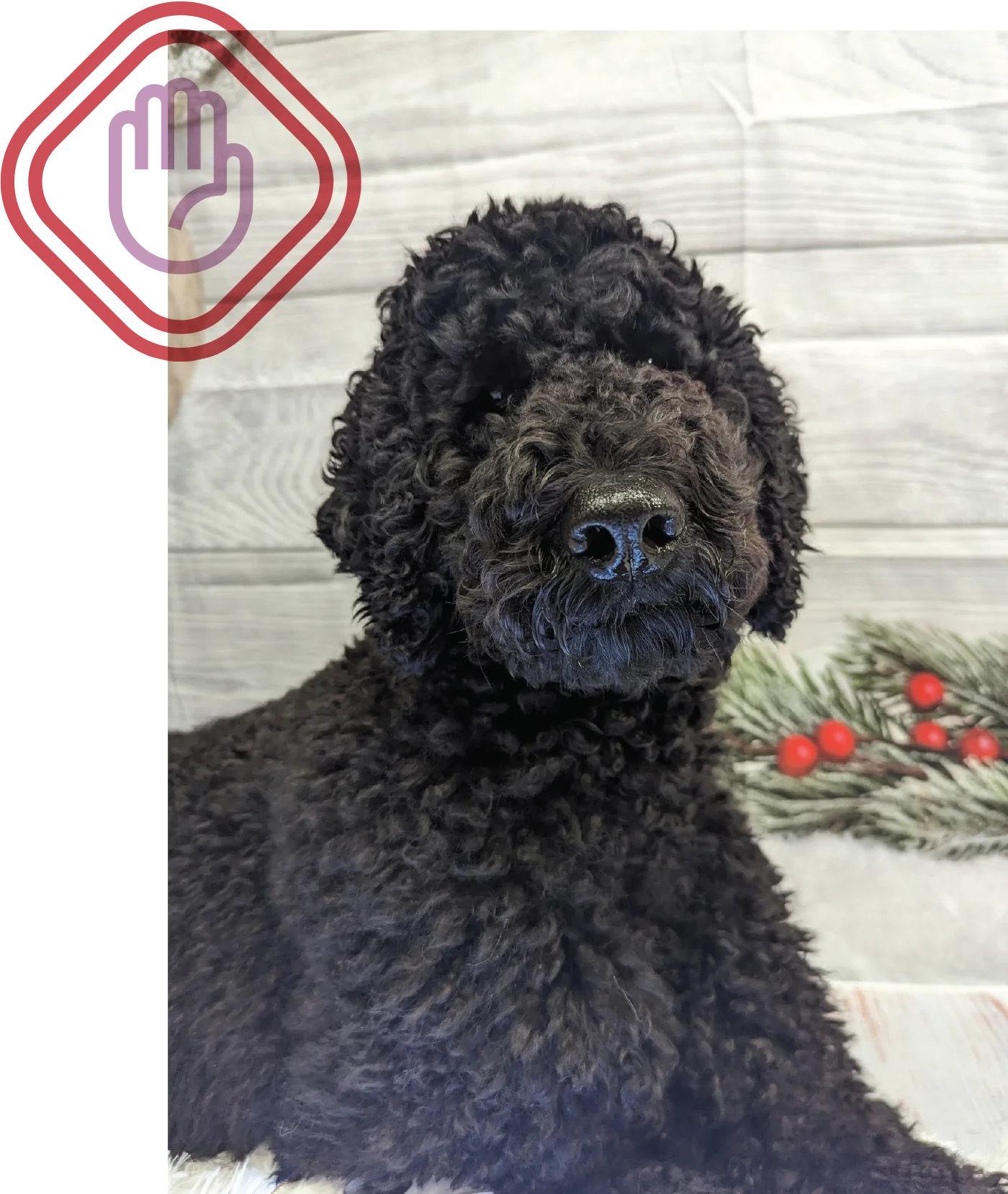
1. “Stay” for Holiday Photos

“Stay” is useful year round, but the holidays bring a unique test: capturing a still photo of a wiggly dog. The trick is teaching a release word (like “break”) and gradually increasing duration and distractions until dogs can hold a pose even with props nearby.
A black, curly-haired Doodle-type dog lying down against a light gray wooden background. The background is slightly decorated with a sprig of faux evergreen and red berries in the lower right corner, suggesting a holiday theme. An overlay graphic in the top left corner shows a purple stop hand symbol inside a red, double-lined diamond or square shape.
To turn photo practice into a training game, handlers can set up multiple stations, which might include a platform for the dog to sit on and a few distractions such as a plush animal, gift-wrapped boxes or a Christmas tree. In daycare, staff can turn it into a photo day for clients.

In some cases, dogs will be more nervous than distracted. If a dog shows any signs of fear or stress, the handler should not force the dog to sit next to the objects that are causing the anxiety. Nervous dogs require a gradual approach, while excitable dogs need a strong foundation. It’s up to trainers and staff members to adjust the game for the needs of each dog.

 A purple outline of a dog's head looking up at a red circle with a slash through a piece of wrapped candy.
2. “Leave It” with Temptations
Holiday food seems to fall everywhere, making “leave it” essential. Start by teaching an automatic “leave it” command (ignoring food on the floor unless given permission). Then turn it into a game, such as spelling out the dog’s name with treats on the floor and seeing if they can resist it until given the cue.

Giving the “search” cue provides a dog with permission to go after and eat a treat the handler tosses to the ground during training, for example. Any other food that hits the ground is an automatic leave it.
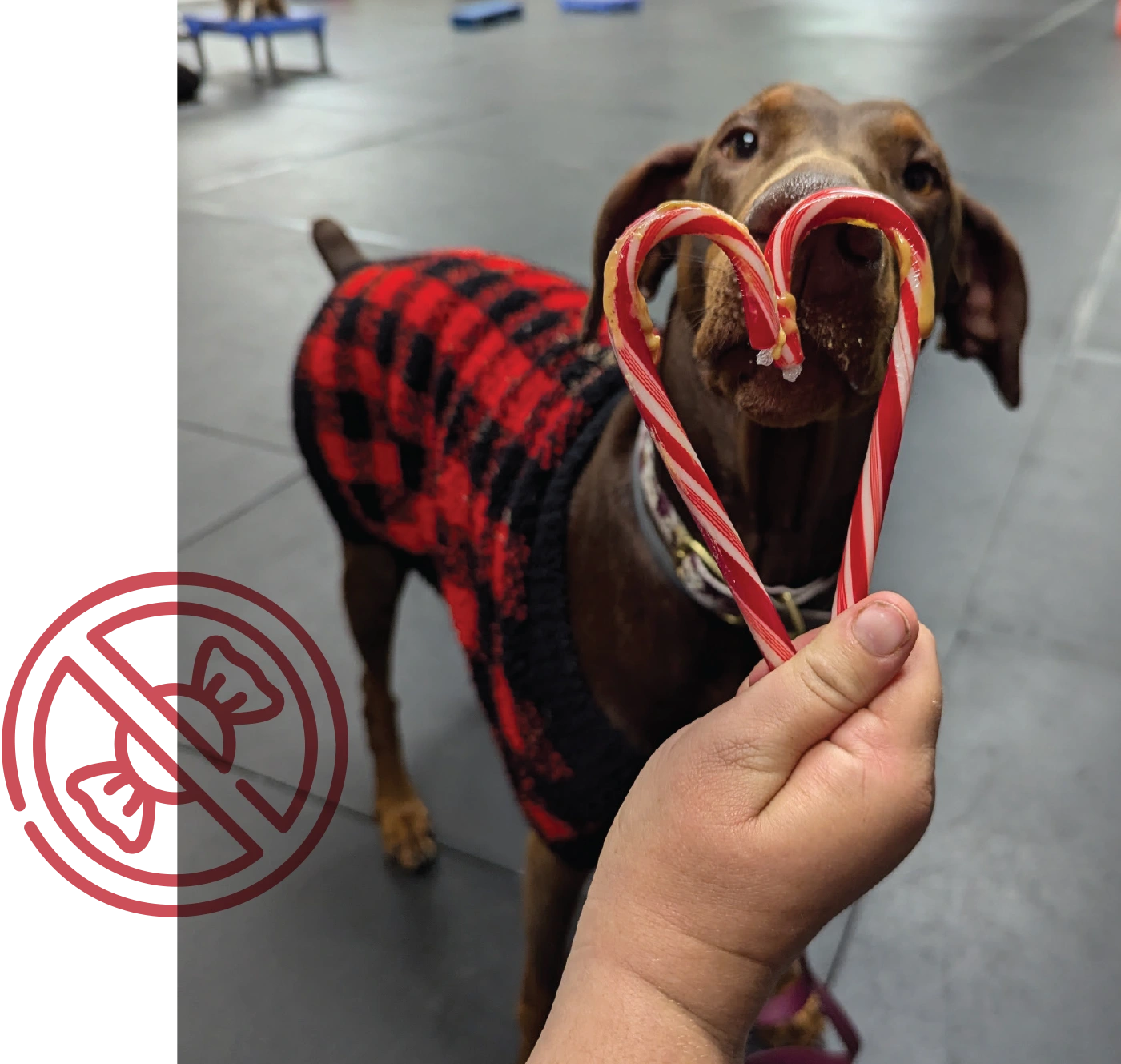
A brown dog wearing a red and black plaid sweater in what appears to be a training facility. A person's hand is holding two candy canes in front of the dog's nose, bent into a heart shape, with a treat, like peanut butter, smeared on the candy canes. The dog is intently licking the treats. An overlay graphic in the bottom left corner shows a red "no candy" symbol (a piece of wrapped candy with a circle and slash through it).
To train this skill, start with covered food and reward the dog for ignoring it. The next step is to increase the challenge by uncovering the food. When the dog ignores the uncovered food, say “yes,” and feed the dog a treat while leaving the uncovered food in place. Repeat this a few times before picking up the food at the end. The key is breaking the skill down into small steps.

To train an automatic leave it, trainers first teach dogs the difference between when they are allowed to pick up food and when the food is not theirs to eat. Even without a command, dogs can learn that anything on the floor is off limits unless cued otherwise. While you should also train a leave-it cue, this exercise helps further a dog’s understanding.
A purple outline of a dog sitting on a bed, split by red and purple horizontal stripes.
3. Settle on a “Place”
Unlike a simple “stay,” “place” teaches dogs to move onto a defined spot, like a mat or bed, and remain there until released. This is especially helpful when carrying food or hosting guests.

Owners worried about their dog jumping on guests when they walk through the doorway can use “place” to move the dog away from the entrance as needed. It takes practice for this level of reliability, but many owners find that it’s a helpful skill to train for this purpose and many others.

In a class setting, set up holiday-themed distractions between the dog and the dog’s designated station. Handlers can practice sending the dogs to “place” past covered food, toys or other people. The goal is to get the dog to walk by the distractions to get to their station.
A red-outline dog sitting next to a slightly open purple-outline door.
4. “Wait” at the Door
An open door is not an open invitation. Practice with cones or a mock door, rewarding dogs for waiting until given a release word. Add holiday-themed distractions to see if the dogs can hold their “wait.” This game not only prevents door-dashing but keeps guests safe during holiday visits.

Dogs should learn how to wait at the door automatically. To train this, handlers can start with the “wait” cue and then use a cue such as “OK” to let the dog know when to go through. With consistent practice, dogs learn to wait until given their release cue.

Owners with dogs that bolt through doors should put their dog away during busy times to prevent accidents. Even with training, it’s the safest option for dogs that are flight risks.
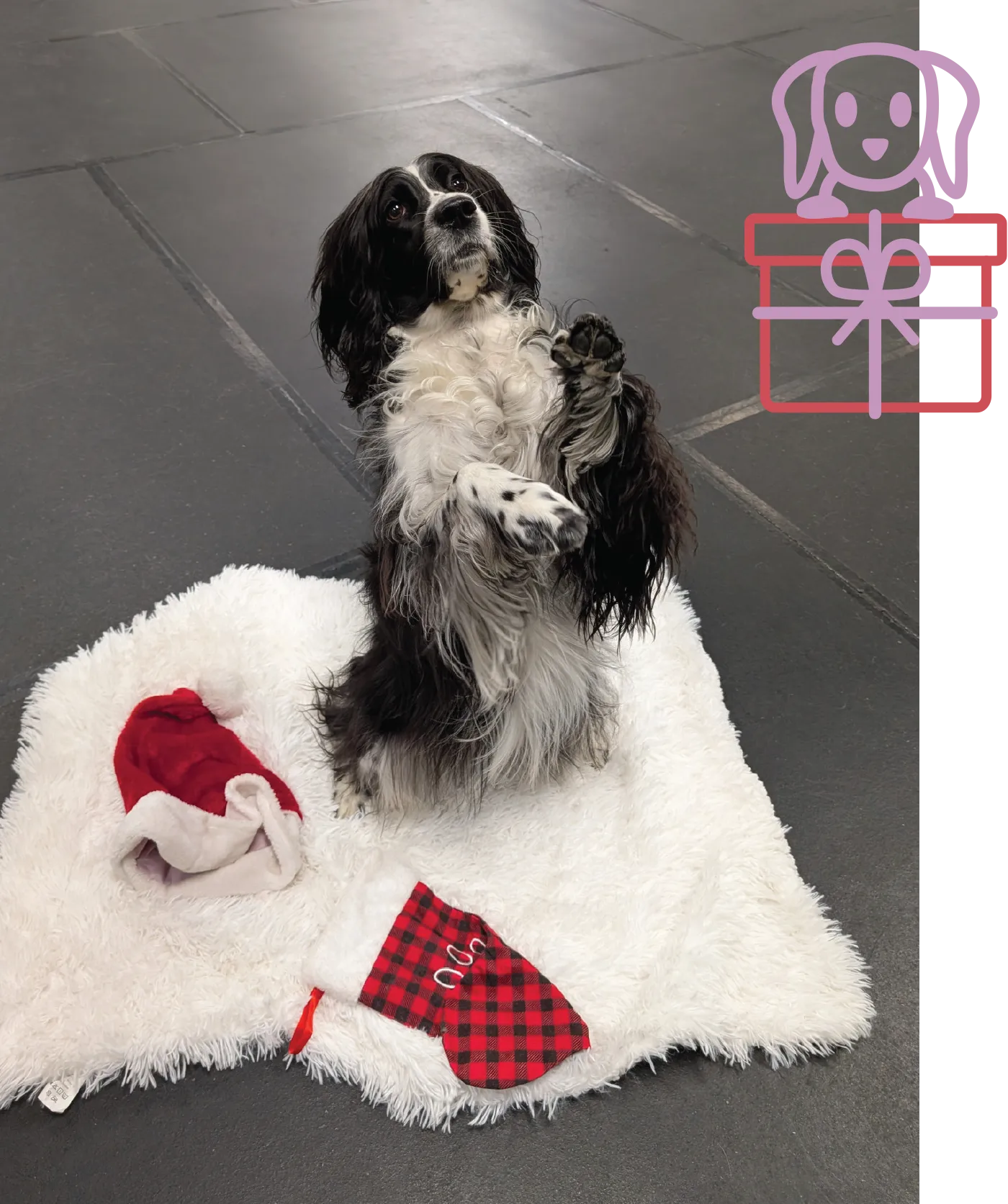
A black and white Cocker Spaniel-type dog balancing on its hind legs in a "begging" position. The dog is on a white, fluffy rug that has a miniature Santa hat and a small red and black plaid stocking on it. The background is a dark floor, likely in a training facility. An overlay graphic in the top right corner shows a purple-outline dog's head on top of a red-outline gift box with a purple ribbon.
 A purple outline of a dog sitting inside a red outline of a wire crate or kennel.
5. “Go Relax”
Sometimes the safest plan during a holiday gathering is for a dog to relax in a crate or quiet room. Trainers can introduce this by offering dogs stuffed Kongs or frozen snacks in a crate to practice short separations. At daycare, staff can reinforce this skill during nap times. Teaching “go relax” gives dogs the ability to settle away from the action when it’s needed most.
 A purple-outline dog with floppy ears smiling, sitting on top of a gift box wrapped with a purple ribbon and outlined in red.
6. Cute Pose Tricks
Once a dog can stay, you can get creative. Teach dogs to pose on a sturdy step wrapped like a gift box, hold a sign, sit pretty or rest their chin on a gift. In daycare, staff can compete to come up with the best photo-ready trick.
 A purple dog paw print centered on a board that is outlined in red and sitting on a red easel stand.
7. Dog-Made Artwork
For a fun project, have dogs create “paintings.” This is an easy craft that can be done in a training class or during daycare. Add a few drops of paint onto a small canvas and seal it inside a zip-lock bag. Smear dog-safe peanut butter on top, and as the dog licks the bag, they create mess-free artwork. Remove the canvas from the bag to allow it to dry.

These make great client gifts or holiday displays. Supervision is key, though. And don’t try this game with dogs that guard food or dogs that are likely to try to eat the art project.

While it takes a lot more than a few games to help train dogs for holiday distractions, these training exercises are one way to get the process started and inspire owners to continue building positive behavior in their dogs. Once you start, you might be surprised at how many ordinary holiday moments you can turn into skill-building opportunities.