






Staff
Barkleigh Productions, Inc.
Rebecca Shipman
Laura Pennington
Brandi Aurelio
Carlee Kubistek
Luke Dumberth
Todd Shelly
Gwen Shelly
Adam Lohr
James Severs
Karin Grottola
Evan Gummo
CONTACT
General: (717) 691-3388
Editorial: rebecca@barkleigh.com
Advertising: james@barkleigh.com
Email: info@barkleigh.com

16

18

Animal Behavior
Business
Think Tank
Animal Health
Industry News
- Aerapy Animal Health7
- Alpha Tech Pet19
- Alpha Tech Pet56
- Barkleigh Pet Pro Cruise14
- Barkleigh Store – Boarding Kennels: The Design Process34
- Barkleigh Store – Boarding Kennels: The Design Process47
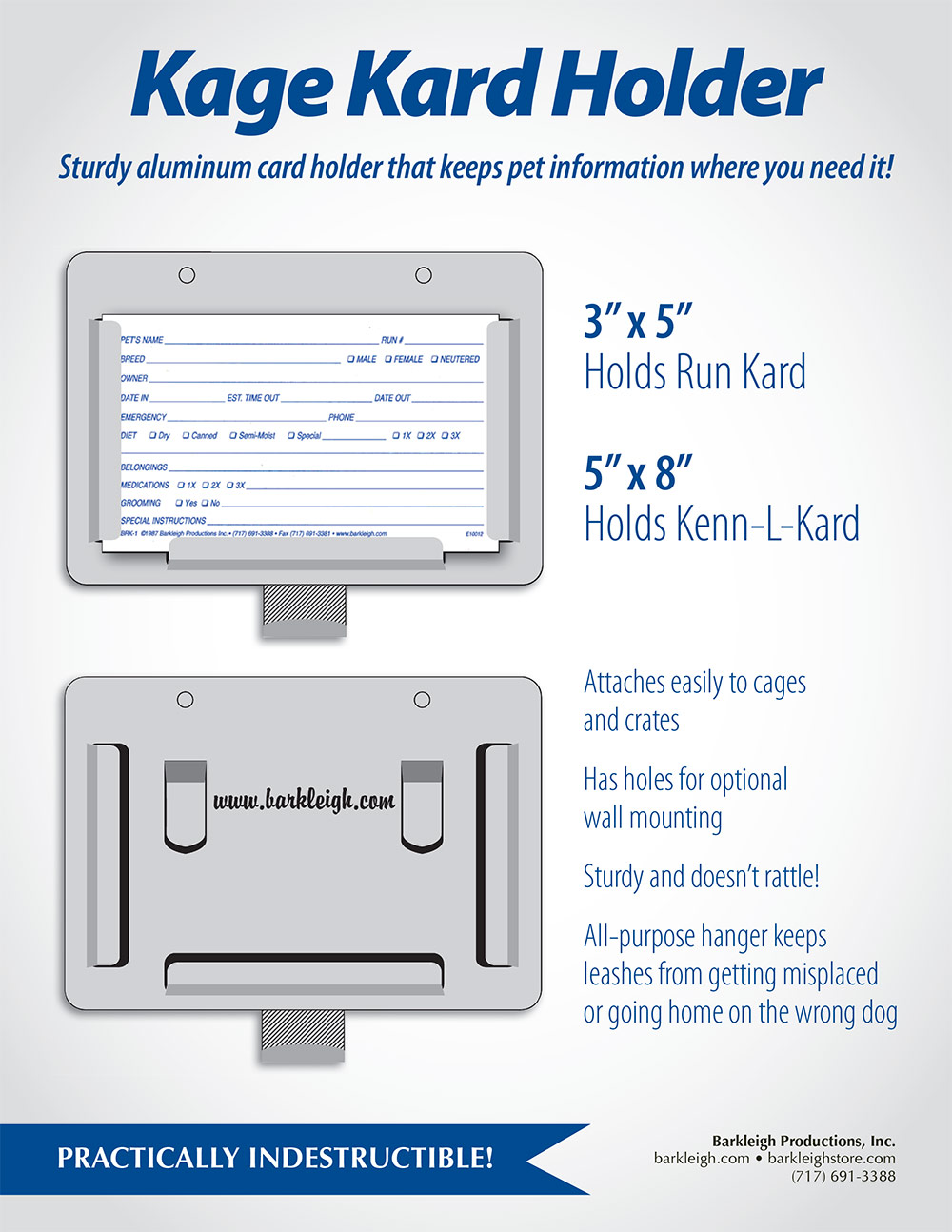
- Barkleigh Store – Kage Kard Holder45
- Barkleigh Store – Meow Wow! A Complete Guide to Feline Grooming31
- Barkleigh Store – The Pet Stylist Resource Guide33
- Barkleigh Store – The Rosetta Bone35
- Best Shot Pet – Scentament Spa49
- Business Insurers of the Carolinas46
- CleanWise39
- Direct Animal Products51
- Dog Kennel Flooring54
- Electric Cleaner Company42
- Enrichment University29
- First Financial Bank13
- Gator Kennels15
- Governor Insurance Agency34
- Gyms for Dogs43
- K9 Grass by ForeverLawn2
- Kuranda Pro3
- Midmark5
- Natura Turf Pro50
- Odorcide21
- Online Doggy40
- Outstanding Pet Care22
- Pack Pro Training25
- Paragon School of Pet Grooming52
- Pet Boarding and Daycare Expo17
- Pet Boarding and Daycare Podcast53
- Pet Business Marketing28
- Pet Business MarketingDigital
- Pet-Shield20
- PetBizInsurance.com27
- PetLift9
- PetVet Magazine41
- Presidio Custom Kennels8
- Professional Pet Boarding Certification32
- Puppy Playground38
- Snyder Manufacturing Company23
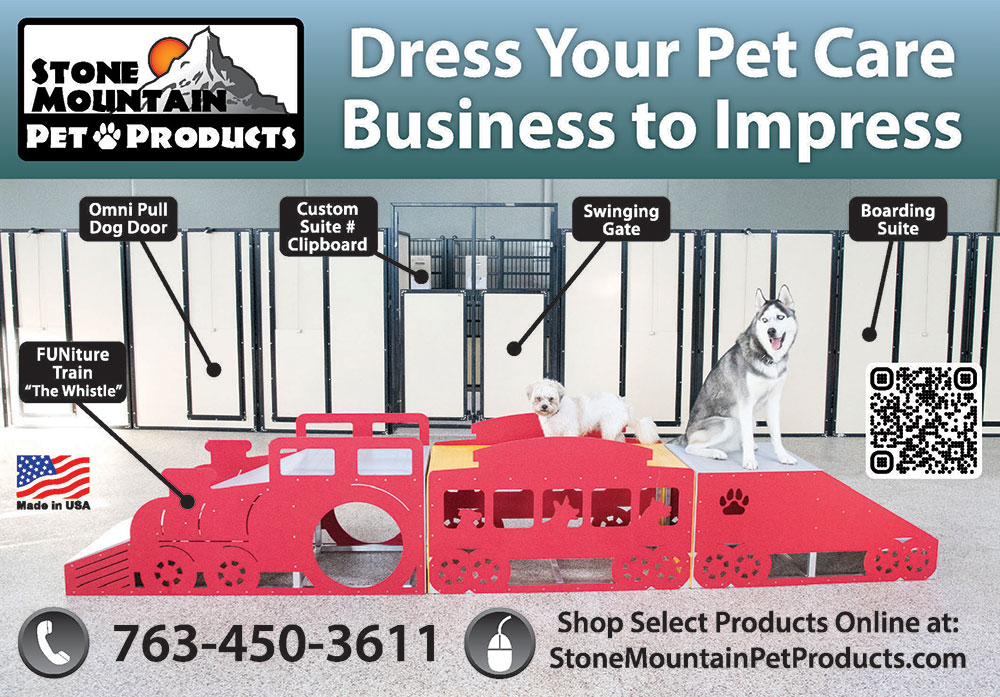
- Stone Mountain Pet Products10
- Turnkey, Inc.24
- Wag’n Tails11





















Animal Behavior



How to Rebuild a Connection in Three Seconds
 henever a dog lives in a house with kids and they go back to school, the dog’s behavior often changes due to a shift in their home-life schedule. Is the dog getting more rest now that the house is quieter during the day? Is the dog getting less rest with all the hustle of school pickups and after-school activities? Maybe their summer was packed with vacations and adventures, and the dog hasn’t been to daycare or boarding in months.
So how do we thoughtfully reintegrate these dogs—each carrying different emotions—back into our playgroups? To start, we return to the basics by working on our talk, working on our body language and working on what we can ask of them early on in their time at daycare or boarding.
One of the most important tools in our toolbox is something we call the three-touch rule, which is also sometimes known as the three-second rule. It’s a foundational way to build trust and comfort with every dog who walks through your door.
Here’s how it works: You don’t approach the dog head-on; instead, walk about a foot or two off to their side, then spin so you end up shoulder to shoulder. This body positioning gives them time to sniff, assess and feel safe.
At some point, we aim to touch the dog—not on the head, but from the shoulder blades back toward the hips or tail. This isn’t a “good dog!” kind of pet, nor a deep massage—it’s somewhere in between. It’s the kind of firm but gentle touch that says, “I see you. I’m here.”
While doing this, we also give a marker word—something like “yes” or “good,” or even say the dog’s name. It’s a subtle but powerful way to bridge verbal and physical communication.
the three–touch rule

You don’t approach the dog head-on; instead, walk about a foot or two off to their side, then spin so you end up shoulder to shoulder.


This process is especially helpful for dogs who may need extra relationship-building after changes at home. For overly social dogs, this helps them focus and channel their energy into positive attention. For the shy or reserved ones, it creates an opening for trust. And if you can slip in a scratch beneath the collar area, that’s bonus bonding! Just remember, don’t overdo it; no hovering. The key is balance.
What we do at daycare also helps shape how dogs behave out in the world. That’s where the three-second rule comes in. Dogs learn to receive three seconds of affection from a stranger, then move away. This teaches them not only appropriate social behavior in a group setting, but also valuable urban training for life with their humans. Many pet owners love this tip—they use it regularly when out on walks or at the dog park to reinforce good manners and respectful interactions.
Too often, we say words without action, and those words lose all meaning to our dogs. However, when the word is paired with something physical, the verbal cue starts to carry weight.
Still, this only works if it’s consistent across all handlers. If someone uses a different word or isn’t consistent, dogs notice—and their behavior shows it. That handler might struggle with engagement or group management simply because their communication isn’t in sync with everyone else.
Consistency isn’t just a training principle; it’s how we build a cohesive, compassionate environment where dogs feel understood. When consistency happens, everybody wins!
Eve Molzhon is the creator and owner of Dog Handler Academy. Dog Handler Academy is a 100% online, automated employee training program designed specifically for dog daycares and boarding facilities. Our real-life daycare videos and online quizzes fast-track your new hires into understanding dog handling and care, saving you time and money. Courses cover basic and advanced dog handler skills, social cues and safety, client relations, and more. The mission of Dog Handler Academy is to provide employers training new hires with comprehensive material in a cost-efficient, consistent, and effective program. Our end goal is to create better handlers within our industry to ensure the proper care of animals.


Business


By Dominic Hodgson
 et’s talk about your website. It’s the front door to your business; the online HQ; the place you’re probably investing a ton of money to send traffic from ads, emails, Google and social. Sadly, though, most pet business’ websites are not the conversion machines they claim to be.
Often, they’re a digital roulette wheel; a chaotic mess of buttons, social media icons, dropdowns, forgotten blog posts and half-baked service pages…and they may be hurting (not helping) your business. For the visitor, there is no clear direction or persuasive path, which means they act like a leaky bucket, letting good leads flow straight off the website and into the arms of your competitors.
And if that website was a member of your team? Admit it, you would have fired them by now. They’re not selling. They’re not guiding. They’re just sitting there like a bored receptionist on their first day. No script, no plan, just scrolling Instagram and ignoring everyone who walks through the door.
The good news is, there’s a better way to boost business. Smart operators don’t send traffic to a website that’s more like a digital graveyard. Instead, they build funnels—focused, persuasive pathways that guide each visitor toward the exact action they want them to take. And they don’t rely on one lonely, overworked page to do it all either. They’ve built something sharper, smarter and stronger.
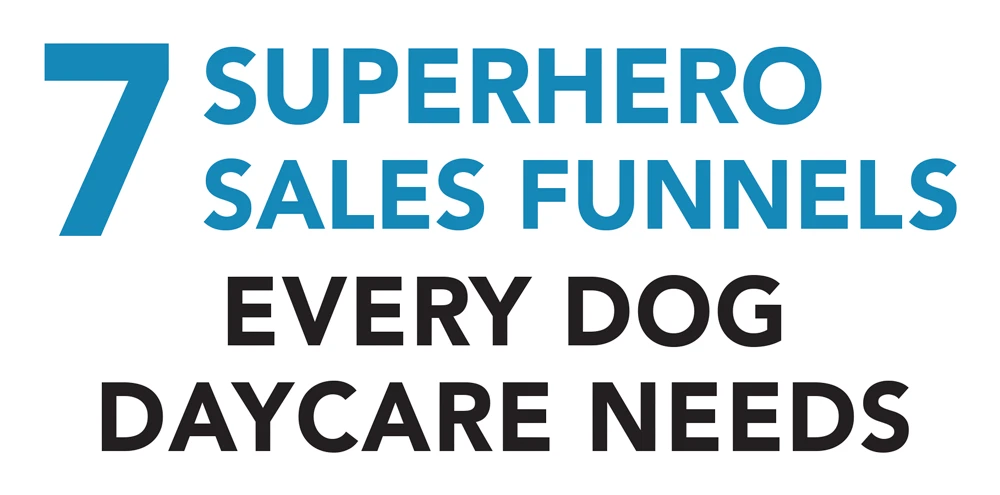
Think of it like the Avengers of pet business marketing: each funnel has its own superpower, its own mission and its own enemy to defeat. But together? They create an unstoppable force that drives exponential growth and success. Each funnel solves one problem. Each one turns “maybe later” into “where do I sign?”
The following will walk you through the seven essential funnels every pet business needs, so you can stop hoping your website gets lucky and start building a marketing machine that works on autopilot!
With a smart hiring funnel, it’s possible to build a waiting list of quality team members, just like you would with new clients.
This isn’t about “adding marketing” to your to-do list. This is replacing randomness with an automated rhythm of success. This turns your leaky digital storefront into a guided path with guardrails, checkpoints and persuasive prompts—the kind of setup where the right people are constantly stepping forward, signing up, showing up, upgrading, raving and returning. All without you lifting a finger.

A system for managing customer relationships with these funnels plugged in will be the growth engine your business has been missing—the thing that makes your marketing work without you and the glue that connects your funnels, follows up automatically, and turns traffic into trust and trust into transactions.
Dom Hodgson is Europe’s leading pet business coach, and is known as the Pet Biz Wiz. His mission is to help pet service providers create superior customer service systems that enable them to build an impactful and profitable pet business. Dom has written over nine books, and is a much in-demand speaker. You can instantly download a free copy of his latest book “How to Disnify Your Doggy Daycare Business” by going to www.petbusinessmarketing.com/daycaremagic
 ith staffing shortages, client concerns and dog-behavior dilemmas, it can be easy to forget why you got into this industry in the first place. But behind every decision to be a pet care professional lies a passion for caring for furry family members and providing peace of mind to pet parents.
So if you’re ready to unearth that passion and fall back in love with your pet care business, there is no better place to start than at the 2025 Pet Boarding & Daycare Expo!
Taking place November 10th-13th at the Hershey Lodge & Convention Center in Hershey, PA, the largest industry event for boarding and daycare professionals will feature more new speakers and trade show vendors than ever before. Whether you’re considering taking the plunge, just days away from opening or an industry veteran wanting a refresh, there are seminars available for every stage of pet professional, including entry-level staff.
The expo will kick off Monday afternoon with two three-hour seminars to choose from, which include the new addition of the “Professional Pet Boarding Pet First Aid & CPR Certification Course,” a must-attend for anyone in the animal care space, and “Pawsitive Practices: Blueprint for Financing, Planning & Building Your Pet Care Business,” an information-packed presentation for those in early stages of building, expanding or renovating their facility.
Monday evening we welcome everyone to join us for the Keynote Address, which is free to all attendees, “Petflation Pressures: Turning Economic Challenges into Business Opportunities,” presented by Jason Duffy. Immediately following the Keynote Address will be a Meet & Greet which will provide a great opportunity to socialize and wind down from a day of travel while enjoying a drink and hors d’oeuvres.
Seminars presented by all your favorite speakers—plus many new ones—will continue throughout the day Tuesday through Thursday. A wide variety of topics will be covered, all specific to the boarding and daycare industry, everything from AI to enrichment. Packages are available for the full schedule of education, or you can pick and choose which classes interest you. And if you want even more opportunities to network with others in the industry, the Roundtable Luncheons, taking place on Wednesday and Thursday, are the perfect place to swap stories and ideas (registration required).
In addition, Wednesday and Thursday will feature the largest industry trade show with rows of vendors offering everything you may need for your business, including kennels, cleaning products, consulting services, software and so much more. There will be plenty of time to shop in between seminars!
So if you’re ready to fall back in love with your pet care business and make it the best that it can be, plan on attending this year’s Pet Boarding & Daycare Expo!
For more information or to register, visit www.petboardingexpo.com


 or pet care businesses, the Thanksgiving and winter holiday seasons are a critical component to year-end revenue. It’s typically a period of increased demand—yet many business owners unknowingly leave thousands (or likely tens of thousands) of dollars on the table year after year.
A truly strong holiday season means maximizing the value of each reservation, not just being sold out. But this year’s economic environment means we can’t count on being sold out, either…
According to a recent survey, only 46% of American adults planned to travel this summer1—a clear sign that consumer travel habits are shifting. Despite slashing fares to spur demand, airlines saw a 10% decline in summer bookings.2 Many Americans opted to shorten their vacations, stay closer to home or drive to their destinations. In fact, another survey found that more than one in five travelers (22%) chose road trips over flying this year.3
That means, with reduced, shortened or even cancelled travel, fewer pet parents need dog boarding—making every reservation that much more valuable. Pet care businesses can no longer afford to simply wait for their buildings to fill with whoever wanders in. Now is the time to get proactive, strategic and targeted in your holiday planning. Here are a few proven strategies to make the most of your holiday season.

With almost all of your revenue coming through your phone lines, the initial phone call is your one golden chance to connect with and win clients. You have mere minutes to collect the client’s information, earn their trust and secure the booking.
With almost all of your revenue coming through your phone lines, the initial phone call is your one golden chance to connect with and win clients. You have mere minutes to collect the client’s information, earn their trust and secure the booking. And, due to the value of potential clients, only well-prepared and highly trained staff should be taking phone calls.
When your team answers with inconsistent messaging, low urgency or lack of proven structure, valuable leads slip away. Worse yet, the most valuable clients may book with a competitor who made them feel more confident. The answer? Phone coaching, sales training and scripting.
Upgrading your phone team’s practices is one of the most reliable and meaningful ways to convert more leads and significantly boost the value of each reservation. It also puts you in position to be more strategic with your booking practices, especially during a crucial time like the year-end holidays.
Some examples of high-value clients include:
- Longer stays
- Multi-pet families
- More activities/add-ons
- Younger pets
- Clients who use (or may use) multiple services
- Clients who want to book frequently
This goes hand in hand with our previous strategy—phone training. With appropriate training, scripting and supervision, your phone team can be vigilant guardians and sleuths. Knowing how to ask the right questions, listen for valuable cues and match the guests to your goals is key to selective, strategic booking. When done successfully, this can significantly increase the value of each reservation—which adds up exponentially.
It’s best to start by identifying your existing VIPs, then reach out weeks (or even months) in advance of key holidays to encourage them to book early. This not only secures high-value reservations, it also reinforces loyalty and helps customers get into the habit of reserving in advance.
Structured scripts, a trained phone team and strategic tracking systems are critical. The goal is to be helpful—not pushy—and come away with as many desirable bookings as possible. And once your building is full with appropriate high-value clients, there’s still room to add another layer of protection to your holiday revenue.
Last-minute cancellations and no-shows are painfully expensive—and inevitable. That’s why airlines and hotels have relied on overbooking for decades to safeguard their revenue, and wise pet care businesses use this strategy as well. However, overbooking only works when the right systems are in place, including:
- Reliable and timely confirmation calls
- Thoughtful deposit and cancellation policies
- Detailed guest tracking
- Clear and well-documented client communication
Since the holiday season is still a couple months out, now is a great time to dip your toes in the water when it comes to overbooking. A good way to start is by tracking how many enclosures go unused each week and to cautiously overbook one or two spots. Measure, adjust and build confidence in your team’s ability to manage the flow.
When done well, overbooking can mean higher occupancy, better revenue and less empty space when it matters most. However, the consequences of poor implementation can lead to unhappy customers, backlash and negative online reviews—so tread carefully and consider the assistance of a consultant.
The good news? With the right systems, support and training, your facility can outperform expectations this holiday season while building momentum that carries into 2026 and well into the future. The opportunity is there. Don’t settle for full—aim for profitable!

References:
- Thomas, S. (21, April 2025). Survey: Fewer Than Half of Americans Plan to Travel This Summer; Cost is a Major Concern. Bankrate. https://www.bankrate.com/credit-cards/news/survey-summer-vacation/
- Oladipo, D., Aishwarya Jain, A. (3, June 2025). Americans slow to book summer travel amid discount hunting. Reuters. https://www.reuters.com/world/us/americans-slow-book-summer-travel-amid-discount-hunting-2025-06-03/
- Ferrara, K., Crowley, E., Usdin, M., et al. Right-sized American summer: 2025 Deloitte summer travel survey. Deloitte. https://www.deloitte.com/us/en/insights/industry/transportation/2025-summer-leisure-travel-trends.html
Laura Laaman is president of Outstanding Pet Care. If you’re interested in the strategies discussed in this article and want to grow your revenue with our proven, guaranteed services, schedule a consultation by calling 1-888-836-8740 or visiting www.outstandingpetcare.com/contact

By Daryl Conner
 n working with animals, it’s understood that we put ourselves at risk each day we come in contact with them. And while it’s primarily dog bites that are at the forefront of our minds, cat bites can often be even more dangerous.
Statistically, cat bites result in infection 30-50% of the time. And, unfortunately, many victims wait hours or days before seeking medical treatment, not understanding the potential danger, as usually the injury does not look like much more than a pinprick.
But why are cat bites so dangerous?
The trouble is primarily due to cats’ cone-shaped, super-sharp canine teeth. Those teeth boast narrow points at the tip which are able to pierce deeply into the skin. Even healthy cats will have several types of bacteria in their saliva that could cause problems. The one that most commonly causes infections in human victims is Pasteurella multocida.
Because cat teeth are small, the human body typically seals the puncture rather quickly. This leaves a nice warm place for that bacteria to multiply. If a bite becomes infected and is left untreated, the infection can become serious, causing cellulitis or even blood poisoning to occur. Cat bites, like any puncture wound, can also carry the potential for tetanus.
If a cat bite should occur, here is how you should take care of the injury:
- Encourage a little blood to flow from the wound, which will hopefully carry some of the bacteria out with it.
- Flush the wound with tepid running water for several minutes.
- Wash the wound with hand soap, then rinse well. (Do not pour alcohol or any harsh cleanser into the injury. This can cause cellular damage.)
- Pat the area dry with a clean cloth.
- Apply antibiotic cream to the wound.
- Bandage the injury with a sterile bandage.
- Call your healthcare provider.
As pet care providers, most cat bites we receive are on our hands. According to the Mayo Clinic, one in three cat bites on the hand will require hospitalization. The study also noted that a bite on any joint in the hand was more likely to require a hospital stay than soft-tissue injuries.

Beyond these rather frightening statistics, it will be essential to check and ensure that the cat who delivered the bite is up to date on their rabies vaccine. If the cat has an unknown history or is overdue for having its rabies vaccine, anti-rabies treatment may be recommended. In addition, cat bites should be reported to the local health department.
While cat bites are not entirely unavoidable, your risk of being bitten can be greatly reduced by becoming educated on how to safely, kindly and compassionately handle felines. It’s well-known that transporting cats can be a stressful experience for them, so great care should be taken when placing them in or removing them from their carrier, as well as when reaching for them in a corner or hiding spot.
Administering medication and grooming are also common practice in the boarding environment, which can pose risk to being bitten. Safety precatuions should be taken when handling potentially aggressive cats with use of protection like leather or heavy rubber gloves, air muzzles, or gentle restraints.
Anyone working professionally with cats should also be well-versed in cat behavior. Knowing the warning signs of when a cat is frightened, stressed or aggressive can go a long way in preventing a handler from getting bit.
A career in pet care can be very rewarding, but is not without its risks. However, if you ensure you’re educated in behavior and handling, informed in what to do in the case a bite does occur, and armed with the tools to keep yourself and cat safe, you’re much more likely to have a long, fulfilling career doing what you love!
- https://vcahospitals.com/know-your-pet/wounds-cat-bite-injuries-to-humans
- https://health.clevelandclinic.org/cat-bites-scratches/
- https://newsnetwork.mayoclinic.org/discussion/when-cats-bite-1-in-3-patients-bitten-in-hand-hospitalized-infections-common/
- https://www.preventivevet.com/cats/what-to-do-if-youre-bitten-by-a-cat

Than a Binder
 f you’re in pet care, you’re in the business of showing up—no matter what’s happening outside. Rain, wind, ice, fire, power outages, flooding…the pets still need food, water, walks, meds and someone they trust to be calm in the chaos. That’s why emergency planning in pet care isn’t optional—it’s foundational.
And it’s not just about having a plan. It’s about practicing it before you need it. Even if your plan was written, reviewed and well-organized, parts of the plan can still fail. Why? Because it’s never been tested outside of a calm discussion. That’s the important lesson to learn before you’re in the middle of it: a written plan isn’t enough unless it works under pressure.
Emergencies don’t give you extra time to think through logistics. They strip away your options, test your assumptions and demand action. If you haven’t already walked through the plan in real time—when your facility is fully booked, short-staffed or in off-hours—it’s unlikely to hold up during a true crisis.
Having a written plan is essential, but too many businesses stop there. They check the box, print the pages and put the binder on a shelf. In a pet care facility, that isn’t enough. If your staff hasn’t seen the plan, rehearsed the steps or tried the process in real life, it won’t matter how detailed it is.
Your emergency response has to be part of your team’s lived experience—not just a policy. That means walking through evacuation routes, testing access to emergency supplies and reviewing communication protocols. It also means pulling that plan down quarterly and going over it with new hires, seasonal staff and department leads. What’s obvious to you may be completely foreign to the person actually closing on Sunday night when the first alerts start to roll in.
Practice isn’t about perfection; it’s about creating muscle memory. When power is out, phones are dead and your internet-based platform is inaccessible, your team needs to know what to do without asking. Practicing in calm moments prepares them for chaotic ones.
Not every emergency requires evacuation. In fact, many events—hurricanes, floods, ice storms, wildfires—will require you to shelter in place. And when you’re running a pet care business, that doesn’t just mean surviving the conditions. It means actively caring for a building full of animals and ensuring the people responsible for that care are safe, alert and capable of doing their jobs for 24, 48, or even 72 hours.
When sheltering in place, your staff becomes both the care team and the crisis team. Comfort, safety and access to basic resources become essential—not just for morale, but for maintaining quality care over potentially long, stressful hours.

The following items should be stocked, accessible, and reviewed regularly to ensure your facility can support both pets and people during an extended stay:
- Air mattresses, cots or foam mats for sleeping
- Clean bedding (blankets, pillows, sleeping bags)
- Toiletries (toothbrushes, toothpaste, deodorant, feminine products, etc.)
- Towels and washcloths
- Flashlights or battery-powered lanterns (with backup batteries)
- Device chargers (including portable power banks)
- Access to warm/dry clothing or rain gear
- Space heaters (only if safe to use) or extra layers if in cold climate
- Non-perishable meals (canned goods, microwaveable options, protein bars)
- Disposable utensils, cups and plates
- Bottled drinking water (at least one gallon per person per day)
- Water-safe containers for pet water if running on a well
- Designated quiet area or breakroom for rest
- Bluetooth speakers or radios for weather/news updates
- Pen and paper for notes or manual logs
- Printed copies of emergency contacts and critical SOPs
- Extra leashes, poop bags, gloves and cleaning supplies
- Manual feeding and medication logs (if digital systems go offline)
- Generator fuel access and refueling tools
- Extra floor fans or battery-operated fans (for heat emergencies)
So, practice now, talk about it now and walk the building now. Because when the next one comes—and it will—the pets will need you, your people will look to you and the plan will only matter if it already lives off the page.
Jennifer Wolf-Pierson has served as General Manager of ABC Pet Resort & Spa in North Houston since 2016, now proudly powered by Best Friends Pet Hotels. With a background in operational leadership, team development, and multi-service pet care management, she has supported pet care facilities nationwide through staff training, process improvement, and strategic planning. Jennifer is passionate about helping teams thrive through thoughtful leadership and systems that scale. She holds a BS in Agricultural Science from Colorado State University and maintains certifications as a Certified Professional Animal Care Operator (CPACO), a Certified Professional Dog Trainer (CPDT-KA), and a PetTech CPR and First Aid Instructor.

by Kathy Hosler
Photos by The Pet Station Country Club
 t The Pet Station Country Club, our mission is to be the ultimate in pet care,” states Scott Burnley, founder and co-owner. “One way we achieve that is to compete with ourselves to get better every year. You can’t stay stagnant; you’re either growing or you’re dying.”
Preparing to open their third and largest location in the Louisville, Kentucky area, The Pet Station’s newest luxury facility spans 25,000 sq. ft. Features will include a 3,500 sq.-ft. indoor dog park equipped with custom-built agility equipment, an immense outdoor splash park with 15 interactive features and a scenic half-mile nature trail for pets.
by Kathy Hosler
Photos by The Pet Station Country Club
t The Pet Station Country Club, our mission is to be the ultimate in pet care,” states Scott Burnley, founder and co-owner. “One way we achieve that is to compete with ourselves to get better every year. You can’t stay stagnant; you’re either growing or you’re dying.”
Preparing to open their third and largest location in the Louisville, Kentucky area, The Pet Station’s newest luxury facility spans 25,000 sq. ft. Features will include a 3,500 sq.-ft. indoor dog park equipped with custom-built agility equipment, an immense outdoor splash park with 15 interactive features and a scenic half-mile nature trail for pets.
Raising the Standard of Care & Creating Careers
So, how did this exceptional pet care facility get its start? Well, a series of unrelated events brought together the talents needed to create The Pet Station Country Club…
During college, one of Scott’s professors posed a question. It was, “If you could do anything, what would you really want to do?”
Scott thought for a moment, then answered, “Well, I’d like to be a dog trainer.”
His professor quickly said, “Then, that’s exactly what you should do!”
Scott scoffed at the idea thinking, No, that’s not a lifetime career; it’s just a pipe dream or something you could do as a hobby. Nonetheless, that day planted the seed for The Pet Station Country Club.
Rebecca and her husband, Paul, also owned a pet grooming salon. So, Scott, Rebecca and Paul collaborated to expand beyond grooming and open a business that incorporated training, boarding and daycare.
Ever since that day, Scott, along with his wife, Sarah, who is the Human Resources Director, Rebecca and Paul have been business partners. And in early 2017, they opened the first Pet Station Country Club location.


 To build a world-class facility, there has to be a need for your services and clients willing to pay for them.
These efforts significantly helped spread the word about The Pet Station in the beginning.
“To build a world-class facility, there has to be a need for your services and clients willing to pay for them,” says Scott. “We actually created demand by offering upscale services and amenities that other facilities did not.
“For instance, our Luxury Lounge was designed specifically for small dogs, catering to people who were hesitant to leave their pets at a traditional boarding kennel,” he continues. “We wanted to create a home-like environment complete with real beds and couches, and had people with them 24/7. That made pet owners feel more confident and comfortable leaving their dogs with us.
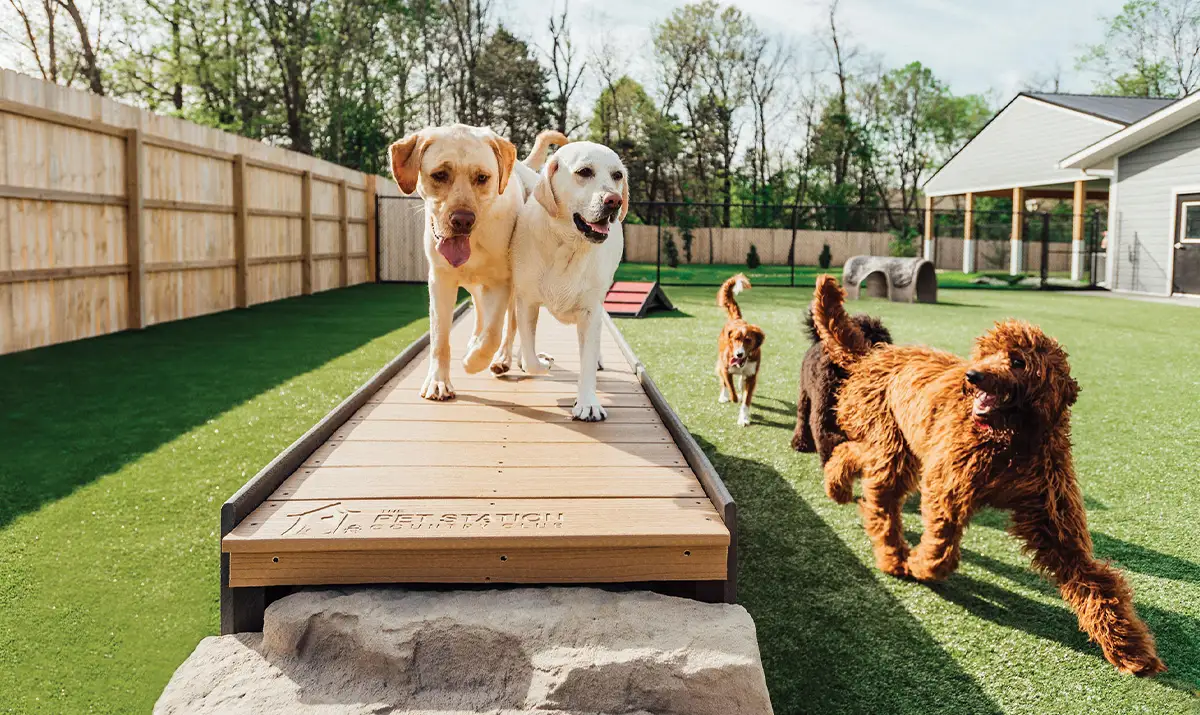
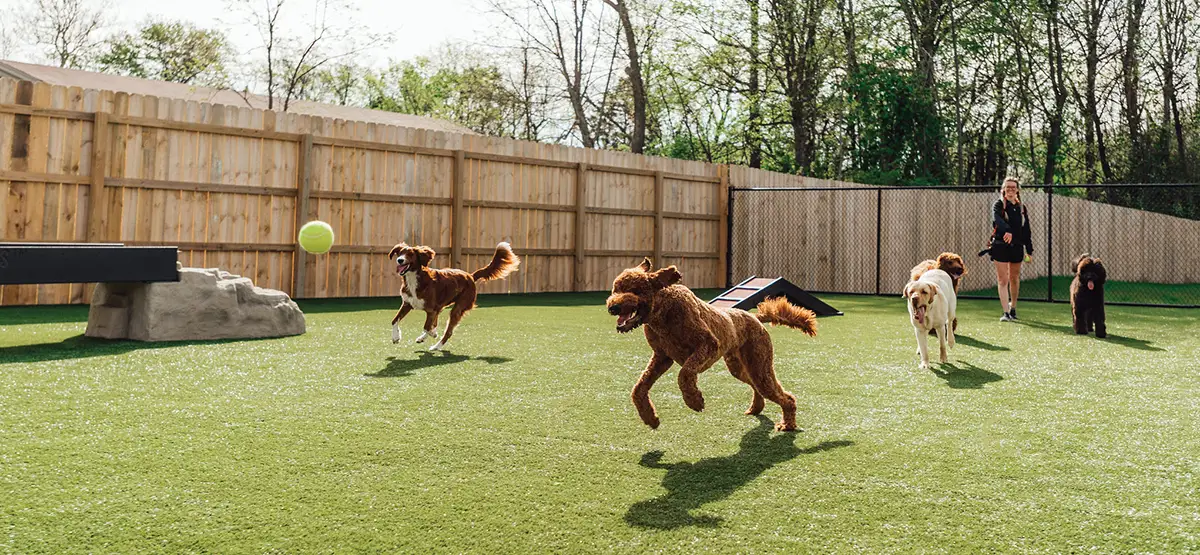
True to their country club theme, they have lots of grass; in fact, 15,000 sq. ft. of turf at each location. And what is a country club without a pool? They have beach-entry pools and splash pads, with their newest location boasting the largest splash pad east of the Mississippi.
The Pet Station also offers “Dog Daycation” which is more than just regular daycare. It’s filled with activities that enhance, engage and enrich the dog’s stay during the day. Membership packages, luxury add-on services, enrichment activities and other amenities are also available. Another standout service that has really topped the charts is their board and train program.
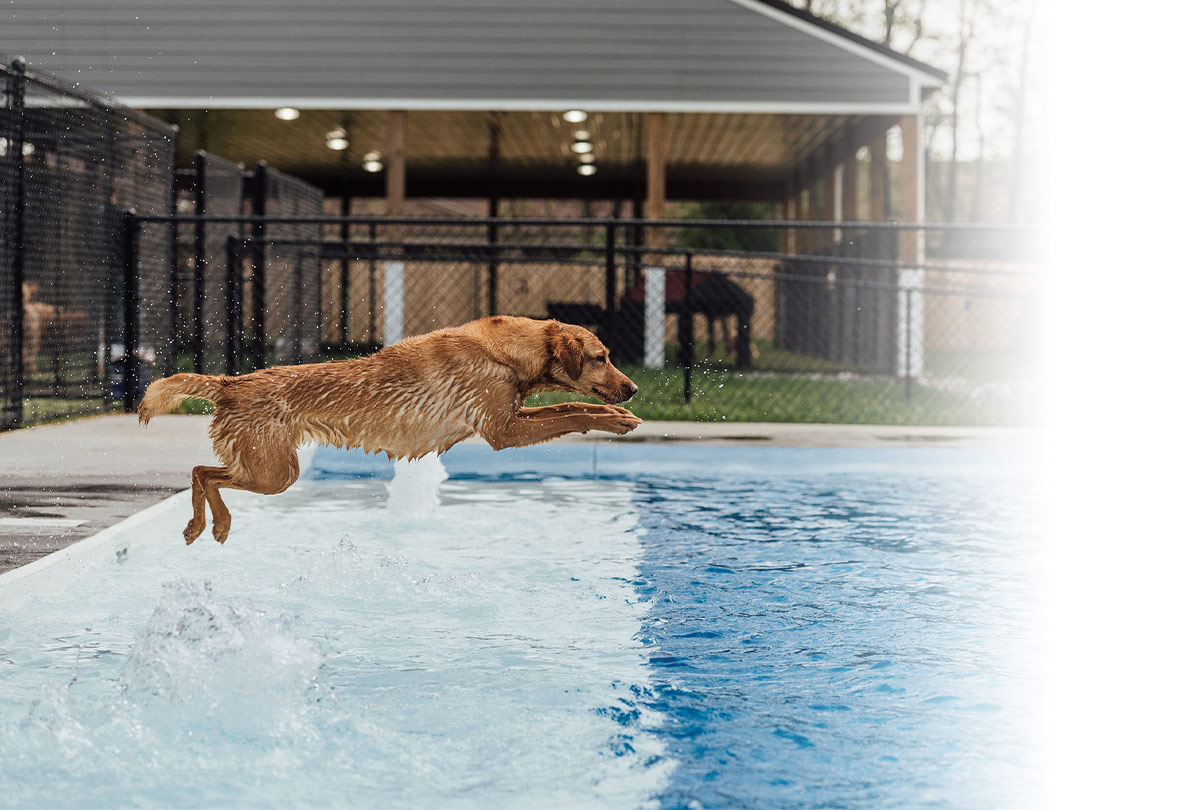

They have beach-entry pools and splash pads, with their newest location boasting the largest splash pad east of the Mississippi.
“The fastest way to accomplish the most with a dog is to put them through a three-to-four-week board and train,” Scott emphasizes. “First we teach the dog, then our focus is on the owners. We have a system set up which includes a ton of actual follow-up time built into it, including a free monthly class to reinforce, refresh, and maintain their skills with their dogs.
“Owners also gain lifetime access to a private Facebook group, where we share dog-related content that not only focuses on training, but also helps clients live and co-habitate with their dogs in ways that are good and fulfilling for both the family and the dogs,” he adds.
One way The Pet Station has achieved their success is by assembling the right team of people. And in a service-based industry that is driven by team dynamics, it’s essential to hire individuals with the right attitude.
“We have five core values at The Pet Station Country Club: Team player, Professionalism, Service, Character, and Compassion,” Scott states. “Our values are an acronym on our initials, TPSCC. By implementing these qualities in all of our departments, we work together to create a cohesive team that bonds around a common purpose.
“I set out to raise the standard of the industry,” he continues emphatically. “Not just for myself and the team/pets in Louisville, but for others. I am also on the Owners of Dog Daycare board.”

 All of our departments offer various levels of development, so people can strive for growth in their current position while preparing themselves for future opportunities.
“We are a growth facility that promotes from within,” he explains. “All of our departments offer various levels of development, so people can strive for growth in their current position while preparing themselves for future opportunities.”
An example of this is their grooming department. Instead of hiring groomers that are already trained, The Pet Station has partnered with the Nash Academy in Lexington, Kentucky. They even sent one of their groomers to Nash to become an instructor for their grooming team.



The Pet Station places great importance on giving back to the community as well. They have partnered with GRRAND (Golden Retriever Rescue and Adoption of Needy Dogs), and built a dedicated wing in one of their facilities to care for those dogs, free of charge, until they find foster homes or forever families.
When asked what separates The Pet Station Country Club from other pet care facilities, Scott said, “From an ownership and leadership perspective, I believe it is our relentless focus on improving our team so they, in turn, can focus on the dogs. Also, our close attention to detail in everything we provide for clients and their dogs (we board cats, too) is crucial.”
He concludes with, “The camaraderie and teamwork that we have as a company is enabling us to fulfill our mission to make The Pet Station Country Club the ultimate in pet care!”









 unning a pet resort isn’t cheap, and when times get tight, the marketing budget is often the first thing to get slashed. But if you want to grow (or even just stay afloat), you can’t stop marketing. Luckily, you don’t need deep pockets to get your name out there!
Start by getting clear on who you’re trying to reach. Not every dog owner in your zip code is your ideal customer. Focus on your sweet spot—maybe it’s working professionals, maybe it’s busy families or maybe it’s older adults who travel a lot. When you narrow in on your target, your marketing becomes way more effective.
Next, look at your existing customers. These people have already said yes to you. Don’t get so caught up chasing new leads that you forget to serve your current clients like royalty. Happy customers stick around longer, spend more and tell their friends.
If money’s tight, over-deliver on service. Surprise clients with little extras, send personalized thank-you messages, and make sure every interaction is smooth and memorable. When your existing clients feel valued, they’ll naturally become walking billboards for your business.
What should you post? Think value, not just promotion. Tips on grooming, training, enrichment, dog behavior—anything that helps pet parents be better at what they do is good content. Behind-the-scenes shots, staff intros, and fun dog stories also go a long way in building trust and connection.
And don’t forget video! A short reel of dogs playing, a 60-second tip from your trainer or a time-lapse of a grooming transformation can get way more reach than a still photo. It doesn’t have to be fancy—just real and engaging.
Another often-overlooked tool is your Google Business Profile. Make sure it’s fully filled out, accurate and includes great photos. Ask happy clients for reviews and respond to every one of them quickly. The faster you reply, the more “Google juice” you’ll get.
What should you post? Think value, not just promotion. Tips on grooming, training, enrichment, dog behavior—anything that helps pet parents be better at what they do is good content.
When you do get new leads in, don’t forget to follow up appropriately. If someone reached out but didn’t book, keep them in the loop with occasional offers or helpful content. A good nurture sequence can turn those “lost” leads around.
Partnerships are another smart move. Find nearby businesses with the same audience but different services, such as dog walkers, trainers or pet stores. Build real relationships and look for ways to support each other. It takes time, but even one good relationship can fuel you with new customers for years.
Local Facebook groups can also be a solid source of visibility. Offer value, answer questions and be helpful—not salesy. Or, start your own local dog lovers group and become the go-to expert in your community.
Most importantly, track what’s working. Try a few of these low-cost tactics, but keep an eye on results. If social reels are getting traction, double down. If flyers aren’t moving the needle, scrap them. Your time and energy are valuable—spend them where it counts.
Marketing doesn’t have to be expensive. It just has to be consistent and intentional. Even with a lean budget, you’ve got plenty of ways to stay visible, keep clients engaged and grow your pet business.
Fern is the founder of Overdog Digital, a digital marketing & consulting agency that helps dog daycare and boarding facilities attract, convert, and keep more customers by creating winning marketing campaigns and providing the business guidance to build momentum and spark long-term growth. Fern also has programs to train daycare staff, is a dog behavior consultant, and has a dog training business in New Jersey. He is the author of eight books and a popular speaker at national conferences and private events. To join The Dog Daycare Business Think Tank or ask a question, go to: www.facebook.com/groups/dogdaycarethinktank

 f you run a daycare or boarding facility, you already know how important it is to keep the dogs happy, active and healthy. Group play is often at the heart of what a facility offers, as it gives dogs much-needed socialization and exercise, and it keeps pet parents coming back. But as any experienced operator will tell you, managing group play isn’t just about fun; it’s also about managing risk.
One of the biggest invisible threats in a group play setting is Giardia. This microscopic parasite is more common than people realize, and can spread quickly in the kind of social, shared environments that make daycare so enjoyable.
It spreads through the classic fecal-oral route, but unlike some other parasites, Giardia doesn’t always cause symptoms. That’s a big issue, because a dog can seem perfectly healthy while still shedding cysts and exposing others during play, mealtime or just sniffing around the yard.
When symptoms do show, it’s usually GI related, such as soft stool or bouts of diarrhea, and maybe some weight loss or less interest in food. But again, most dogs don’t show any symptoms at all.
Unfortunately, the nature of boarding and daycare—shared yards, toys and water bowls, as well as tight playgroups—makes it easy for Giardia to get passed around, even in a spotless, well-managed facility.
Here are a few reasons why:
- Giardia cysts are surprisingly resilient. They survive for weeks in damp or cool conditions.
- Dogs being dogs; they lick, sniff, roll and interact in ways that practically invites transmission.
- A lot of standard disinfectants won’t kill Giardia. You need to use the right ones or methods like steam-cleaning to kill it.
So, even if your staff is cleaning constantly and your playgroups are well-supervised, you can still end up with Giardia if you’re not testing regularly.

Unfortunately, the nature of boarding and daycare—shared yards, toys and water bowls, as well as tight playgroups—makes it easy for Giardia to get passed around, even in a spotless,
Fecal testing shouldn’t be something you just do when a dog has diarrhea. If you’re running group play, it should be a part of your preventative health program. Whether you decide to require testing for new clients or put all active dogs on a regular schedule (every six months is a good place to start), it’s going to pay off in fewer outbreaks and healthier packs.
The most reliable testing is done by veterinary diagnostic labs using zinc sulfate flotation with centrifugation. This is the test recommended by the Companion Animal Parasite Council, which should be done every six months for all adult dogs. And if you want pet parents to follow through, you have to make it easy by providing collection kits, sending reminders and helping them understand why it matters.
Aside from testing, here are a few other measures that can be taken to help reduce risk:
- Switch from shared water bowls to individual ones.
- Clean up stool immediately and disinfect the area with something that’s proven to kill Giardia.
- Wash toys and sanitize turf and high-traffic areas often—especially after rain.
- Train your staff to understand how parasites spread and what to look for.
- Keep clients in the loop. Education goes a long way toward prevention.
The more you do to keep the environment clean and clients informed, the better off everyone’s going to be.
In addition, some businesses could even make a small profit from testing by bundling it into onboarding fees or monthly wellness packages. Whether you charge for it or not, offering testing is a smart move from both a health and business standpoint.
Giardia is common, it spreads easily and it’s often invisible. But that doesn’t mean you can’t stay ahead of it. Regular fecal testing, smart cleaning routines, and clear communication with clients and staff go a long way in protecting your facility and the dogs who come there. You’re already doing the hard work of keeping dogs happy and engaged, this is just one more way to keep them safe and healthy, too.
John Beres, DVM, is a veterinarian and the founder of Canine Lab Testing, a service designed to help daycare and boarding facilities make fecal testing simple, fast, and client-friendly. With almost 20 years in practice and a strong focus on prevention, Dr. Beres works with pet care businesses across the country to improve parasite screening and keep group play safe. You can learn more at caninelabtesting.com

New Products


Wisdom & Grace

Thanks for reading our September/October 2025 issue!